On Spectral Lines, a cartographer of the strange and fantastical traverses more familiar territory, patiently seeking glimmers of magic in the mundane.
There are few people who could use the words “brindled” and “bergamot” in a song and get away with it. Josh Ritter is one of them. The Idaho native has always been a wordsmith and storyteller at heart. Not only has he published two novels (2011’s Bright’s Passage and 2021’s The Great Glorious Goddamn of It All), but his songs have always sounded more novelistic than most contemporary folk songs, brimming with wordplay, literary allusions, and historical references. This all makes sense when you consider his undergraduate major at Oberlin College: “American History Through Narrative Folk Music.” As one of the Americana music scene’s most revered poets, Ritter could easily rest on his laurels. However, his newest album ventures into uncharted territory, challenging sonic and lyrical boundaries in its quest for things luminous and universal.
Spectral Lines, which dropped on April 28, 2023, is Ritter’s eleventh studio album. It’s also his most unique. While the instrumentation is familiar, the arrangements are more ethereal and atmospheric than anything Ritter has produced before. Announcing the album on Instagram, Ritter described it as a musical leap forward: “I wanted to make a record that looked outward, following close on the heels of time as it traveled forward, looking toward the future, rather than backward at the record of things past. The songs on Spectral Lines float through all kinds of sonic environments… The signal that the lyrics beam out is composed of Light, in the spectrums of Imminence and Resolve and Love.” The description is an apt one. The album’s tracks are luminescent, awash with shimmering guitar riffs, sparkling piano flourishes, and warm harmonies. Ritter’s Royal City Band has always pushed the musical envelope, reveling in exotic sounds and layered production. Here, they drift into the background, eschewing clutter and giving Ritter’s melodies room to breathe. The results are stunning: each song feels like an open space to get lost in.
The experimentation doesn’t stop there. Ritter weaves a tapestry with seamless transitions, allowing each song to bleed into the next. In a recent interview with NPR, the songwriter revealed that several of these transitions incorporate field recordings captured on his phone over the course of a decade. The audio clips – which include swings, birdsong, cathedral bells, and the winds of Mars – underscore the album’s preoccupation with movement and flight. They’re also a tribute to Ritter’s mother, a neuroscientist who died in March of 2021. Describing the recordings to NPR, Ritter said, “They were all things that reminded me of Mom, in some way. I don’t know why.” Like the album’s instrumentation, these sounds evoke particular landscapes, lending the songs an expansive, tactile feel.
If there’s anything to criticize about Spectral Lines, it might be its lyrical simplicity. Fans of Ritter’s past work (myself included) love its verbosity – the endless alliterations and assonances and internal rhymes, the sense that the songwriter can’t help but pack as many beautiful words into each line as possible. Ritter is fond of grand narratives, a bent exemplified by his celebrated albums The Animal Years and So Runs the World Away (The latter is a personal favorite which I revisit every year around Halloween: How many albums do you know that include songs about sabertooth bones, polar expeditions, gunslinger murders, and a mummy who falls in love with an archaeologist?) By contrast, the lyrics on Spectral Lines are more subdued. Yet, this simplicity complements the soft grace of the music. It also makes thematic sense. The songs on this album deal with intimate concerns: family and community, aging and mortality, love and loss and longing for connection. On Spectral Lines, a cartographer of the strange and fantastical traverses more familiar territory, patiently seeking glimmers of magic in the mundane.

To characterize the songs as simple is not to label them cliché. There’s plenty of strangeness to appreciate here. The album’s opener, “Sawgrass,” features a spoken poem reminiscent of Bob Dylan’s early work, charting an interstellar quest for belonging. “Black Crown” examines the intersection of depression and creativity through a patchwork of dreamlike fragments (and uses the words “brindled” and “bergamot” in close succession). “Whatever Burns Will Burn” sounds eerie and ancient, grappling with the inevitability of change. In his interview with NPR, Ritter depicted the harmonies on “Any Way They Come” as a “ghostly barbershop quartet.” Additionally, there’s plenty of gorgeous poetry here. In the second verse of “Horse No Rider,” Ritter asks, “What is love anyway but the prettiest bird singing such a bitter song?” In the album’s standout track, “Strong Swimmer,” Ritter mines inspiration from a seaside scene in Shakespeare’s King Lear, meditating on the struggle of entrusting a child to the world:
Now I’m standing on the cliffs And cold sea is far below And the birds that float the midway air Like driven flakes of snow
I cannot go where you are going I can no longer fight those waves Still I’ll watch you ’til you’re out of sight A strong swimmer all the way
Towards the end of the album, Ritter expresses gratitude for a partner with these straightforward, remarkable lines:
I got a pure heart I am not wise But everybody gets lucky hits the nail on the head And gets it right sometimes And you are my sometime
For all the light scattered across this album, Ritter is no stranger to the darkness. Here, as on past albums, he reckons with the inescapability of death, the entropy that grinds all things down, and the destructive potential of humanity. Nevertheless, he remains convinced that hope, beauty, and intimacy are worth fighting for, all the more precious for their fragile and fleeting nature. On “For Your Soul,” he enjoins listeners to accept the reality that life is struggle: “There’s a battle that rages / You can’t wish it away / You’ll have to fight for your love.” On the back half of “Any Way They Come,” he refutes the notion that life’s brevity renders it meaningless:
I came here with nothing I’ll be gone before long Tell me, whatever’s left Of the breath of a song?
But if that’s all there is It’s more than enough And it wasn’t for nothing I gave it all of my love
On the album’s closing track, “Someday,” Ritter urges listeners to fight universal forces of decay with connection:
The dark is too hungry Nothing’s ever quite enough So throw your arms Round the whole world And the ones you love
The song’s chorus is yearning and hopeful in equal measure: “Someday, there’s gonna be justice / Will it be today?”
Listening through Spectral Lines for the first time, I was underwhelmed. I had hoped for more of the bold production and dense, dazzling wordplay that I’d come to expect from Ritter’s work. It took a second listen for the songs to work their magic. The album may not achieve the musical and lyrical heights of The Animal Years and So Runs the World Away, but I’m grateful for Ritter’s willingness to lean into the intimate and the universal, to create sonic spaces that invite introspection and revelation. In these dark and difficult times, we could all use a bit more light, and the tales Ritter unfolds on this new project have a peculiarly arresting glow.
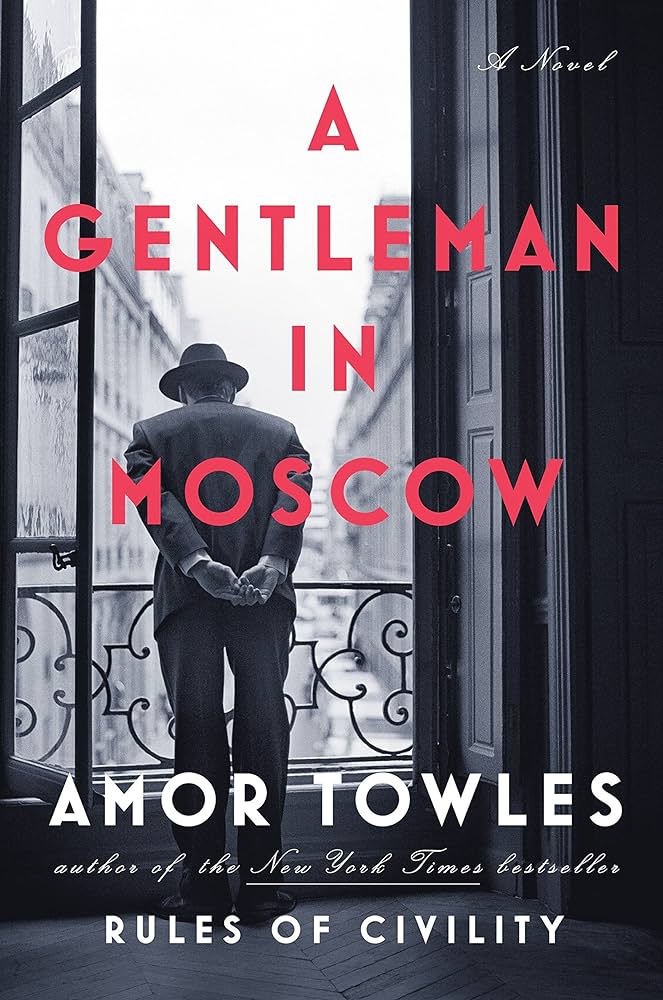
Recently, my wife and I sat at our kitchen table, trying to recall the books which had most influenced us. The exercise was a tricky one. We weren’t listing our favorite books; we were trying to identify books which had altered our thinking, shaped our ambitions, and redirected the course of our lives. We had a blast, and I decided to share my own list here. Each of these titles comes highly recommended. So, without further ado, happy reading! 🙂
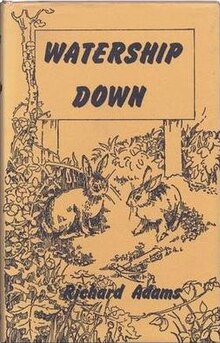
#1. Watership Down by Richard Adams When I think about Watership Down, I think about the Ikea bunkbeds in the upper bedroom of my family’s old house in Lučenec, Slovakia. It was here that my brothers and I lay awake each night, listening to our dad as he read the story aloud to us. Our parents had introduced us to many stories, but nothing quite like this. Richard Adams’ tale of rabbit refugees on the English Downs was epic and sinister, laced with dread that rumbled like distant storm clouds. Menaced on every side by phantoms and shadows, the heroism of the hunted bunnies flickered with desperate magnificence. We fell in love with each of them: Fiver, Bigwig, Dandelion, Blackberry, Kehaar, and, of course, Hazel-Rah (my brothers and I named our bearded dragon “Hazel” after our childhood hero). Watership Down was one of the first books to sweep me away, plunging me into a world that I didn’t want to leave. It kindled a lifelong passion for stories with talking animals, cross-country quests, ragtag bands of companions, and fierce battles between good and evil. It also inspired me to write more of my own stories. Reading the novel aloud to my wife this year, I was a little kid again, longing with Hazel and his friends for “a high, lonely place with dry soil, where rabbits can see and hear all round and men hardly ever come.”
#2. Lizzie Bright & the Buckminster Boy by Gary Schmidt This was the first book that I ever purchased. I was a fifth grader and had won some kind of prize at school for reading tons of library books, and that prize allowed me to select one discounted title from Barnes & Noble (just feeding the addiction, I guess). After wandering the aisles in breathless excitement, I picked Lizzie Bright and the Buckminster Boy. I had never heard of the story, but something about the cover image called to me: a boy and girl, laughing together in a rowboat as the gigantic bulk of a humpback whale glided underneath. The novel is set in 1912 and follows Turner Buckminster, a preacher’s son struggling to adapt to a new community in Phippsburg, Maine. It also recounts his relationship with Lizzie Bright, a vivacious Black girl from nearby Malaga Island. As the two kids grow closer, the religious prejudices and political interests of Phippsburg threaten to tear them apart, forcing them to decide how far they’ll to preserve their unlikely friendship. I’ll never forget finishing the book in my family’s basement in Grandville, Michigan. I wept as I read the closing pages, both overcome by sadness and awed by the beautiful way in which it was communicated. Lizzie Bright was my first introduction to the cathartic power of storytelling. It showed me that stories weren’t just entertainment. They could also bring you to tears, inviting you into the emotional experience of another person and opening chambers in your heart that you didn’t know were there.
#3. The Kite Runner by Khaled Hosseini I picked this novel off a summer reading list for my AP English Literature class. My older brother had read it and liked it, and I trusted his taste. As a third culture kid who was raised overseas, I had seen more of the world than most of my peers. I loved stories set in foreign countries: accounts of missionaries, explorers, and other travelers who immersed themselves in unfamiliar surroundings. But The Kite Runner was different. The Afghanistan that Khaled Hosseini described wasn’t a picturesque travel destination or a proving ground for brave adventurers. It was a glorious nation ravaged by decades of ceaseless war, a place of immense promise devastated by the will of the powerful. Worst of all, the country I now called home had played a major part in cementing its ruin. Hosseini’s unconditional love for his homeland reverberated through every page, and his meditation on the possibilities of redemption stirred something deep inside me. I burned through the book, unable to put it down. After finishing The Kite Runner‘s closing pages, I went for a walk, trying to process one of the greatest endings I’d ever encountered in a story. Through this brave and beautiful book, Hosseini opened my eyes to a world beyond the edges of my maps – to places whose histories were marked by unimaginable suffering, whose citizens were not so different from the people I knew and loved, and whose stories were inextricably linked with my own. I had glimpsed the bleeding heart of the world, felt its blood pumping through my own veins, and I couldn’t go back. What was I going to do now?
#4. Just Mercy by Bryan Stevenson “Bryan Stevenson is coming to Wheaton College!” My anthropology professor was ecstatic, urging all of his students to attend an upcoming lecture on capital punishment and mass incarceration in the United States. I had never heard of Stevenson. I had no idea how vital his advocacy had been for innocent prisoners on death row, for children tried and sentenced as adults, for intellectually disabled people living their lives behind bars, and for Black people everywhere who were terrorized by a broken criminal justice system. Honestly, the situation was much worse than that. As someone steeped in White, suburban, evangelical Christian culture, I genuinely believed that racial injustice was history. We were past that sort of thing, weren’t we? Hadn’t MLK and the civil rights movement of the 1960s already slain the dragon? That evening at Wheaton College, I sat stunned as Stevenson unspooled his lecture with quiet conviction, sharing stories and statistics that demolished my comfortable worldview in the course of an hour. I read Stevenson’s bestselling memoir later and was devastated anew by more data that hadn’t been included in that fateful talk. Just Mercy challenged me to interrogate the racial assumptions that I had adopted unquestioningly. It spurred me to acknowledge my privilege and to repent of my own complicity in systems of oppression. It changed the way I think about prisons and prisoners. Best of all, it inspired me to seek out other stories by Black artists and activists, opening me to perspectives that were as liberating as they were convicting. I still have much to learn, but I’m so grateful for the role Bryan Stevenson played in provoking that journey of discovery.
#5. The Irresistible Revolution by Shane Claiborne In the summer and fall of my senior year at Wheaton College, I had an amazing opportunity to spend five months living, learning, and laboring alongside residents of a slum in Jakarta, Indonesia. My neighbors were undocumented Sundanese migrants who made their living as scavengers, sorting through the city’s waste for recyclable materials. They were some of the most generous and hospitable people I’ve ever met, and I learned so much from them. Their joy and resilience in the face of adversity were remarkable. However, their daily struggles were gut-wrenching, and they haunt me to this day. Returning to college in the United States, I found myself navigating reverse culture-shock and grappling with a host of difficult questions: How can I apply what I’ve learned to my everyday life in the United States? What does it look like to fight poverty, systemic injustice, and capitalist greed in the wealthiest country on the planet? Where are the poor in midwestern America, and how can I build meaningful relationships with them? One of my friends in Indonesia recommended that I read The Irresistible Revolution by Shane Claiborne. More than anything else, Claiborne’s book helped me bridge the gap between my experiences in Indonesia and my life at home. Reflecting on decades of service alongside the poor, homeless, and mentally ill residents of Philadelphia, Pennsylvania, Claiborne taught me that the values I wanted to embrace – commitments to live simply, to give generously, to speak out against oppression, and to follow Jesus’ call to love the marginalized – could be practiced anywhere. Opportunities to be an ordinary radical were all around me, if only I had the courage to see them.
#6. Orthodoxy by G.K. Chesterton I have my dad to thank for this book, which has shaped my personal philosophy more than any other. Dad found a tattered copy of Chesterton’s classic treatise in the used books section of our local Christian bookstore, and he hinted that magic lay within its pages. I read the book in the summer after my college graduation, at a camp nestled in the north woods of Wisconsin. I had never encountered such penetrating wit in a work of writing. Chesterton’s prose sparkled and sang, drawing a smile one moment and cutting to my core the next. The rotund, mustachioed philosopher with the countenance of a bulldog invited me to ponder something which I had felt countless times but rarely consciously considered: the strangeness of ordinary life. Like Chesterton, I had often experienced a sense of “eccentric privilege” when encountering beauty – the feeling that I was an uninvited guest on the Earth, privy to wonders beyond my capacity to understand. Orthodoxy showed me that these wonders weren’t just visible in grand and glorious things; they were just as present in the mundane, in the millions of ordinary miracles that we human beings regularly take for granted. According to Chesterton, the proper response to life’s mysteries was one of humility and gratitude. Revisiting the words of this quirky Catholic sage (as I do often on this blog), I’m humbled by his brilliance and grateful for his perspective. When I’m weary of life’s hardships, in danger of missing the glory that swirls around me each and every moment, his words help me to stop and see: “Here dies another day, during which I have had eyes, ears, hands, and the great world round me, and with tomorrow begins another. Why am I allowed two?”
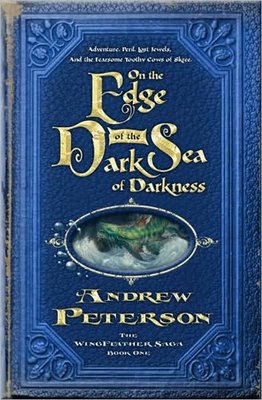
#7. On the Edge of the Dark Sea of Darkness by Andrew Peterson Looking back, I’m amazed that I didn’t discover this book sooner. I’d been a nerdy fan of Andrew Peterson’s music since high school. His poetry had kindled my imagination countless times, and I knew almost all of his lyrics by heart. So, when I picked up On the Edge of the Dark Sea of Darkness after college, I wasn’t surprised to learn that Peterson was a gifted novelist. The book came at a perfect time. I was aimless and discouraged, navigating a high-stress job in social work and wondering what to do with my life. Initially, the first book in The Wingfeather Saga hit me as a welcome shot of unbridled joy. The book was chock-full of bizarre characters and oddball humor, and I found myself belly-laughing alone in my car as I read chapters before work. However, little by little, the book began probing at things that had lain dormant in me for years. I had wanted to be a writer for as long as I could remember. I went to college as an English major, itching to tell stories that kindled people’s imaginations. Yet, I ultimately abandoned those dreams and gave up writing for years, convinced that my broken and bleeding world already had enough storytellers, that social activism was a far more pressing need than fiction. Reading On the Edge of the Dark Sea of Darkness, I realized that I was wrong. I started to recall the many ways that stories had shaped me into the person I was, the many ways they had opened up my world and inspired me to love that world better. Peterson’s debut novel was exactly the type of story I had dreamed of telling as a kid, as goofy and perilous and magical as the planet I called home. It also prompted me to start writing again. My adult aspiration is now the same as my childhood dream: to tell stories that awaken, comfort, and inspire. And I have Andrew Peterson to thank for that.
#8. Jayber Crow by Wendell Berry Set in the fictional town of Port William, Kentucky, this novel features one of my all-time favorite narrators. Jayber Crow is an orphan, bachelor, and failed seminary student who returns to the community that raised him and becomes its barber. As decades pass, we witness the changes that wash over Port William through Jayber’s eyes. We also witness his blossoming affection for the land and for the cast of quirky characters that calls it home. When I finished the book, I was still living at home with my family, working hard to pay off college debts. Like Jayber, I frequently found myself tiring of the familiar and longing to hit the road. Yet, his tale of fidelity to place challenged me to take a second look at my surroundings. What was I missing in my rush to be elsewhere? Who were my neighbors, and what might it look like to love them as Jayber did? What might my own place have to teach me? Gradually, just like Jayber, I grew to love the ground I’d been given, in all its messiness and particularity. It wasn’t easy, but it was worth it. Thanks in part to Wendell Berry’s book, my relationship with my parents and siblings is stronger than it was before college. Not only that, but my longing for the kind of close-knit community that Jayber describes led to the formation of an art group which ran for several years, filling my days with joy. Jayber Crow taught me that contentment is possible anywhere, if we keep our eyes open for the gifts, graces, and potential friends that already surround us. As Berry writes elsewhere, “We live the given life, and not the planned.”
#9. Why I Believed: Reflections of a Former Missionary by Kenneth Daniels When I purchased this book in the winter of 2022, I had just made the decision to abandon the Christian faith of my upbringing. It was an incredibly lonely time. I knew no one who had deconverted from religion as I had; almost the entirety of my community consisted of believing Christians. Online testimonies of spiritual deconstruction were my only solace, and it was in one of those talks (shared by Rhett McLaughlin and Link Neal of Good Mythical Morning) that I first heard about Kenneth Daniels’ book, Why I Believed. I devoured the book, then I went back and read it a second time. Daniels, a former missionary in Niger with Wycliffe Bible Translators, had become an atheist after grappling with faith and doubt for decades. Equal parts memoir and exposé, his book not only portrayed the struggle of apostasy in heartbreaking detail, but also mounted the most devastating critique of Christianity that I had ever read. Reading Daniels’ story, I felt deep assurance that I wasn’t alone. Someone out there had walked the same path, weighed the same evidence, and survived the same heartache. Furthermore, Daniels’ arguments cemented my conviction that I could no longer subscribe to Christian teachings. I can recommend no better volume to skeptics deconstructing their faith or to Christians seeking to understand what the experience of deconstruction entails.
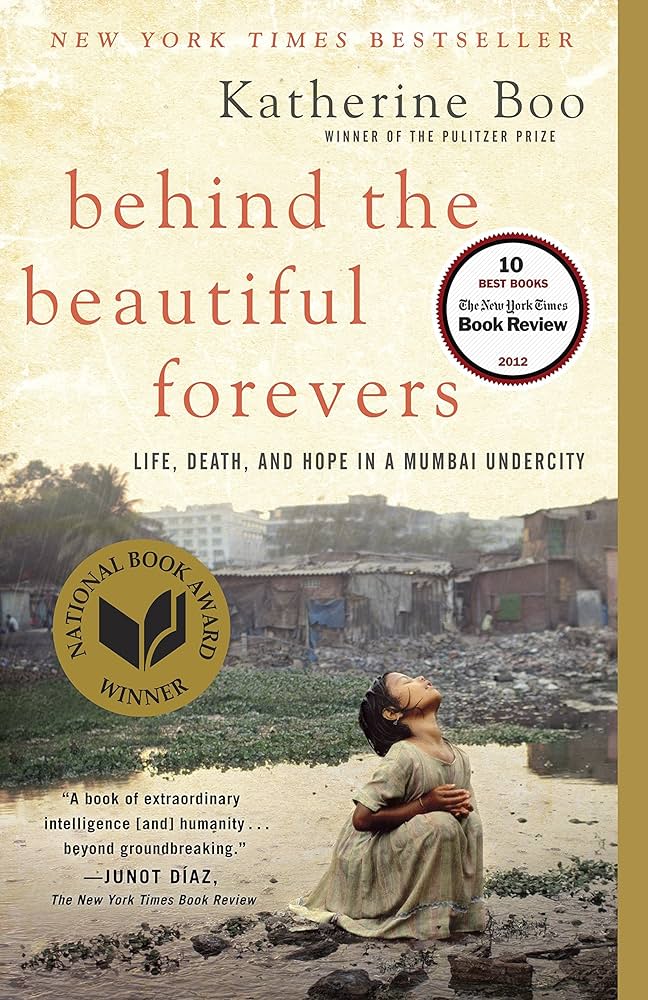
#10. Behind the Beautiful Forevers: Life, Death, and Hope in a Mumbai Undercity – Katherine Boo Okay, okay. I haven’t technically finished this one yet. However, the fact that I’m still including it on this list says it all. Katherine Boo won the National Book Award for her groundbreaking account of everyday life in the slums of Mumbai. I read the opening pages of her book with astonishment, startled by the numerous similarities between the ramshackle neighborhood of Annawadi and the Jakarta squatter settlement where I lived during 2017. Like my former neighbors, the characters of Boo’s book salvage their living from a city’s waste, founding their homes and hopes on the rubbish. The tales Boo tells are gut-wrenching, unforgettable, and achingly human. More than one billion of the world’s people live in slums, and Boo is convinced that we cannot ignore their stories. Reading her account has allowed me to return to a place and a people I loved, helping me explore the impact of their stories on my own. It has also given me a vision for the specific kind of writing I hope to produce someday: vivid, cross-cultural journalism that invites the privileged into the lived experiences of the marginalized. I’ve spent years wondering how my anthropology training and literary aspirations might be reconciled, and Behind the Beautiful Forevers has blazed a trail for me to follow. If my future work bears any resemblance to Katherine Boo’s, the journey will have been well worth it.
Well, that’s a wrap! Which books have impacted you the most? If you’d like to make a list and share it via email, Facebook, or a comment on this page, I would be honored to read it!
Imagine that you’re about to be stranded on a desert island. You’re allowed to take one fragment of a piece of art from any genre with you – not a complete work of art, but a tiny piece of that work of art, such as a chunk of a painting or sculpture, a chapter from a book, a scene from a movie, a level from a video game, or a song from an album. Which fragment of art would you take?
If you’re an art junkie like me, that question might seem impossible to answer. It’s hard enough picking a favorite work of art within any particular genre, much less from all genres collectively. With so many beautiful and inspiring creations to consider, how on earth could you possibly compare them all and choose a single fragment of a single work of art?
Sure, it’s an absurd scenario. Yet, as crazy as it may sound, I know without hesitation which fragment of art I would pick – the tiny sliver of storytelling that resonates with me more than any other. I know this because, quite simply, that fragment changed my life.
The work of art is Robert Zemeckis’ 2000 film, Cast Away (my favorite film of all time), and the fragment is the final two minutes of the movie. Chuck Noland (played by Tom Hanks) is standing next to a dusty crossroads in rural Texas, peering at a map and trying to get his bearings. A pickup truck pulls over next to him, and an auburn-haired woman leans out of the window.
“Where are you headed?” she asks, grinning.
Chuck looks up. “Well, I was just about to figure that out.”
The woman climbs out of her truck and looks around. “Well, that’s 83 South. And this road here will hook you up with I-40 East. If you turn right, that’ll take you to Amarillo, Flagstaff, California.” She smiles and gestures toward her farm. “And if you head back that direction, you’ll find a whole lot of nothing all the way to Canada.”
Chuck thanks the woman, who wishes him well: “Good luck, Cowboy.” She returns to her truck and drives off. Alone again, Chuck walks into the middle of the crossroads. Slowly, he turns to face each direction. The camera turns with him, showing each road stretching over miles of plains into the horizon. Finally, he turns toward the camera, staring down the road taken by the auburn-haired stranger (and at us). The hint of a smile appears on his lips. And then the credits roll.
It’s a simple, quiet scene. Nothing dramatic happens. The events depicted are thoroughly mundane: an exchange of directions by the roadside. So, why does this scene affect me in such a profound way?
Saved From a Wreck
Let’s rewind to the beginning of the movie. When we first meet Chuck Noland, he’s a high-strung FedEx executive who makes no apologies for his workaholism. He berates employees for their lack of efficiency, checks his pager during Christmas dinner, and struggles to find time for his girlfriend, Kelly. When Chuck looks toward the horizon, he sees a checklist – an endless sequence of predictable tasks and measurable results, stretching as far as his eyes can see. Boarding a plane to resolve a work problem in Malaysia, he knows exactly what he’ll do upon his return: pop the question to Kelly and continue business as usual.
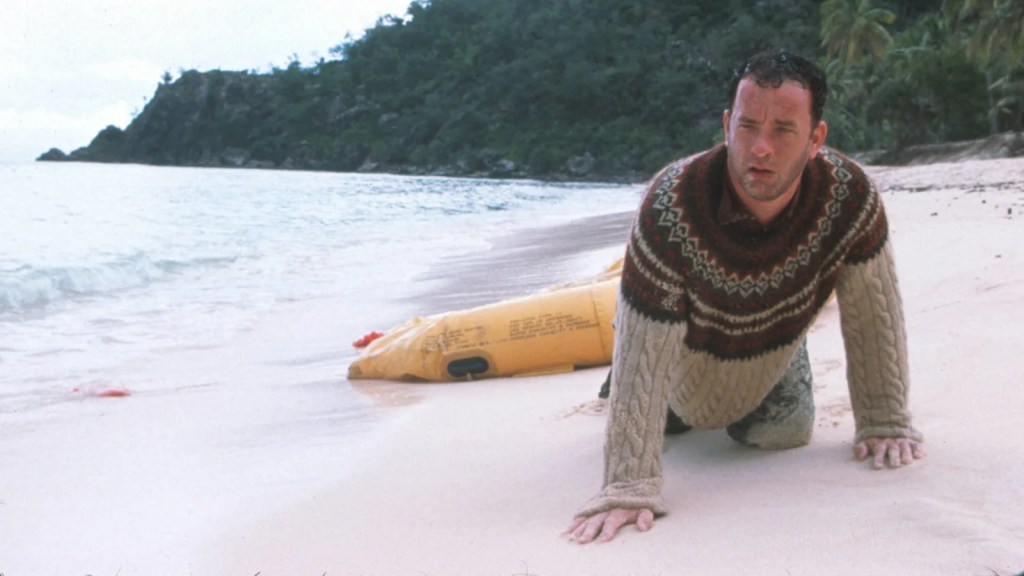
Neither of these things will happen. As his flight nears its destination, it’s buffeted by a violent storm and crash-lands in the Pacific. The next day, Chuck washes ashore on an uninhabited island, the sole survivor of the wreck. He will remain there for four years.
As the story unfolds, we see Chuck struggling to adapt to isolation. He treks across the island, exploring each of its haunts and hideaways. He learns how to crack coconuts, how to spear fish from the tide pools, and how to coax a fire into life. He salvages packages from the sunken plane, repurposing everything from ice skates to fishnet stockings. Eventually, one of these packages divulges an unexpected companion: a volleyball (named “Wilson” after its logo) that will become Chuck’s deadpan conversation partner throughout the film.
Sound boring? It isn’t. Tom Hanks gives a career-best performance, laying bare his character’s emotions with every flick of his eyes, inviting the audience to ponder what we’d do if we were in his shoes. The narrative is consistently riveting, no more so than when, at long last, Chuck finally breaks through the waves that surround the island, using a wall from a portable toilet as a sail. Half dead and adrift, he is once again plucked from the sea, only this time by an ocean liner.
A lesser story would end there, celebrating Chuck’s triumphant return to civilization. Thankfully, Robert Zemeckis knows that life isn’t that simple. Chuck has spent four long years yearning for the familiar rhythms and routines of society. Now, however, he discovers that his old life is anything but familiar. As he begins to reintegrate into a world that believed him dead and gone, he’ll face challenges as difficult as any encountered on the island.
So, returning to my earlier question: Why does the story of Cast Away, particularly its ending, mean so much to me? To answer that question, I need to share a quote from G.K. Chesterton’s 1908 autobiography, Orthodoxy. In this passage, Chesterton reflects on another literary work: Robinson Crusoe, a novel which bears strong resemblances to Chuck Noland’s story. Chesterton writes:
Thus I have said that stories of magic alone can express my sense that life is not only a pleasure but a kind of eccentric privilege. I may express this… by alluding to another book always read in boyhood, “Robinson Crusoe,” which I read about this time, and which owes its eternal vivacity to the fact that it celebrates the poetry of limits, nay, even the wild romance of prudence. Crusoe is a man on a small rock with a few comforts just snatched from the sea:the best thing in the book is simply the list of things saved from the wreck. The greatest of poems is an inventory. Every kitchen tool becomes ideal because Crusoe might have dropped it in the sea. It is a good exercise, in empty or ugly hours of the day, to look at anything, the coal-scuttle or the bookcase, and think how happy one could be to have brought it out of the sinking ship on to the solitary island. But it is a better exercise still to remember that all things have had this hairbreadth escape: everything has been saved from a wreck. Every man has had one horrible adventure: as a hidden untimely birth he had not been, as infants that never see the light. Men spoke much in my boyhood of restricted or ruined men of genius: and it was common to say that many a man was a Great Might-Have-Been. To me it is a more solid and startling fact that any man in the street is a Great Might-Not-Have-Been.
But I really felt (the fancy may seem foolish) as if all the order and number of things were the romantic remnant of Crusoe’s ship…The trees and planets seemed like things saved from the wreck: and when I saw the Matterhorn I was glad it had not been overlooked in the confusion. I felt economical about the stars as if they were sapphires (they are called so in Milton’s Eden): I hoarded the hills. For the universe is a single jewel, and while it is a natural cant to talk of a jewel as peerless and priceless, of this jewel it is literally true. This cosmos is indeed without peer and without price: for there cannot be another one.
What is Chesterton getting at here? Simply put, he wants us to recognize that life is a precious gift – something to be wondered at and never taken for granted. That might sound cliché, but the way that Chesterton describes the “gifted-ness” of life is unique. Furthermore, when placed alongside Cast Away, Chesterton’s words reveal layers of profundity tucked within the film – themes and motifs that help explain why that final roadside scene moves me so deeply.
Beautiful Flotsam
According to Chesterton, every part of our material world is a treasure. You might not feel excited by a coal-scuttle or a bookcase, but Chesterton wants you to be. He argues that if, like Chuck Noland, we were stranded on a desert island and these items washed ashore, we wouldn’t take them for granted. So, why then do we take them for granted in our everyday lives? They didn’t have to exist. Modern cosmologists remind us that the odds of our being here – the chances that far-flung stardust would coalesce into this particular planet of soil, rocks, trees, oceans, clouds, and ecosystems capable of sustaining life – are quite literally astronomical.
Chesterton’s words remind me that there are no “ordinary” things in this life, just extraordinary things that we’ve gotten used to seeing around. When we were too small to walk or speak, everything that our eyes fastened on was a wonder. Does the fact that we can name things, categorize them, and understand their basic parts make them any less wonderful?
As he adjusts to life on the island, Chuck gains a deeper appreciation for ordinary things. Each package salvaged from the sea is useful for something, whether it’s handmade fabric footwear or emergency ice skate dentistry (if you’ve seen the film, then you probably can’t forget the tooth removal scene). After his rescue, Chuck lays on a hotel floor, flicking a light switch on and off over and over again. Watching him do this, we suddenly recall that he has lived without electricity for years, and we realize that he’ll never see it in the same way again. Nothing is too small or simple to kindle Chuck’s wonder. During a late-night talk with an old friend, he pauses to look down at his drink. “I have ice in my glass,” he murmurs, turning those words over like a precious stone.
Included in Chesterton’s treasures are the people with whom we navigate life. Like the raw materials of our planet, human beings didn’t have to exist, and we do so against astronomical odds. Every one of us is a “Great-Might-Not-Have-Been.” In addition to cosmological considerations, there was no guarantee that we’d survive the grisly gauntlet of childbirth, that we wouldn’t join the untold numbers of “infants that never see the light.” We are walking miracles – beautiful flotsam.
Furthermore, none of us emerges from a vacuum. We are all the products of stories that started long before we were born and that included countless people we’ll never meet, billions of accidents and chance encounters and romances and brave decisions that we’ll never know. We exist within social networks – families, communities, societies, and cultures – that have shaped us into the people we are. Our stories are far more entangled with the stories of others than we realize. As a result, we are far more dependent on one another than we can imagine. As songwriter Josh Ritter puts it, “Man wasn’t made to live alone.”
CastAway‘s volleyball subplot is unarguably odd. Wilson sticks in people’s memories, and he’s often the main thing people recall about the film. As the story progresses, Chuck’s conversations with his mute companion become increasingly elaborate, and we become increasingly concerned about his sanity. The fact that Hanks pulls these scenes off, unsettling us and making us laugh at the same time, is a small miracle. Yet, those who see Wilson as a mere comedic prop are missing the weighty significance of his place in the narrative.
A world away from everyone he knows and loves, Chuck is desperate for connection, for dialogue, for relationship. He can’t survive without it. This is why he scratches portraits of Kelly on the walls of his cave, and it’s also why he traces a smiley face onto Wilson’s surface. When Chuck weeps after losing Wilson to the sea, we don’t laugh. We cry with him (or, at the very least, I do) because we know what that weathered volleyball meant to him. It was the closest thing to a friend that he had for four years. He wasn’t made to live alone.
After returning to civilization, Chuck recognizes that relationships are immeasurably precious gifts. He also reckons with the painful reality that he once squandered those gifts. Catching up with a coworker whose wife recently died of cancer, Chuck apologizes for never offering support. He makes a similar apology to Kelly: “I’m so sorry… I should’ve never gotten on that plane. I should’ve never gotten out of the car.” Through his isolation, Chuck learns the truth that no man (pardon the pun) is an island. He comes to see himself as immersed in a web of relationships that are fragile, fleeting, and sacred.
The Time That is Given to Us
Chesterton’s claim that each person is a “Great-Might-Not-Have-Been” reminds us that we had no say in our emergence into this world. Likewise, we’ll have no say in our exit. Each and every one of us will die. This fact illumines a further truth: none of us knows how long we will exist. Like our birth and our death, time is a mystery that eludes our grasp. We don’t control the clock, and we don’t know when it’ll stop ticking. All we can decide, as a wise old wizard once said, is what to do with the time that is given to us.
At the beginning of Cast Away, Chuck gives an impassioned speech to his FedEx employees: “Time rules over us without mercy… That’s why every FedEx has a clock. Because we live or die by the clock. We never turn our back on it. And we never, ever allow ourselves the sin of losing track of time!” While Chuck might seem to appreciate the value of time, his speech reveals a crucial misunderstanding. He thinks he can control the clock. In his mind, time is a commodity – something that can be hoarded and turned into profit. That’s why he urges his employees to keep their eyes on their watches.
Later in the film, we hear Chuck repeat these same words in his island cave. This time, however, he speaks them with bitter cynicism, chastened by the crash that blew his carefully constructed schedule to bits. On the island, Chuck has all the time he could ever want… and no work projects to fill it with. We watch his hurry and bluster dissolve over time, settling into a patience that mirrors the natural rhythms of sea, land, and sky.
After his rescue, Chuck is slower to speak and quicker to listen. He sits and talks with an old friend late into the night, making a formerly uncharacteristic effort to be fully present. He travels to rural Texas to perform an act of kindness for a stranger. When he stands at the crossroads at the end of the film, Chuck takes his time looking around, and he isn’t checking his watch. Time matters just as much to him as it ever did, but it isn’t a commodity anymore. It never was. It’s a gift. Like all gifts, it doesn’t demand to be hoarded; it only asks to be received.
The reality that we don’t control the clock challenges us to reckon with the inevitability of changes brought by time. Early in the film, we watch Chuck as he eavesdrops on a friend who is describing his wife’s cancer. Chuck’s eyes say it all: he would rather be anywhere else. Perhaps some small part of him still thinks that he’s the exception to the rule, that mortality will work around his plans. Later in the film, Chuck doesn’t flinch while consoling his bereaved friend. He knows that grief and loss are unavoidable, that they often blindside us with all the ferocity of a plane crash, and that they must be reckoned with.
Chuck’s wisdom is hard-won. In one of the film’s climactic scenes, he reunites with Kelly, the woman whose memory kept him going during those four long years on the island. He stands in her kitchen, listens to her stories, stares at the photographs of her new husband and children. And then, in the pouring rain, he lets her go again – this time for good. It’s a gut-wrenching scene. Yet, it’s also full of grace. Chuck recognizes that loss is inevitable. He can’t control Kelly, any more than he can control the clock or the changing tides. By letting her go and allowing her to let him go, he frees Kelly to move forward in her story, just as his rescue freed him to move forward in his.
What the Tide Could Bring
In the wake of profound and unexpected loss, a question surfaces: Are the gifts that we experience in this life worth the hardships that accompany them? The material world and the relationships that we experience may have been salvaged from a wreck, as Chesterton argues. But how can we treasure that precious flotsam when it keeps slipping back into the sea? We may be able to make peace with the plot twists and tragedies brought by time. But how can we go beyond simply making peace to loving life again when all that was familiar has washed away in the tide?
Near the end of Cast Away, while talking with an old friend, Chuck opens up about a particularly dark moment on the island. Director Robert Zemeckis films Noland’s description of the event as a single continuous shot, keeping his camera on Tom Hanks. As Hanks delivers Chuck’s monologue (one of the greatest ever written), his eyes reflect the glow of firelight, staring at scenes that are as vivid to him now as when they first occurred:
We both had done the math. Kelly added it all up and knew she had to let me go. I added it up and knew that I had lost her. ‘Cause I was never gonna get off that island. I was gonna die there, totally alone. I was gonna get sick, or get injured or something. The only choice I had, the only thing I could control, was when and how and where it was going to happen. So, I made a rope, and I went up to the summit to hang myself. I had to test it, you know? Of course. You know me. And the weight of the log snapped the limb of the tree, so I couldn’t even kill myself the way I wanted to. I had power over nothing.
And that’s when this feeling came over me like a warm blanket. I knew, somehow, that I had to stay alive. Somehow. I had to keep breathing, even though there was no reason to hope, and all my logic said that I would never see this place again. So that’s what I did. I stayed alive. I kept breathing. And one day my logic was proven all wrong because the tide came in and gave me a sail. And now, here I am. I’m back. In Memphis, talking to you. I have ice in my glass… And I’ve lost her all over again… I’m so sad that I don’t have Kelly. But I’m so grateful that she was with me on that island. And I know what I have to do now. Gotta keep breathing. Because tomorrow the sun will rise. Who knows what the tide could bring?
Chuck never expected to crash-land in the Pacific. But he also never expected that the tide would bring him a sail, enabling him to escape the island. His logic said that there was no hope, that life couldn’t be salvaged from the wreckage. But life confounded his logic, just as surely as it confounded his flight to Malaysia. The wreck of that very flight (more specifically, the wrecked wall of its portable toilet) is what made Chuck’s return to civilization possible. Alone on a desert island, Chuck came face to face with his greatest fear: the reality that life can’t be controlled. Yet, as he talks with his friend, we witness his dawning realization that this very lack of control might, after all, be life’s truest gift.
Existence doesn’t bow to our desires. Life can change without warning, in an instant, laying waste to everything that we loved or thought we knew. Yet, at his lowest point, Chuck discovers a paradoxical truth: the very unpredictability that occasions life’s deepest sorrows also generates life’s greatest joys (or, as a pastor I knew once said, “We don’t know what will happen tomorrow, and that is the worst and best thing about life”). How much of the beauty and goodness that you’ve experienced in your life was a product of your own efforts? Haven’t most of your cherished memories, your closest friendships, your wildest encounters with awe, your richest insights, and your deepest experiences of love come to you by surprise?
This is why that closing scene of Cast Away moves me so deeply. As he stands in the center of the crossroads, Chuck isn’t just deciding which direction to drive. He’s pondering the countless directions his life can take, recognizing that each open road is an invitation. He can choose to go anywhere. The film doesn’t show us which path he takes in the end. Will he strike off into the unknown, chasing a new future to the south or east or west? Perhaps. Will he backtrack north, following the trail of the auburn-haired woman and seeking the possibility of new relationship? This seems more likely. Either way, he’s in no rush. As he stares through the camera at us, we might sense a feeling coming over us “like a warm blanket,” just like it did for Chuck on the island, when he was tempted to believe that his story was over: You’re still here. You’re still breathing. What will you choose to do today?
In his one-man broadway show, legendary songwriter Bruce Springsteen laments the loss of innocence brought by time: ““The one thing I miss in getting older is the beauty of the blank page – so much of life in front of you, its promise, its possibility, its mysteries, its adventures – that blank page just lying there daring you to write on it.” While I sympathize with Springsteen’s sentiment, Cast Away tells a different story. Life isn’t a blank page that gets increasingly filled up as our stories are written, so that our potential for growth and change and new beginnings continually recedes. It’s a stack of innumerable blank pages – one for each day, each minute, each second of our lives on Earth. No matter what we’ve done or failed to do, tomorrow is a tale that’s yet to be written. It’s not as if we have a select few “crossroads” moments where the future is wide open and our life can take different trajectories. The future is always wide open. Each and every moment of our lives is a crossroads – the gift of a fresh start, if only we have eyes to see it. As indie rock band Colony House sings in their song “The Hope Inside”:
Maybe there’s a reason why this world spins around in circles Like it’s giving us another try every sunrise to find purpose Has it been going on all this time, like another breath that goes unnoticed? I’m leaving what is lost behind to find the light
Whenever I’m walking in the countryside and I come across a fork in the road, I head to the middle of that crossroads. Slowly, I turn to face each direction, gazing at the point where each road meets the skyline. As I practice this small ritual, I’m overwhelmed by gratitude. Thanks to Tom Hanks, Robert Zemeckis, and Cast Away, I look at the world differently. “Ordinary” objects like volleyballs, ice cubes, and light switches look a little less humdrum, a little more bizarre. Conversations with friends and family members become spaces of sacred communion – transcendent mysteries demanding my full attention. And, while still painful, heartbreaks feel a bit more bearable when viewed as the inevitable outcome of life’s ceaselessly shifting tides.
This past year has been an incredibly difficult one, full of grief and losses I could never have anticipated. Many familiar comforts have been washed away by the waves. Like a certain FedEx executive, I have no idea what the future holds. I struggle to see how new chapters can unfold from the wreckage. But I’m so thankful to be here, and I’m willing to wait. Who knows what the tide could bring?
Shortly after my wife and I started dating, I made a horrifying discovery: She had never seen the original Star Wars trilogy. Well…that wasn’t exactly true. She had seen the opening minutes of George Lucas’ sci-fi epics, which are consistently ranked among the most influential works of cinema ever created. She had just fallen asleep for the remainder of the movies.
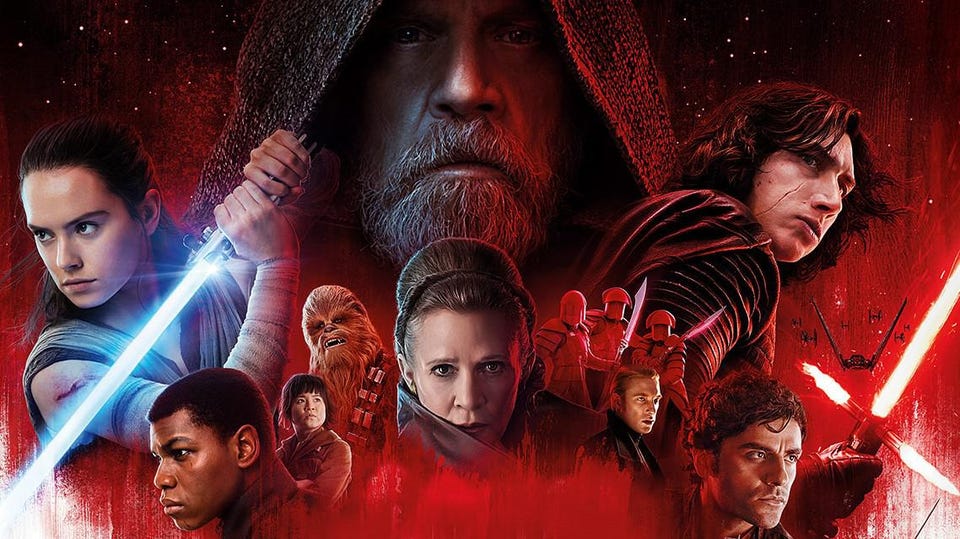
Suffice it to say that, shortly after we were married, I assumed my God-given husbandly duty of bringing her up to speed on the Star Wars universe. She watched The Empire Strikes Back for the first time last week, and while I’ve seen that film more times than I can count, it was delightful to revisit it through her eyes. I found myself marveling afresh at the sharp, surprising storytelling of the trilogy’s famous middle chapter. Few films have generated as many sequels and spin-offs as Star Wars has. Some of these follow-ups are thrilling. Others are tedious exercises in fan service (and no, I’m not referring to the Star WarsHoliday Special). However, no Star Wars story reminds me more of Empire Strikes Back than The Last Jedi – a movie which has achieved a similar level of fame, but for much more negative reasons.
Over the years, I’ve debated The Last Jedi with people more than any other film. The movie was incredibly divisive upon its release, polarizing fans of the series about as sharply as the 2016 presidential election. While the vast majority of critics praised its originality, many fans saw it as a betrayal of all the franchise stood for, and some of them even petitioned for a remake. Backlash against the film was so strong that Disney and Lucasfilm brought back series originator J.J. Abrams to plaster over all vestiges of Rian Johnson’s storytelling in the series finale, The Rise of Skywalker. To this day, Star Wars fans can’t agree on whether The Last Jedi was a triumph or a travesty. The film has joined the laundry list of inflammatory topics best avoided at social gatherings, such as finances, politics, death, and whether or not hot dogs are actually sandwiches.
Trigger warning: I happen to believe The Last Jedi is good. Really good. Not only that, but it’s also my favorite Star Wars film, and I think it’s the best Star Wars sequel since TheEmpire Strikes Back. Many members of my generation don’t know that Empire was also divisive upon its release. Reviews of the film were mixed at best, with fans criticizing its dark tone, its plot twists (particularly Darth Vader’s parental reveal and Han’s romance with Leia), and its conclusion. It took years of reflection and reconsideration for the film to receive the acclaim that it enjoys today. In this essay, I will argue that The Last Jedi deserves the same reconsideration. Like The Empire Strikes Back, Rian Johnson’s famous entry in the Skywalker saga does exactly what the middle chapter of a trilogy should do, expanding the universe of its predecessors, developing characters, and setting up the series finale for success.
Expanding the Universe
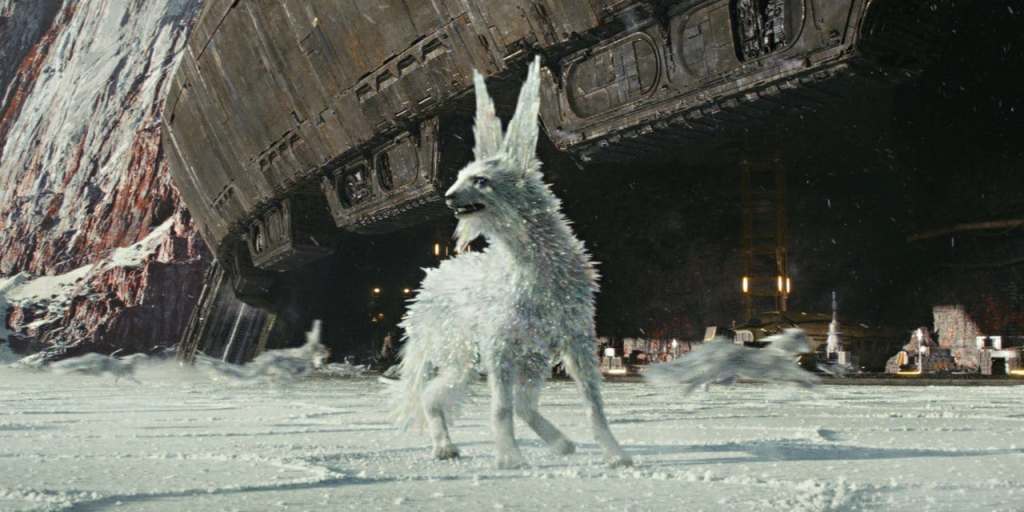
From a purely cinematic standpoint, The Last Jedi is undeniably gripping and immersive. The film boasts some of the most unforgettable images ever captured in the Star Wars franchise: the silent sundering of a Star Destroyer as a cornered ship jumps to hyperspace, blood-red clay bursting from a salt surface as pale and smooth as glass, a balletic duel with red guards in a crumbling throne room, the silhouette of a lone Jedi striding from the rubble to face an armada, and twin suns setting above an empty cloak on a cliff.
The film’s script is top-notch as well, crackling with wit, humor (the best since since the original trilogy), and poetry. Rian Johnson is known for crafting intricate, multilayered screenplays (remember his 2019 film Knives Out?), and he’s also the only person besides George Lucas to both write and direct his own Star Wars film. The result here is a streamlined, delightfully quirky script studded with moments of grandeur, such as Luke’s first lesson with Rey, which contains the most eloquent description of the force since Yoda’s in The Empire Strikes Back. Similarly, Yoda’s monologue on Ahch-To contains the best lines the tiny green sage has ever uttered (Seriously, go back and watch it again). Moments of dialogue are interspersed with propulsive action sequences, none of them more heart-pounding and kinetic than the film’s opening scene, which depicts the deaths of Rebel pilots during a bombing raid gone horribly wrong. Rogue One is rightly praised for its gritty depiction of galactic warfare, which highlighted the sufferings of ordinary soldiers outside the Jedi order. Yet, it’s rarely acknowledged that Rian Johnson managed a similar feat in the span of a few minutes, opening his film with a gut-wrenching sequence that showcases the sacrifice of a lone gunner. Leia’s subsequent mourning for the lost pilots and Rose’s grief for her sister lend gravitas to deaths which are all too often sidelined in Star Wars films.
Beyond creating an entertaining spectacle, Rian Johnson expanded the Star Wars universe in exciting, thought-provoking ways. The Last Jedi‘s Canto Bight sequence is frequently criticized by fans, with many claiming that Finn and Rose’s side quest contributes nothing to the movie’s plot. However, while it’s true that the duo’s mission ends in failure, their discoveries complicate simplistic understandings of the franchise’s central conflict. In Canto Bight, Finn witnesses a troubling side-effect of war: greedy profiteers enriched by military arms deals. DJ, the swaggering code-breaker rescued by Finn and Rose, challenges the former’s idealism and loyalty to the Rebellion by demonstrating that both Rebel and First Order weapons are traceable to the same salesmen. War doesn’t just benefit the gamblers and hustlers who crowd Canto Bight’s casinos; it also finances the subjugation of a slave population. In a series where “good guys” and “bad guys” are usually clear-cut categories, Canto Bight presents a more complex, unsettling, and three-dimensional picture of warfare. It also saddles Finn with a new dilemma: Is sticking his neck out for the Rebellion truly worthwhile? Faced with the ambiguities of war, DJ advises Finn to pursue his own self-interest: “Live free. Don’t join.” The audience is left wondering how Finn’s discoveries will affect his allegiance to the Rebellion. This situation harkens back to The Empire Strikes Back, a film that exposed audiences to similarly thorny questions. It’s easy to hate and kill a masked tyrant whose actions have brought untold suffering to the galaxy. But what if that tyrant is your own flesh and blood?
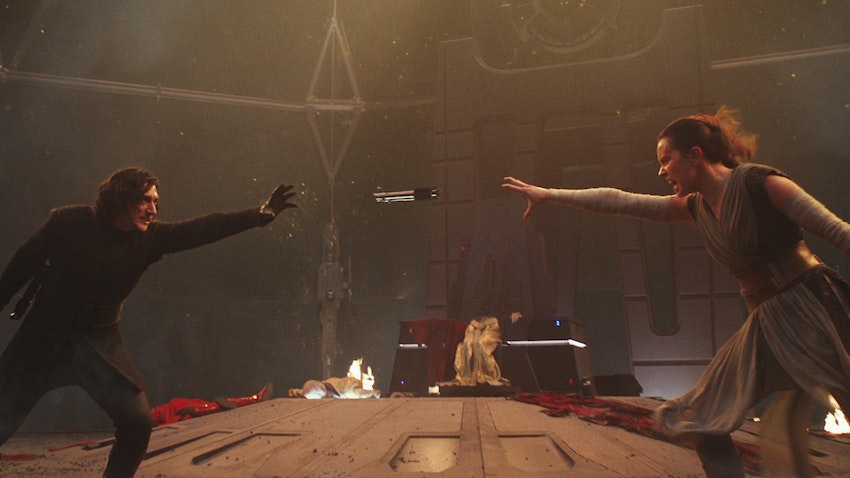
Similarly, The Last Jedi breathes new life into our understanding of the Force. Part of the joy of The Empire Strikes Back was discovering that the Force was bigger than we imagined. Not only could it guide Jedi movements, sway the mind of a stormtrooper, or choke a bothersome officer (as in A New Hope), but it could also pull objects through the air, propel a Jedi through space, lift a spaceship from the bottom of a swamp, and connect the thoughts of a father and son. In The Last Jedi, Rey and Kylo Ren discover (to their astonishment) that they can speak, see one another, and even touch across vast distances. Their scenes of Force connection raised intriguing questions about their relationship (later described as a “dyad” in the Force) and also paved the way for thrilling action sequences in The Rise of Skywalker. Luke’s climactic, self-sacrificial projection of a Force ghost to outwit Kylo Ren is another feat audiences had never dreamed possible. Not since Yoda dredged Luke’s X-wing from the marshes of Dagoba have I been so gobsmacked and fascinated by what the Force could accomplish.
Rian Johnson’s decision to deny Rey über-powerful, force-wielding parents may have sparked more collective outrage than pineapple on pizza ever has. However, it reinforces Luke’s claim that the Force is bigger than the Jedi. It’s a mysterious, unpredictable reality that surrounds and connects all living things. The Last Jedi‘s closing shot of a Force-sensitive slave boy on Canto Bight drives the point home. Call me naïve, but I’d rather explore a universe where the Force can show up unexpectedly – in places and people and ways I may never have considered – than a universe where that magical, mind-bending reality is constrained by council deliberations or who someone’s parents are. What if the power that the Jedi harness isn’t limited to their ranks? For all their wisdom, might not the Jedi themselves have more to learn about the mysterious ways of the Force?
Developing Characters
All right, here’s where I’m going to get in trouble (if I haven’t already). I believe that one of the Last Jedi‘s greatest strengths is its character development. Now, before you brand me a heretic, put down your torches and pitchforks and hear me out. Contrary to popular belief, Rian Johnson respected the protagonists introduced by J.J. Abrams in The Force Awakens, so much so that he gave each of them a satisfying, logically consistent character arc. The Last Jedi develops existing characters in ways that, while perhaps unexpected, transform them into more interesting and relatable human beings.
Take Poe Dameron. In The Force Awakens, Poe is a dashing and decisive flyboy whose cockpit skills come in clutch for the Rebellion. And that’s all we really know about him by the end of the film. The Last Jedi asks a weightier question of Poe’s character: What will it take for this scrappy, independent ace to mature into a true leader? At the beginning of the film, Poe’s recklessness and stubbornness have jeopardized the well-being of his crew. Convinced that he knows what’s best, the pilot is unable to stomach orders from his superior officer, Vice-Admiral Holdo. His hot-headed quest for control eventually escalates into mutiny. Yet, when Holdo sacrifices herself to save her fleet, Poe learns that appearances aren’t always what they seem, and he also discovers that patience and circumspection are vital components of effective leadership. Notably, when Kylo Ren’s forces overwhelm Rebel troops on Crait, Poe is the one who directs the Rebels to retreat. He has learned to subject his own desires, and even his own instincts, to the larger mission and the needs of those who follow him.
What about Finn? One of the most complex and interesting characters in the Star Wars saga, Finn made the courageous decision to abandon the stormtrooper platoon that had brainwashed him and taught him to kill. In The Force Awakens, we see him risking his life repeatedly to help Rey, the first true friend he has ever known. Yet, at times, Finn’s loyalty to Rey borders on obsession. More than once, it drives him to make rash decisions that are counterproductive to the Rebel cause. When we first see Finn in The Last Jedi, he’s about to desert the Rebellion to chase after Rey again. However, after Rose politely redirects him with a taser, Finn is forced to determine for the first time who he is apart from Rey. His journey to Canto Bight is pivotal, because both that trip and Rose’s righteous indignation broaden his concerns beyond friendship with Rey to other lives impacted by the First Order, including slave children who are captured and exploited as expendable resources, just as he himself once was.
There’s a reason why DJ’s cynical arguments appeal to Finn. Up to this point, his primary motive has been self-preservation, an instinct which has blinded him to what the Rebels are really fighting for. Finn grew disillusioned with the First Order as a stormtrooper, leading to his defection. Now, faced with conclusive evidence that the Rebels aren’t as squeaky-clean as he’d assumed, he’s tempted to jump ship once again. However, he ultimately decides that the cause of liberating the oppressed is worth fighting for, even if the soldiers and systems that work towards that goal are imperfect. When Captain Phasma calls Finn “scum” later in the movie, he happily replies, “Rebel scum,” finally identifying himself with the Rebellion. He also risks his life for Rebel comrades in a heroic attempt to disable a First Order cannon (although it seems his ship would likely have melted or blown apart before reaching the cannon, doing nothing to slow Kylo Ren’s advance, which explains Rose’s effort to divert the impulsive maneuver). Watch the scene where Rey reunites with Finn again, and you’ll notice that although he greets her warmly, he turns quickly to check on an injured Rose. His friendship with Rey still matters to him, but it isn’t the only thing he cares about anymore.
Then there’s Rey herself. In The Force Awakens, we meet the plucky heroine on Jakku, a desert planet where nothing of consequence ever seems to happen. Her greatest fears are isolation and irrelevance, and throughout The Last Jedi, she looks to Luke as someone who can help her find her place in the galaxy. But Kylo Ren is eager to exploit her loneliness, and she finds herself increasingly drawn to this fellow outcast. Luke’s failures as a mentor exacerbate her insecurities. In one of the film’s climactic scenes, Kylo twists the knife into Rey’s very worst fear, revealing that her parents were nobodies who abandoned her as a child. It’s Rey’s lowest moment – a gut-wrenching revelation that makes the Sith lord’s offer of companionship all the more tantalizing. While Rey manages to resist, we are left wondering how she will reckon with Kylo’s words. It’s a gutsy move by Rian Johnson, and it gives Rey’s character plenty of impetus to grow in the series finale.
Speaking of Kylo Ren, Rian Johnson’s decision to kill off Supreme Leader Snoke isn’t simply an effort to subvert expectations. Rather, it’s a perfect excuse to deepen and develop Kylo’s character. In The Force Awakens, the Sith lord is a powerful but temperamental youth who dreams of filling Darth Vader’s sizable shoes. He’s out to prove himself, but he’s also very insecure, hiding behind a mask and throwing tantrums whenever his plans go awry. Toward the end of that film, we witness a tiny crack in his facade – a moment of vulnerability in the presence of his father, Han Solo. The Last Jedi draws out these character threads in insightful ways. On the one hand, we see Kylo’s grip on the galaxy tightening, each victory pushing him further and further toward the point of no return. His decision to unmask underscores his resolve to step out of Vader’s shadow and embrace his own identity as a Sith. On the other hand, we see his inner turmoil intensifying as his avenues toward redemption disappear. He sheds tears in secret, hesitates to kill his mother, and reaches out to Rey as the one person who might still provide him with companionship (if only she would turn to the dark side). Kylo’s conversations with Rey in The Last Jedi are both brilliantly acted and narratively compelling. Chock-full of longing, tension, and subtlety, they invite us into the emotional journeys of both characters, establishing the pair’s relationship as a complex, multifaceted phenomenon.
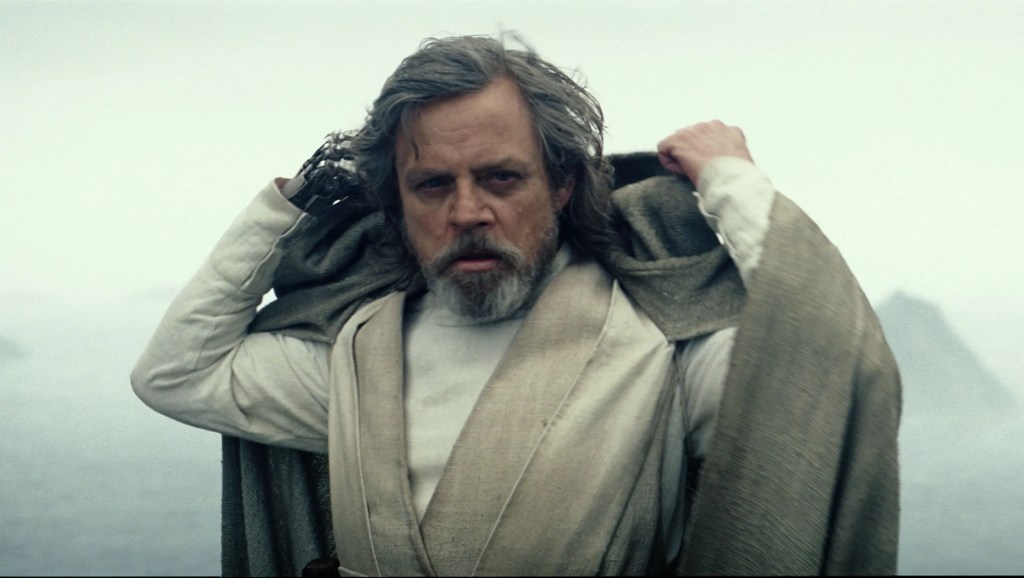
Finally, we come to Luke Skywalker. For many fans, Luke’s disdainful, over-the-shoulder lightsaber toss was the most incomprehensible Jedi act since Anakin’s sand monologue. With that provocative image, Rian Johnson challenged audiences to reexamine their beloved childhood hero with fresh eyes, checking any assumptions about who he must have become at the door. Personally, I found this challenge invigorating. For all their charm, the characters of Han Solo and Princess Leia in The Force Awakens were essentially exercises in nostalgia – carbon copies of their past incarnations in Return of the Jedi, albeit with more wrinkles and arthritis. In sharp contrast, Rian Johnson gave Mark Hamill a fully-fleshed character to inhabit, investing that character with new fears, new questions, and new obstacles to overcome. I must confess that grumpy Luke is my favorite Luke. I happen to think it’s Mark Hamill’s best performance. Sure, seeing that same old starry-eyed, swashbuckling, morally stalwart Luke that we all know and love would have made us feel nice. But wouldn’t we rather meet a Luke who still has depths within him yet to be explored – who, after all these years, might still be capable of surprising us?
The most common criticism leveled at The Last Jedi’s Luke is that his behavior is out of character. However, this criticism overlooks an important fact of human nature: People often change in surprising and substantial ways, especially after unexpected tragedies (Have we forgotten about Anakin’s descent into hatred after the death of his mother, or about Han Solo’s return to smuggling after his divorce?). The Last Jedi answers a question posed by The Force Awakens: Why would this leader of the Rebellion abandon his friends and family and retreat to the distant reaches of the galaxy? Like Yoda’s hermitage on Dagobah, Luke’s isolation was prompted by a painful failure. After spearheading the defeat of the Empire, Luke failed to see the darkness brewing within his young padawan until it was too late, just as Yoda and his Jedi compatriots failed to see the Sith lord gathering power right under their noses. But Luke’s grief ran deeper than Yoda’s. Not only did his failure as a teacher stoke the fires of Kylo Ren’s rage, dividing Han and Leia from their son, but it also resulted in the slaughter of Luke’s students and the rise of the First Order, resurrecting the very evils he had fought so long and so hard to destroy. All of his life’s work seemed to have amounted to nothing. If ever there was a breeding ground for cynicism, this was it.
This is why Luke and Rey needed to cross paths. Rey’s youthful optimism and faith in Kylo’s goodness rekindled something deep inside Luke – the memory of a headstrong young Jedi who never gave up hope that brokenness could be redeemed. This is also why Yoda needed to be the one to comfort and challenge Luke after Rey’s departure. He alone understood Luke’s burden – the struggle of rebuilding from the ashes of catastrophic failure. At the beginning of The Last Jedi, Luke dismissed Rey’s plea for help with weary annoyance: “You don’t need Luke Skywalker. You think what? I’m gonna walk out with a laser sword and face down the whole First Order?” Yet, at the climax of the film, this is exactly what he does. Luke’s showdown with Kylo Ren on Crait is both a masterwork of suspense and a perfect summation of his character. He’s not interesting in taking Kylo’s life, but rather in saving the Rebellion. Long, long ago in a galaxy far, far away, Luke won our hearts by triumphing over evil with self-giving love, which is the truest expression of the Force. On Crait, Luke lays down his life for those he loves (including Kylo Ren), conquers through peace and self-control, and in so doing achieves a union with the Force hitherto unimagined. There could be no better homage to Luke Skywalker than the film’s closing shot, in which a group of slave children tells the tale of Luke’s last stand, which has already spread across the galaxy.
Setting Up the Sequel
Many people believe that J.J. Abrams’ The Force Awakens was a solid beginning to the sequel trilogy. Episode seven reminded audiences of what they loved about Star Wars while also introducing them to exciting new characters. By contrast, many of these same people see The Last Jedi as the proverbial wrecking ball of the Star Wars universe – a destructive force with all the tact and taste of a wampa. Did Rian Johnson hamstring the sequel trilogy’s shot at greatness? Or did he set up the series finale for success?
I enjoyed every minute of The Force Awakens when it opened in 2015, and I still think it’s loads of fun. However, I recognize that its story is profoundly unoriginal. The film is a pure nostalgia trip that recycles numerous elements of past Star Wars movies: an orphaned protagonist on a desert planet who possesses unusual flying skills and untapped Force abilities; Rebel plans stashed in a lost droid; a trio of young heroes; a masked, black-clad villain in service to a prune-faced Sith master who pulls the strings; an army of stormtroopers and Nazi-esque officers; a bigger and better Death Star (the third of its kind); a cantina sequence with a motley crew of aliens; the handoff of a legendary lightsaber; a shocking parental reveal; a father-son confrontation on a bridge; a space battle finale accompanied by a climactic lightsaber duel; the protagonist flying off to a remote planet to find a reclusive, powerful Jedi teacher; Han and Leia and Chewie and C-3PO and R2-D2 and the Millennium Falcon. Besides the welcome diversity of its cast, the film contributed little if anything to the Star Wars saga that we hadn’t already seen before. It was as safe, predictable, and bland as blue milk on Tatooine.
The Last Jedi is not without its missteps. The physics of Holdo’s lightspeed kamikaze trick may not withstand scrutiny. The porgs on Ahch-To are a little too cute and cuddly for their own good, less fit for a harsh island climate than for the shelves of Toys R Us (That said, I would gladly own one myself). Finn and Rose’s fortuitous discovery of a backup code-breaker on Canto Bight strains credibility. And Leia’s Force resurrection scene is downright befuddling. Still, despite its flaws, the film raised all kinds of fascinating questions for the series finale to explore: How will Finn and Poe implement their hard-won wisdom as leaders of the Rebellion? How will the bond between our three protagonists grow and change now that they’ve each experienced failure? How will Rose fit within that dynamic? How will Rey move forward with the knowledge that she is nobody special, and how will this impact our understanding of the Force? How will Kylo Ren develop as the new Supreme Leader? Leaving The Last Jedi, I felt like the series could go almost anywhere. The sky was the limit. And that was a very good thing.
An aside about Kylo Ren: In Return of the Jedi, Darth Vader defeated Emperor Palpatine and redeemed himself by doing so. In The Last Jedi, Kylo Ren followed suit by killing Snoke; yet, contrary to what we might have expected, that act pushed him further into the clutches of the dark side. While the sight of Snoke’s severed corpse tumbling to the floor may have prompted droves of Star Wars aficionados to spit out their popcorn, that twist was exactly what the franchise needed to stay alive. Protests about Snoke’s unexplained backstory fail to persuade; Palpatine himself didn’t need a backstory until the prequel trilogy. And did we really want a rehashing of Return of the Jedi in which, at the climactic moment of the finale, our hero must once again confront that mysterious old geezer who wants to turn them to the dark side, all in hope of redeeming that evil mastermind’s sympathetic padawan? I know I didn’t. That story had already been told. I wanted to see how young Kylo would carry the mantle of ultimate power. Would he steel his resolve to stay on top, glimpse his need for salvation, or spiral into madness? Luke had managed to redeem the Emperor’s crony. But could Rey possibly redeem the new “Emperor” himself?
Sadly, The Rise of Skywalker failed to dunk these alley-oops. Frankly, it didn’t even try. Caving to the complaints of outraged fans, Disney summoned the Force ghost of J.J. Abrams, who retconned Rian Johnson’s narrative at every turn and reactivated The Force Awakens’ strongest weapon: nostalgia. There were more cameos: Lando Calrissian and an inexplicably resurrected Palpatine. There was another mask for Kylo Ren. There was another lightsaber standoff in Palpatine’s throne room and even another showdown with Palpatine himself on Exegol. There was another dramatic parental reveal (“Wait a sec, Palpatine is a grandpa? Ick.”). There was Luke’s old X-wing and a LOT more Force lightning. There was more Han, more Leia, more Chewie, more C-3PO, more R2-D2, and (you guessed it) more Millennium Falcon. Abrams vindicated angry fans by giving them everything they thought they wanted, except for one thing: a new story. Many believe that Rian Johnson killed Star Wars. That couldn’t be further from the truth. The Last Jedi was the one true spark of energy, originality, and hope in an otherwise lifeless, derivative enterprise.
Perhaps the most surprising thing about The Last Jedi is that it succeeded in surprising us at all. Sandwiched in the middle of a multibillion-dollar trilogy pored over by business executives and countless fans alike, the movie risked collapsing under a freight load of expectations. Yet, against the odds, it inspired more reflection, questioning, and debate than any Star Wars film since The Empire Strikes Back. The credit for that belongs primarily to Rian Johnson, who loved Star Wars enough to propel its story into uncharted territory, moving old characters forward and exploring what the series might say to a new generation of fans. Film critics recognized the genius of Johnson’s accomplishment, as did many die-hard Star Wars fans (including myself). If this essay accomplishes anything, I hope that it will inspire readers who may have discounted Rian Johnson’s work to ponder what might have been, had The Last Jedi‘s narrative choices been built upon rather than discarded.
Conclusion
One of the most frequent criticisms of The Last Jedi that I’ve heard is that all of its plot threads end in failure. Leaving aside the fact that this same objection was raised against The Empire Strikes Back, I would argue that failure is actually the beating heart of Rian Johnson’s story. Specifically, The Last Jedi asks audiences a question which is at once timely and timeless: How do we keep fighting for truth and justice when the heroes who inspired us to do so let us down, when our best efforts don’t produce any substantive results, and when the systems we’ve built to protect ourselves from corruption are afflicted with that very same disease?
“Let the past die. Kill it if you have to.” For some naysayers, these words are a perfect summary of Rian Johnson’s attitude toward Star Wars: Burn it all down to make way for something new. Yet, these words are spoken by The Last Jedi‘s antagonist. Embittered by the failures of his mentor, Kylo Ren wants to crush everything and everyone that has ever failed him, including his parents, his former teacher, the Jedi Order, and the Sith master who would use him as a pawn. Similarly, Luke’s disillusionment with the past prompts him to tell Rey, “It’s time for the Jedi to end.” However, unlike Kylo’s arc, Luke’s story doesn’t terminate hateful resignation. Like Finn, who faces up to the flaws of the Rebellion and still finds reason to rebel, and like Rey, who refuses in spite of crushing disappointment to take Kylo’s hand, Luke realizes that the Force is bigger than the imperfect agents who represent it. For all the Jedi Order’s oversights, arrogance, and mistakes, their cause is still worth fighting for. Ultimately, the grizzled master changes his tune when confronting Kylo Ren: “The Rebellion is reborn today. The war is just beginning. And I will not be the last Jedi.” In the end, Luke glimpses a reality described by J.R.R. Tolkien in The Lord of the Rings: the truth that the shadows within and without us are “only a small and passing thing,” and that there is “light and high beauty” forever beyond their reach.
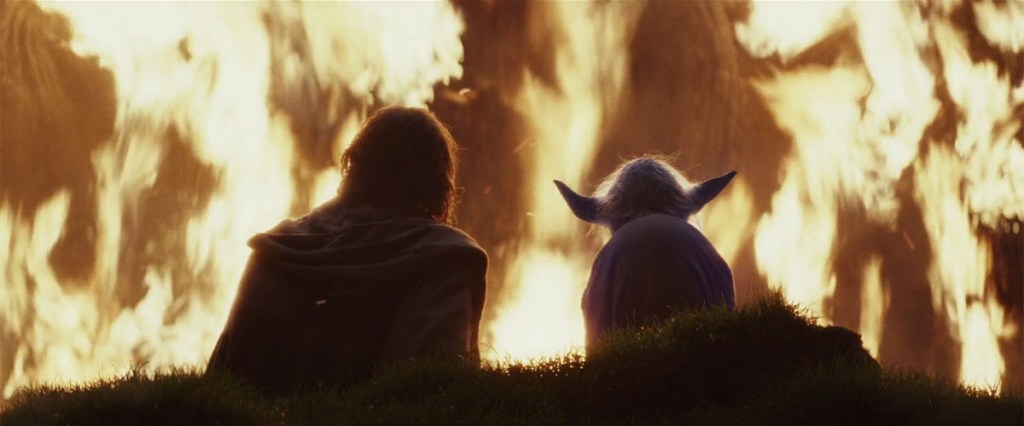
These themes are most poignantly expressed in what has become my favorite scene in the Star Wars saga. Watching as his tree hideaway goes up in flames, Luke laments his inability to train Rey and bids farewell to what he believes are the last embers of the Jedi Order. Sitting beside him, the ghost of Yoda patiently yet firmly rebukes his defeatism:
Timeit is for you to look past a pile of old books, hmm?… Page-turners, they were not. Yes, yes, yes. Wisdom they held, but that library contained nothing that the girl Rey does not already possess… Lost Ben Solo you did. Lose Rey we must not… Heeded my words not, did you? Pass on what you have learned. Strength. Mastery. But weakness, folly, failure also. Yes, failure most of all. The greatest teacher, failure is. Luke, we are what they grow beyond. That is the true burden of all masters.
Yoda’s speech has something to say to Star Wars fans of every age. For youngsters who first encountered the Force alongside Rey, Finn, and Poe, it serves as a reminder that our elders have wisdom to pass on. This wisdom includes not only their words but also their lived experiences – their strength, their mastery, and their failures. The sacred Jedi texts may not be “page-turners,” but a careful observer will notice that Rey takes them with her to Crait, suggesting that they may have something to teach her after all (Yoda betrays his awareness of Rey’s theft with his tongue-in-cheek claim that the library doesn’t contain anything which the girl doesn’t already have in her possession). And for old farts (like me) who grew up alongside Luke, Leia, and Han, Yoda’s words serve as a reminder that life is an invitation to constant rediscovery. Wisdom isn’t found in blindly venerating the old or in destroying the old to make way for the new. Both of these paths allow injustice to thrive. Rather, wisdom requires openness – a willingness to reexamine our cherished beliefs, traditions, and ways of life; to honestly confront their shortcomings (and our own); to fight for what’s worth keeping; and to set fire to some things in order to make room for new discoveries. This process is tricky, and we’ll inevitably make mistakes along the way. But if goodness, truth, and beauty are as enduring as Yoda believes they are, then even those mistakes can become signposts to redemption – lessons to pass on to those who follow.
For Rian Johnson, Yoda’s speech wasn’t just talk. The director reinforced the Jedi master’s words with his own filmmaking, bravely crafting a Star Wars sequel that returned to the franchise’s roots while simultaneously launching the saga to unexplored heights. The time has come for us to celebrate his work as the amazing achievement that it is.
In the opening scenes of Top Gun: Maverick, we’re invited to eavesdrop on an elite group of fighter pilots, each of whom is pondering this question. It’s no mere intellectual curiosity. For these young aviators, the answer will spell the difference between life and death. They’ve been given a seemingly impossible mission: destroy an unsanctioned nuclear facility, which is nestled in an impassible canyon fortress and guarded by both surface-to-air missiles and fifth-generation fighter planes. The challenge is exacerbated by tensions within the group. Rival pilots vie for leadership: one a braggart who neglects his wingmen, the other a powder-keg whose temper clouds his judgement. To top it all off, the officer responsible to train these pilots is none other than Captain Pete “Maverick” Mitchell, a man whose latest unauthorized stunt turned a hypersonic jet into a heap of scrap metal. Maverick’s unorthodox teaching style evokes puzzlement in his students and impatience in his superiors. As the fault lines within their party widen, the pilots (and we who witness their story), begin to wonder what, if anything, can keep their fragile hopes aloft.
A few confessions: I’ve never seen the original Top Gun movie. I’m not a fan of Tom Cruise. I have little interest in military matters, and I don’t gravitate toward action movies or big-budget blockbusters. As such, I’m not exactly the target audience for director Joseph Kosinski’s sequel to the iconic 1986 film. Yet, I must also confess that Top Gun: Maverick is my favorite film of the year so far, by a long shot. There’s a lot to praise about it, including its meticulous attention to detail, its magnificent cinematography, its high-flying soundtrack, and its visceral stunt sequences. However, the aspect of the film that ultimately won my admiration was its thoughtful exploration of leadership. For those with eyes to see and ears to hear, Top Gun: Maverick offers a profound glimpse into the heart of history’s most perplexing, polarizing, and paradoxical leader: Jesus Christ.
If you’re anything like me, the last few years have done little to bolster your confidence in Christian leadership. The headlines are as relentless and unavoidable as guided missiles: pastors embezzling funds, celebrities abusing their followers, denominations hiding elaborate scandals, churches bickering over current events, and politicians wielding faith as a tool for personal gain. Again and again, we see the people whose lives and wisdom we’ve trusted bailing out, the machines they’ve piloted rupturing and combusting overhead. The hypocrisy that we witness breeds deep cynicism. For those who have been used or bruised by faith leaders, the notion of trusting Christians or the Christian message can feel every bit as deadly as the mission faced by Top Gun:Maverick’s pilots. Those called by God to positions of church leadership also face a difficult dilemma. In an increasingly jaded and post-Christian society, how can they win the trust of those they seek to help without falling prey to the same pitfalls and temptations that have ruined so many others? Is there anyone we can trust, including ourselves? And if Christian leaders so routinely let us down, what about the God those leaders represent?
In the pages of the gospels, we find Jesus’ disciples grappling with similar questions. They have left everything to follow Jesus, staking their fortunes and reputations on his claim to be Israel’s messiah. The early days were great, jam-packed with miraculous healings, stunning exorcisms, and tantalizing sermons about the kingdom of God. However, the mission keeps becoming more complicated. The disciples’ rabbi looks nothing like the military conqueror they’ve been taught to await. Not only does he keep prophesying his own crucifixion at the hands of the Romans, but the future he predicts for his followers looks pretty bleak as well, chock-full of rejection and martyrdom. As if these teachings weren’t confusing enough, Jesus warns his students that many false teachers will attempt to lead them astray, promising profitable and palatable alternatives to the difficult way of Christ. The disciples are disturbed by Jesus’ strategy. Peter goes so far as to declare it foolhardy. How could the abundant life of God’s kingdom ever come from suffering and death?
On the flipside, Jesus struggles to prepare his pupils for the firestorm that is coming. Like Maverick’s students (who, interestingly, are also a company of twelve), the disciples veer back and forth between lessons on cooperation, failed attempts to apply those teachings, and arguments about who is worthy to lead their group. Ultimately, each and every one of them will abandon Jesus in his hour of greatest need. The disciple hand-picked by Jesus as the foundation stone of the fledgling church will eventually crack under threat of persecution, disavowing his Lord three times. We start to wonder what Jesus sees in these men. How could such a petty and factious crew ever be trusted to launch God’s world-saving project?
It is here, into the very heart of our cynicism about Christ and the cowards, hotheads, and turncoats who represent him, that a scene from Top Gun: Maverick comes thundering with all the force of a fighter jet. To all appearances, Maverick’s quest has failed. Not only has he been stripped of his position, but his replacement is woefully out of touch with the stringent requirements of the air strike, and Maverick’s pupils know it. As they sit through their final briefing, we see the despair settling in their eyes.
Then, out of nowhere, a blip appears on the radar screen – an unauthorized fighter plane, hurtling at breakneck speed toward the training course that has stymied the pilots throughout the film. As realization of who is steering the rogue craft sets in, the pilots watch the screen unblinkingly, willing their mentor to do what none of them dreamed was possible. First weaving through a narrow canyon at an unfathomably low altitude, then climbing over a cliff against a wall of g-forces, then jettisoning missiles onto a target far below, Maverick shows his students once and for all that their task is achievable. His example gives them hope. Not only will Maverick be invited back to base, but he will also assume command of the mission, flying before his students into the final conflict.
What does this scene have to say to those embittered and burnt out by Christian leadership gone wrong? For starters, it points us back to the paradigm. In Maverick’s unauthorized flight, we see the hallmark of truly Christ-like authority: self-emptying service to the beloved. Jesus redefined leadership forever when he said to his disciples, “Whoever wants to become great among you must be your servant, and whoever wants to be first among you must be your slave – just as the Son of Man did not come to be served, but to serve, and to give his life as a ransom for many” (Matthew 20:26-28). Maverick’s efforts to prepare his students well have already cost him his position. By returning to base against orders, he risks further disciplinary action. Yet, the success of his pupils is worth the sacrifice. Maverick’s humble, self-sacrificial love stands in stark contrast to Christian celebrity culture, which all too often holds out power, wealth, and acclaim as incentives to its heroes, rather than a cross.
Maverick understands the challenges faced by his students intimately, from within the cockpit. As a result, he identifies himself with them on a profound level. His actions distinguish him from his superiors, who strategize from the safety of their offices and thus are ignorant of the true demands of the mission. Unlike them, Maverick wants far more than his students’ success. He wants their survival. They aren’t his pawns; they’re his friends. He has joined them in the air, and now his fate is inseparably bound to theirs. This radical identification with those who follow behind is another cornerstone of Christ-like leadership. In a recent chapel message at Wheaton College, poet, singer-songwriter, and priest Malcolm Guite expounded a puzzling verse in the Book of Revelation, which depicts Jesus as a lamb seated on a heavenly throne: “The lamb in the center of the throne will be their shepherd” (Revelation 7:17). The lamb will be their shepherd? Reflecting on this verse, Guite contrasts Christ’s incarnational model of authority with the distant, disconnected leadership frequently displayed in American churches:
We have the only Shepherd who knows what it’s like to be a lamb. We have a Leader who has been led. We have one who rules who has served. I’ll tell you what’s gone wrong with a lot of shepherding in the churches, a lot of shepherding where it turns out to be wolves in sheep’s clothing… they have forgotten what it’s like to be a lamb. They’re not interested in the lambs anymore: “Hey, I’m a shepherd!”… But ‘the lamb on the throne will be their shepherd.’ That’s what makes the good shepherd the good shepherd.
We may recognize the beauty and authenticity of Christ’s mode of leadership. But what should we do when it’s twisted into a weapon? How should we respond when those who claimed to be lambs reveal their claws, turning and ravaging the flock? Top Gun: Maverick reminds us of the truth that Jesus’ disciples failed to grasp: as counterintuitive as it may seem, the way of the cross leads to exaltation and glory. Maverick’s courageous act of love wins him his rightful place as head of the flight team. Similarly, in Paul’s letter to the Philippians, we learn that Jesus’ self-emptying service and sacrificial death have triumphed over earthly power, exalting him to the place of highest authority (Philippians 2:5-9). Knowing the end of the story enables us to see all human power, especially oppressive power, as inherently partial and provisional. A day of reckoning is coming when all knees will bow to Jesus’ lordship (Philippians 2:10-11). Those who were victimized by the powerful will finally receive justice. Those who were persecuted in service to Christ, countering hatred and tyranny with self-giving love, will finally be vindicated. Furthermore, those who were entrusted with power will be forced to give an account of how they used it. Yes, our leader is the lamb slain for the sins of the world (Revelation 13:8). His grace is deep enough to pardon any sin and purify any sinner. But that same lamb now occupies the throne. He has given us orders, and when our mission is over, it’s him we will report to.
These promises offer hope of future consolation. But what about the here and now? In a world where Christian leaders so routinely crash and burn, leaving trails of devastation in their wake, how can those of us who strive to follow behind or to lead others well ever hope to find out way? The answer, echoed so beautifully in Maverick’s solo completion of the training course, is at once simple and profound: Our Captain completed the mission before we ever began it. We follow a Savior who not only gives us orders and trains us to accomplish them, but who also goes before us each step of the way, executing those orders perfectly on our behalf. As the author of Hebrews put it, Christ is both “the author and perfecter of our faith” (Hebrews 12:2) – the one who plans our operation and the one who carries it out. Like Maverick’s pilots, we are indispensable to our Savior’s plan. Yet, it is his power and presence, not our ability, which guarantees the success of our mission. He knows what’s required, and he has bound himself to us, promising to bring us home alive. Ultimately, we’re along for the ride.
Our Messiah doesn’t coerce or even demand our trust. He earns it. He walks in our shoes, bears our burdens, and dies the death we deserve. Christ alone can handle the full weight of our trust, because he is the only person to shoulder the full weight of our humanity without buckling. Dorothy Sayers said it well in her Letters to a Diminished Church:
For whatever reason God chose to make man as he is – limited and suffering and subject to sickness and death – He had the honesty and courage to take His own medicine. Whatever game He is playing at with His creation, He has kept His own rules and played fair. He can exact nothing from man that He has not exacted from Himself.
Christ isn’t just the lamb on the throne. He’s also the lamb in the cockpit – the pilot who guides us on our way. His obedient flight shows us what leadership was meant to be, but it does much more than that. By the indwelling power of the Holy Spirit, it also becomes our flight – the wind that lifts our wings and keeps us aloft, enabling us to navigate each treacherous twist, turn, and nosedive of our mission. Live Maverick, Jesus pioneers the salvation of those he loves. As we follow in his wake, we will find ourselves agreeing with the words of Andrew Peterson’s song “Pillar of Fire,”
Pillar of Fire, you blaze that trail You’ve been there every step along that road From a barn in Bethlehem To Hell and back again You blaze the trail that leads me home
Now, if you’ll excuse me, I’m going to watch Tom Cruise fly a fighter plane again.
Welcome! It’s that time of year again – the time when we get to look back on the past year and reflect on which parts of it were most meaningful to us. One of my favorite ways to do this is by listing the five music albums, five books, and five movies that were most impactful and inspiring to me during the past year. I hope this list will both encourage you to check out some great works of art and challenge you to create your own favorites lists. So, without further ado, here we go!
Music Albums Total listened to: 55
Honorable Mention: Modern Vampires of the City by Vampire Weekend, Divinely Uninspired to a Hellish Extent by Lewis Capaldi, The Ghost of Tom Joad by Bruce Springsteen, Songs in the Key of Life by Stevie Wonder
5.The Wild Swan by Foy Vance – Which is more noteworthy: this album (a soulful, groovy, and wonderfully oddball blend of Irish folk and American roots music) or Foy Vance’s mustache? You be the judge.
4. The Mantis & the Moon by Son of Laughter – Not only is Chris Slaten’s voice easy on the ears, but the stories he tells strike a perfect balance between skillful poetry and heart-tugging insight. Producer Ben Shive’s orchestrations are a perfect complement to Slaten’s songs, creating a lush landscape of sound that reveals more intricacy with every listen.
3. The Land of Canaanby J Lind – When was the last time you heard an album of music that made you uncomfortable in a good way? In the follow-up to his brilliant album For What It’s Worth (which was my favorite album of 2020), J Lind leads listeners into the wilderness, exploring universal experiences of doubt, disillusionment, and despair through the eyes of Old Testament characters. Dodging simplistic answers, Lind challenges us to face up to feelings that we all too easily refuse to acknowledge. Along the way, he invites us to glimpse Christ with us on our journeys, sharing our full humanity in all its messiness, struggle, and glory.
2. Pet Sounds by The Beach Boys – If, like I once did, you hear the name “Beach Boys” and think of cheesy ballads about cars, girls, and surfing, then you need to check out Pet Sounds. I gave it a listen after learning that many consider it to be the greatest album of music ever made, and I’ve been re-listening ever since. Brian Wilson is one of the great musical geniuses of our time, and Pet Sounds was his first attempt to share his heart with the world through song. The story of the album’s creation is a fascinating account of mental illness, musical experimentation, and artistic collaboration. If you’re interested in digging into it, I’d recommend checking out the 2014 biopic Love & Mercy or the 2021 documentary Brian Wilson: Long Promised Road.
1. Father of the Bride by Vampire Weekend – My favorite musical discovery of the past year, Vampire Weekend’s highly anticipated and Grammy-winning fourth album is the band’s best work to date. Where Modern Vampires of the City was grim in it’s honest confrontation with mortality and spiritual angst, Father of the Bride feels like a rebirth – a coming-to-terms with the mystery, struggle, and resilient beauty of ordinary life. Weaving lyrics about personal heartache with reflections on global issues, imbuing these lyrics with Biblical imagery (listen for all the references to gardens, weddings, and new creation), and setting them to jubilant, danceable rhythms, Vampire Weekend creates an unforgettable listening experience that awakens our longing to put broken things to rights.
Books Total read: 9
Honorable Mention: Becoming Mrs. Lewis by Patti Callahan
5. Dune by Frank Herbert – Like many others this year, I read the book in preparation for the movie (which turned out to be exhilarating, superbly-crafted sci-fi cinema). The book has its problems – underdeveloped and unrelatable characters, a hurried second half, and abstruse prose that all too often keeps the reader at arm’s length. However, it’s still a suspenseful, immersive, and visionary achievement in fantasy worldbuilding.
4. Surprised by Joy by C.S. Lewis – While I couldn’t follow all the British colloquialisms and literary allusions that C.S. Lewis packs his autobiography with, I still found it a witty and fascinating account of his conversion from atheism to Christianity. Lewis’s descriptions of the “inconsolable longing” that led him to God have had a deep influence on my own faith.
3. Through a Screen Darkly by Jeffrey Overstreet – Jeffrey Overstreet is one of my literary heroes. I’m a huge fan of his thoughtful movie reviews (which you can check out at his blog: Looking Closer with Jeffrey Overstreet), and it was delightful to read a book about movies and moviemaking that both celebrates Christian faith and challenges Christians to dig deeper into the artistic quality and craft of movies (which is frequently neglected or ignored by mainstream Christian film reviews). If you’re a movie buff like me, then you’ll love this book!
2. Gentle and Lowly by Dane Ortlund – Outside of the Bible, this is the best theological book that I’ve ever read. Drawing inspiration from Scripture and Puritan writings, Ortlund handles the truth of God’s radical love for sinners and sufferers like a multifaceted gem, exploring it with great care from multiple angles. Just when you think you’ve got a handle on the idea of grace, Ortlund shines a flashlight on the cobwebby corners of your soul, exposing the doubts and defenses that taint your perspective on Christ’s heart and inviting you to reexamine that heart with fresh eyes.
1. Born to Run by Bruce Springsteen – I admired Bruce Springsteen’s music after discovering his landmark album Born to Run, but this book (which shares the same title) is what made me a die-hard fan. One of America’s greatest troubadours, the man millions know as “The Boss” brings the same lyricism, candor, and ripped-from-the-guts enthusiasm to his autobiography that he does to his songwriting. I burned through this 528-page tome and found it a joy from start to finish. If you’re interested in learning more about Springsteen, or if you’ve never checked him out, this book is a great place to start.
Movies& TV Shows Total seen: 39
Honorable Mention:Springsteen on Broadway, Infinity Chamber, A Man for All Seasons
5. News of the World – This tale of an orphaned girl raised by Native Americans and adopted by a grizzled Civil War veteran could have been so easily cheapened and sentimentalized. Thank goodness, it is filmed with remarkable understatement, patience, and attentiveness to detail. Tom Hanks is great as usual, but it is Paul Greengrass’s prowess as a director that pushes this film into my favorites of the year.
4. Trollhunters: Tales of Arcadia – In the same category as other recent animated series like Avatar: The Last Airbender, Gravity Falls, or Over the Garden Wall, this Netflix original series by director Guillermo del Toro is a wildly enjoyable fantasy ride punctuated here and there by moments of greatness. I appreciated the time given for characters and plot threads to develop, which enabled the storyline to suck me in and keep me invested.
3. Under African Skies – Paul Simon’s legendary Graceland album is still one of the most awe-inspiring things I’ve ever listened to, and this documentary about its controversial production and enduring legacy is no less fascinating. Tracing Simon’s decision to defy the United Nations and record with black musicians in Apartheid-era South Africa, Under African Skies is a stirring testament to the cross-cultural, boundary-breaking power of song.
2. Nomadland – Right up until December, I was confident that this movie about the wandering folk of contemporary America would top my year-end favorites list. Director Chloe Zhao is a student of Terrence Malick, and it shows in Nomadland’s vivid, meditative cinematography. She’s also a fantastic storyteller in her own right, and the directing awards she received (along with those won by lead actress Frances McDormand) were well-deserved. Straddling the line between particular and universal, Nomadland is a profound examination of humanity’s restless search for belonging. You can read a more in-depth review in my blog post: “Joy on the Journey: Chasing Sehnsucht in Chloe Zhao’s Nomadland.”
1. Calvary – Is John Michael McDonagh’s dark comedy about an Irish Catholic priest threatened with murder a Christmas movie? I’d argue so, and I’ll make that case in an upcoming blog post. In the meantime, I’ll say that Calvary was the most moving and surprising artistic discovery that I made during the past year. Presented in the style of a whodunnit detective story and bolstered by brilliant acting and scriptwriting, Calvary tackles exceedingly difficult subject matter with an astonishing amount of grace. The last 15 minutes of the film are immensely powerful. Be forewarned, the film is gritty and delves into painful issues like sexual abuse and suicide. However, it’s an honest, thought-provoking, and ultimately redemptive tale.
“Home, is it just a word? Or is it something you carry within you?”
In the opening minutes of Chloe Zhao’s film Nomadland, we see these words inked on the arm of an Amazon employee named Angela, who is showing off tattoos to her new friend, Fern. It’s a quick scene that may not seem particularly noteworthy. However, nothing in this movie is extraneous or insignificant. The words of this tattoo present us with both a portent of what’s to come and the central tension of the entire film. Fern (played by Frances McDormand) has recently endured back-to-back tragedies: the death of her husband and the closing of her longtime job at a gypsum plant in Empire, Nevada. Very soon, she will swap her belongings for a van and adopt the life of a nomad, crisscrossing the western United States in search of work and roadside community. As she meets other nomads, she will face questions that are at once timely and timeless: Where in this rapidly-changing world do I belong? How do I put down roots when all that was familiar has washed away? Can home be found on the edges of the maps?
If you haven’t seen Nomadland yet, I heartily recommend it. The movie was named Best Picture at the 2021 Oscars, where McDormand and Zhao also won awards for acting and directing, respectively. I saw the film months ago, but I’m still thinking about it. Primarily, this is because it reminds me of someone who, on the surface, has little in common with the oddball wanderers of modern America: C.S. Lewis.
Shortly after seeing Nomadland, I started reading Lewis’s autobiography, Surprised by Joy. In that book, Lewis recounts his decades-long journey to faith in Christ, tracing the impact of a mysterious sensation that he calls “Joy.” Lewis compares Joy to the German word Sehnsucht, defining it as an “inconsolable longing” in the human heart for “we know not what.” What do the nomads of Zhao’s film have to do with Lewis’s Joy? I believe that Nomadland is packed with echoes of that bewildering, bittersweet desire. If we listen closely to those echoes, we can learn some profound things about both the nature of Joy and humanity’s search for that elusive destination: home.
Shaken Loose
According to C.S. Lewis, Joy is dynamic. It’s an elusive desire, which appears unexpectedly and vanishes far more quickly than we want it to. While it may be sparked by familiar things – an illustration in a book, the smell of morning mist, or a glimpse of distant hills – it always surprises and unsettles us, compelling us to find it again. This is because of both its fleeting nature and its unique intensity. Joy carries with it a sense of what Lewis calls “incalculable importance,” a transcendent spark that feels otherworldly and makes all other pursuits seem “insignificant in comparison.” Unlike other desires, we can’t manufacture or control it. As Lewis says, Joy “is never a possession, always a desire for something longer ago or further away or still ‘about to be.’” Joy is on the move, and it gets us moving, too. Once we’ve encountered it, we are never quite the same.
The characters in Nomadland (many of them played by real-life nomads) have varied reasons for leaving society behind. Like Fern, some are bereaved and unemployed. Others are battling depression, chronic illnesses, or symptoms of PTSD. Still others are pursuing adventure and a deeper, richer way of life. Despite their differences, all of them have been shaken loose from what was familiar, launched into uncharted territory by experiences that changed them, rendering them unable or unwilling to thrive in traditional settings. Chloe Zhao highlights their uniqueness with close-up camera shots that dwell on weathered skin, lines etched in faces, and the glow of restless eyes. At the same time, she invites us to empathize with them by lingering on numerous scenes of everyday life, work, and play. These mundane moments are punctuated here and there with scenes of astonishing beauty: buffalo rustling through a sea of tall grass, hundreds of birds wheeling in the air beside a cave wall, sunset blazing over the Badlands, and a desert sky splashed with starlight. Like our own stories, the lives of Zhao’s characters are multifaceted – slow and meandering and chock-full of ordinariness, yet also riven by glory.
Like Fern and her companions, those of us who have experienced what Lewis calls “the stab of Joy” and committed ourselves to pursuing its source are square pegs in round holes – what the Bible calls “sojourners and exiles” (1 Peter 2:11). Having tasted a desire that no earthly comfort can assuage, we are compelled into motion. Our starting points may be different, but our quest is the same. We are drawn inexorably onward, lured by a high and holy wind that fills us with longing for something else, something more, and something beyond. We have no hope of controlling that wind, but if we allow it to carry us, we may find ourselves swept to places and people we may never have expected to encounter. Like Fern, we may find ourselves shedding old goals, old entanglements, and old coping mechanisms in our efforts to track down that peculiar spark, yet also discovering new joys along the way. We may traverse the highways and byways of the world, but we are no longer “of the world” (John 17:6). We have been displaced.
On the Outside Looking In
In Surprised by Joy, C.S. Lewis describes Joy as an ache – a desire that, while pleasurable, is tinged with bitterness. This melancholy strain is not only a consequence of Joy’s absence, but is also an intrinsic part of Joy itself. Reflecting on his own experience of Sehnsucht, Lewis identifies the feeling as something “almost like heartbreak.” Elsewhere, he calls it “a single, unendurable sense of desire and loss.” Joy as Lewis defines it is interwoven with grief.
While Chloe Zhao’s film explores the appeals of life on the road, it refuses to romanticize the experiences of its subjects. Fern and her friends are vulnerable to many hardships, from difficulties finding stable work to the vicissitudes of the natural environment. Cinematographer Joshua James Richards underscores these struggles with camera shots that expose the vast, silent barrenness of the Badlands and the Arizona Desert. In such places, a broken van becomes a terrifying prospect. Fern’s relationships are laced with the sorrow of inevitable goodbyes. During one raw scene, her sister tells her, “I would have loved having you around all these years. You left a big hole by leaving.” Throughout the film, we see Fern repeatedly gravitating toward the firm beams and warm embers of family. Yet again and again, that old itch that Joni Mitchell dubbed “the urge for going” sends her retreating back into the wilderness. Frances McDormand’s performance here is masterful, betraying the depths of Fern’s yearning and grief in quiet, subtle expressions and the fires of a relentlessly searching gaze.
In the pages of Scripture, we learn that suffering is part and parcel of our journeys toward Joy. 1 Chronicles 29:15 connects life as a sojourner with the ache of continual transience: “Our days on the earth are like a shadow, and there is no abiding.” In his letter to the Jewish exiles, the Apostle Peter describes the Christian sojourn as a battleground, which is fraught with temptation and peril: “Beloved, I urge you as sojourners and exiles to abstain from the passions of the flesh, which wage war against your soul” (1 Peter 2:11). Like the characters of Zhao’s film, those of us who chase Joy into the wild must eventually confront the fact that our best efforts to achieve happiness are imperfect. Beauty crumbles away, the fires of longing fade with time, and our thirst for lasting fulfillment collides with the reality that this world isn’t as it should be. The bitter aftertaste of Joy reminds us that despite its glories, our road is a hard one, and we are far more distant than we thought from the source of our longing. Like Fern, who thumps against the glowing windows of home with the persistence of a wayward moth, we find ourselves on the outside looking in.
Called Home
Musing on the strange character of Joy, C.S. Lewis describes the desire as something akin to memory: “All Joy reminds.” On the final page of his autobiography, he elaborates this idea by comparing Joy to a signpost. Unlike other desires, Joy doesn’t merely lead us to the physical object or experience that inspired it. Instead, it points beyond itself to something that is farther off and more difficult to name. What does Joy remind us of, and where is it pointing us? Lewis answers these questions in his book Mere Christianity: “If I find in myself desires which nothing in this world can satisfy, the only logical explanation is that I was made for another world.”
There is a reason why our encounters with Sehnsucht feel otherworldly. That ache is a memory of another time and place – an echo of the Eden that was lost when humanity disavowed its creator and a seismic evil sundered the cosmos, fracturing everything in its wake. It is also a signpost pointing us to a time and place yet to come – to Eden regained, healed of all the sin and sickness and sorrow that ravaged it. The Joy that Lewis writes about is a both a remnant of paradise lost and an invitation from the God who is making all things new again. In the last analysis, it’s a call to come home.
Near the beginning of Nomadland, a girl asks Fern if she is homeless. “No, I’m not homeless,” Fern replies. “I’m just houseless. Not the same thing, right?” Throughout the film, as we watch Fern roam from place to place, we’re invited to ask ourselves that very question. Is home a physical place, or is it something that we take with us? Can those without roots ever truly be at home in this world? While a lesser film would slap simplistic answers on those questions, Zhao’s movie challenges us to linger in spaces of tension, inviting us into the physical and existential wilderness that Fern and her friends must navigate. We’re encouraged to walk a mile in their shoes – to see ourselves as fellow sojourners, set adrift between the things we’ve left behind and the future we’re longing to participate in. As we read in Hebrews 13:14, those of us who await God’s new creation “do not have an enduring city, but we are looking for the city that is to come.” Like Fern, we’re still on the road.
Yet for those with eyes to see and ears to hear, there is profound consolation to be glimpsed in Nomadland, tattooed on an Amazon worker’s arm. In the Apostle John’s depiction of the New Jerusalem, we witness the ultimate balm for our homesickness: our savior, Jesus, dwelling among the people he has redeemed by his blood. He, more than any physical space, is our truest home – the source of our Joy and the satisfaction of our longings. What comfort does this vision offer us in our wilderness wanderings today? Elsewhere in the New Testament, Christians are told that the same savior who will one day welcome us home now lives within each of us by the power of the Holy Spirit. Faced with the questions posed by Angela’s tattoo, we can honestly answer, “Yes and amen.”Yes, home is just a word; more specifically, it is a name. And yes, it is also something we carry within us – a fellow traveler, who has promised to be with us “to the very end of the age” (Matthew 28:20). Reflecting on Nomadland and its resonances to Lewis’s Joy, we might find ourselves agreeing with the words of George MacDonald: “Yea, no home at last will do, but the home of God’s heart.”
It was almost the best day of his life. Joe Gardner, a resident of New York City, had spent most of his years teaching jazz band classes for middle-schoolers. The work had its own peculiar charm. Sure, the racket cooked up by distracted brains, untrained ears, and clumsy fingers could be grating. But there were moments of magic along the way: flickers of musical progress, sessions when the students caught some of Joe’s infectious enthusiasm for jazz, and a young prodigy named Connie whose soulful trombone playing reminded Joe of the day he first fell in love with music. However, despite those perks, the work remained a chore which competed for time and energy with Joe’s true passion: playing jazz piano. Year after year, Joe’s dream of lighting up the stage seemed increasingly unattainable, dwindling into the darkness like a missed subway car. But that all changed when a smooth audition landed him a gig with Dorothea Williams, the legendary trumpet virtuoso. Before the audition, life had been mundane and monotonous – a melody that puttered along and circled back with all the predictability of a broken record. The gig with Dorothea was a key change, infusing the melody with new colors and possibilities. “I was born to play,” Joe had told his students. At long last, he was finally on the brink of doing so.
Then, on his way home from the audition, he fell into a manhole.
In a sick twist, Joe found his soul on a cosmic conveyor belt, moving with countless other souls toward the blinding light of the “Great Beyond.” Desperate to escape his fate, Joe leaped off the belt and plummeted into the void, only to find himself landing with a thud in the “Great Before.” Here, new souls were mentored and given their traits before heading to earth. Mistaken for a mentor, Joe was tasked with training a notoriously difficult soul named 22, who had zero interest in life on earth. The job presented Joe with the makings of an escape plan. He would take 22 to earth to help her find her “spark,” the missing piece of her palette. In exchange, he would get a chance to locate and rejoin his body. It was almost too good to be true: for one, a chance to witness life firsthand before committing to it, and for the other, a second chance at a life snuffed out by bad luck. However, in their undercover journey to earth, both Joe and 22 would get far more than they bargained for.
I’m a huge fan of Pixar’s latest film, Soul. While it may sound like heresy to you animated movie lovers out there, I must confess that I liked it even more than Pixar classics like Up, Inside Out, The Incredibles, Finding Nemo, and Toy Story (Now, before you hunt me down and burn me at the stake, hear me out). Sure, there are plot flaws and corny bits. Sure, the spirituality of the film is a hodgepodge of the sincere, the strange, and the schmaltzy. However, more than any other Disney or Pixar film that I’ve seen, Soul hit me in the heartstrings and swept me into its propulsive, wonderfully outlandish plot. It also did what the best art does, prompting me to pause and reevaluate my life with fresh eyes. As a follower of Jesus Christ, I was delighted to find echoes of the Gospel in the storyline. Specifically, I believe that Soul has some profound and deeply countercultural things to say about a topic that is frequently overlooked in modern storytelling: the magic (or, in this case, the music) of the mundane.
Make Me Interruptible
Despite his commitment to helping 22 find her spark, Joe Gardner’s journey to Earth is really motivated by one goal: find and rejoin his body at any cost. It’s a race against the clock, made all the more pressing by the Accountant who hunts the escaped souls in an effort to return them to the Great Before. However, as a newcomer to Earth, 22 is arrested by the strangeness of New York City – the stew of sights, smells, and sounds that flavors its hustle and bustle. Throughout the film, she stops to appreciate things that Joe hurries past in his frantic quest: seeds spinning down from the branches of trees, the aroma of fresh pizza, a busker singing on a subway platform, and the rush of air through a sidewalk grate. To Joe, these interruptions are both bewildering and irritating. To 22, they’re burning bushes: moments of astonishing beauty that demand her full attention.
Like the streets of NYC, our society is characterized by relentless momentum. Efficiency is the name of the game. Whether by TV commercials and touchless technology, freeways and fast food, or sound bites and cellphone upgrades, we’re trained to expect results that fit neatly into our accelerating timetables. The quicker and more streamlined the path to our goals, the better. We plug in earbuds to drown out distractions, use GPS to avoid detours, and fill our spare hours with activity to minimize downtime. Unlike 22, we rarely pause to notice our surroundings, because slowing down is missing out. “Adventure is out there,” we tell ourselves, and we chase after it with everything we’ve got, hurdling over anything that threatens to waste our valuable time. Like Joe Gardner, our eyes are on the clock.
During the summer and fall of 2017, I had the opportunity to live, work, and study with residents of a slum in a Southeast Asian megacity. While there, I was frequently surprised by my neighbors’ attitudes toward privacy. I’m an extrovert. I draw energy from being with people and get stir-crazy if I’m alone for too long. Nevertheless, I found myself getting annoyed when kids pounded on my door and poked their heads in during homework sessions, when neighbors sidled over to strike up chats while I was trying to read, or when late-night karaoke music came rumbling like thunder through the walls of my house. My neighbors in the slum used almost all of their spare time to do one thing: visit their neighbors. By contrast, I found myself coveting alone time like toilet paper in the spring of 2020.
Early in my stay, I recall sitting with two of my Kiwi teammates before our weekly prayer time. One of them confessed her frustration with neighbors who showed up uninvited in her house at all hours of the day, seeking conversation or help or nothing in particular. Then, as our prayer time began, my teammate prayed this prayer: “Lord, help me be interruptible.” Listening to her, I was convicted and humbled. She wasn’t asking God for a break from interruptions. She was asking him for fresh perspective – for the grace to see these disruptions of her plans and projects as opportunities for relationship-building.
My teammate’s attitude was remarkably Christ-like. During his three-year ministry on Earth, Jesus was a busy man. There were disciples to train, crowds to teach, sick people to heal, religious leaders to infuriate, and many, many miles to travel (not to mention a world-saving mission that needed some attending to). Yet, in the Gospel of Mark, we see Jesus not only allowing himself to be interrupted, but even encouraging disruptions of his agenda. When his disciples shooed away a group of kids, dismissing them as an unnecessary distraction, Jesus called the children back and turned their interruption into a teaching moment (Mark 10:13-16). When some folks interrupted Jesus’s sermon by lowering their crippled friend through the roof, Jesus put his lesson on hold and took time to heal the man (Mark 2:1-12). When a woman interrupted Jesus’ meal to anoint his feet with perfume, Jesus defended her unusual action in front of his companions (Mark 14:1-9). And when a penniless, chronically ill woman tugged his robe in a crowded street, Jesus forced his disciples to stop and made time to chat with the woman, despite the fact that he’d been hurrying to the home of a wealthy dignitary (Mark 5:25-34). Jesus operated on a different timetable than the people around him. Like 22, he saw interruptions not as cause for irritation, but as moments of profound beauty and possibility. In his eyes, each and every moment was worthy of attention.
Slowing down can be much harder than speeding up. I resonate with the lyrics of Half Alive’s song “Arrow”: “This heart is afraid to beat slowly / Miss a chance at what I could become / I know that I can’t run forever / But I can’t stand still for too long.” Life hurtles forward, and we’ve got to keep up. Yet, if we spent more time looking out our windows, bringing into focus the blur of colors and shapes rushing by outside them, I wonder what we’d see. Perhaps, we would glimpse some of the truth that Jesus tapped into: the reality that, as John Lennon sang, “Life is what happens to you while you’re busy making other plans” (or, as Vanessa Redgrave so eloquently put it in Letters to Juliet, “Life is the messy bits”). Pausing in our rush to adventure, we might start to wonder whether the interruptions around us might actually be adventures in disguise – an unexpected party of dwarves in our kitchen, summoning us into a quest for dragon gold. We might find ourselves agreeing with the words of C.S. Lewis, penned in a 1943 letter:
The great thing, if one can, is to stop regarding all the unpleasant things as interruptions of one’s ‘own’ or ‘real’ life. The truth is of course that what one calls the interruptions are precisely one’s real life – the life God is sending one day by day. What one calls one’s ‘real life’ is a phantom of one’s own imagination.
Small Things Matter
As Joe and 22 travel through New York City, 22 ponders what her “spark” might be. Enraptured by her surroundings, she suggests that it might be eating pizza, or listening to music, or talking to strangers. Joe shoots these ideas down quickly. A spark is something extraordinary, he tells her – a purpose or passion that directs the course of one’s life. By contrast, the things that delight 22 are small, which makes them trivial.
“Bigger is better” is a maxim that’s widely accepted in American society. We see it everywhere we look: in our multi-million dollar sports stadiums, in the lavish spectacles of our entertainment industry, in the frenetic calculations of our stock markets, and even in the products that we purchase from our local grocery stores (Costco, anyone?). It isn’t necessary for something to be physically big to fit the bill. If there’s anything cellphones have taught us, it’s that a shocking amount of stuff (most of which we never knew we needed or wanted) can be crammed into a tiny space. In addition to efficiency, our culture prizes productivity, influence, and recognition, values exemplified by the soaring skyscrapers of our urban centers and the ceaseless scrolling of our social media feeds. We’re trained to tabulate costs and benefits in our pursuit of maximized results. If an activity can’t be chalked up to a specific career goal, turned into profit, or shared with our Instagram followers, then it’s probably a waste of our time.
By contrast, when we examine the life of Christ, we meet a man who, by all earthly accounts, wasted a whole lot of time on a whole lot of trivial things. The Son of God could have chosen any form he wanted for his entrance into our world. Instead of racing to start his mission, as most of us would have done, he chose to spend thirty years living in the backwater town of Nazareth (Luke 2:39-40,52; 3:23). During those years, he followed in his father’s footsteps and learned carpentry (Mark 6:3), a blue-collar vocation that had no direct relevance to his future work of teaching and healing. Throughout his ministry, Jesus spent numerous days visiting homes, sharing meals, and attending festivities with common folk (Luke 7:36, 10:38-42, 22:7-13; John 2:1-2). He did this so often that the influential people of the day called him “a glutton and a drunkard” (Matthew 11:19). And while he could have commandeered chariots (of the regular or angelic variety) to spread his message as fast as possible, Jesus walked everywhere he went (which, unless he was an Olympic-level speed walker, took a considerable amount of time). If ever anyone had reason to hurry through life, it was Jesus. Yet, the Savior of the world moved at what many today would consider a snail’s pace, investing huge amounts of time in small-scale activities that produced no grand or even substantive results.
Earlier this year, one of my favorite artists made national news headlines for a very odd reason. Andy Gullahorn, a singer-songwriter based in Nashville, was interviewed by The Atlantic and CBS News regarding a high-five tradition that he started with his friend and fellow musician, Gabe Scott. Once a week, Andy and Gabe walk thirty minutes to give each other a high-five, which includes a unique snap and clap routine that they developed together. After high-fiving one another, they usually keep walking and make their way back home. They’ve been doing this for seven years. At first glance, the ritual seems silly and a bit superfluous. However, for the two friends, it has become deeply meaningful over time. Gabe was hospitalized recently with a severe form of encephalitis, which ravaged his brain and caused him to forget his entire life. Andy visited his buddy regularly in the hospital. Amazingly, while Gabe couldn’t recall anything about who he was, his body remembered the high-five ritual that he’d shared with his friend – snap, clap, and all. Gabe’s memory has returned slowly, filling in the gaps left by his brain infection. In a bizarre twist of fate, something as silly and superfluous as a weekly high-five became both a step toward recovery and the glue binding two friends together through a season of intense suffering.
Why did Jesus devote so much time and energy to small things? Like Andy and Gabe, he knew that small things have a way of adding up over time, becoming meaningful in surprising ways. He knew that there is no hierarchy of events – that a human life is the sum of billions of individual moments, each one every bit as precious and meaningful as the one before. Like 22, Jesus rejoiced in simple things like good food, beautiful music, and conversations with strangers, not because these things were instrumentally valuable as a means to an end, but because they were intrinsically valuable as God-given gifts. He invited his followers to ask themselves whether, in their hurry to get busy and get ahead, they had been missing the innumerable gifts woven into the fabric of their lives. The Apostle Paul echoed Jesus’ attitude toward small things in his letter to the Corinthians: “So whether you eat or drink or whatever you do, do it all for the glory of God” (1 Corinthians 10:31). Paul’s words remind us that all of life – the big stuff and the small – is an opportunity to worship the Giver of all good things. Andy Gullahorn makes a similar observation in his song “Small Things Matter,” which was inspired by his high-five tradition with Gabe Scott:
So take a walk with me on Monday morning Through the same old small streets of our neighborhood Oh, it’s no marathon that ends in glory But it’s good
My Hometown
Near the beginning of Soul, on a conveyor belt bearing him toward the Great Beyond, Joe Garner vents his frustration at the accident that stole his longed-for gig with Dorothea Williams. “I’m due,” he says. “Heck, I’m overdue!…This can’t happen. I’m not dying today. Not when my life just started.” In Joe’s mind, everything before that fateful day had been a prelude. His “spark” had always been jazz piano. By contrast, his years in the classroom were a necessary evil – a tiresome stage of life that he’d always assumed would be temporary. Sure, the job had its moments. But it wasn’t living, not in the full-hearted, ravishing sense that Joe had anticipated a professional jazz gig would be. If his life ended before he could achieve his dream, then what had that life really amounted to?
I resonate deeply with Joe’s struggle. When I graduated from college several years ago, I was excited to find a job that I was passionate about. Aimless and yet eager to change the world for the better, I plunged into work in the foster care system. Very quickly, I learned that social work was a lot less glamorous than I had expected. There were endless stacks of documents to sign and file, countless conflicts to sort out, and dozens of days that left me feeling spent and discouraged. Soon after arriving, I started itching to move to greener grass. Yet, without clear alternatives, I found myself agreeing to stay for longer and longer periods of time. My restlessness intensified. Rather than pondering why God had given me the job, I fretted over skills I had that were going unused and imagined other vocations that would surely be more fulfilling. On TV, on Facebook, and in the streets around me, I saw people scrambling to escape the drudgery of their routines and to find jobs that they truly enjoyed (jobs which, according to Confucius, would keep them from ever having to work a day in their lives). Like Joe Gardner, I felt cheated, stuck in a monotone melody that was drowning out the strains of more promising tunes. Fulfillment was out there somewhere, and life was making me wait for it. The chorus of Half Alive’s “Arrow” captured my feelings perfectly: “The hardest place to be is right where you are / In the space between the finish and the start / It’s the arrow in your heart.”
Joe Gardner is a nerdy fan of jazz. In the past several months, I’ve become a nerdy fan of Bruce Springsteen. Prior to 2018, I knew him only as the dude screaming “BORN IN THE USA,” who sounded like he’d had the dual misfortunes of swallowing a bucketful of gravel and setting his pants on fire. Then, I discovered his landmark album Born to Run, started reading his song lyrics, and burned through his 508-page autobiography. I’m currently working my way through his entire discography and thoroughly enjoying it. Springsteen is famous for writing songs that interrogate the American dream, exploring the tension between our country’s promises of a brighter tomorrow and the gritty realities of its streets, tenement halls, and factories. His songs are marked by a longing to escape the monotony of working class life and, at the very same time, a fascination with the mundane details of that life. Perhaps the best example of this paradox is his song “My Hometown.” The track opens with a tender father-son interaction:
I was eight years old and running with a dime in my hand Into the bus stop to pick up a paper for my old man I’d sit on his lap in that big old Buick and we’d steer as he drove through town He’d tousle my hair, and say, “Son, take a good look around – This is your hometown.”
As the song progresses, Springsteen recounts the toll that changing times took on his hometown: the race riots that endangered innocent lives, the textile mill shutdown that stripped men of their jobs, and the gradual exodus of the town’s citizens. In the final verse, Springsteen confesses his longing to leave the town that has fallen so far short of his childhood dreams. Then, unexpectedly, he hits us with a twist:
Last night me and Kate, we laid in bed, talking about getting out Packing up our bags, maybe heading south I’m thirty-five, we’ve got a boy of our own now Last night I sat him up behind the wheel and said, “Son, take a good look around – This is your hometown.”
That final verse gets me every time I hear it, because the redemption in the lyrics is impossible to miss. Although thoroughly disenchanted with his hometown, Springsteen still feels an inexplicable loyalty to the place. He wills himself to see its landscape through new eyes: the eyes of his son. He seeks beauty in familiar streets. Ultimately, he recognizes that no hardship can sever the ties that bind him to his birthplace. Sure, it’s screwed up and run-down and a sorry excuse for what it was. But it’s home.
Springtseen reminds me of another storyteller who was fascinated by the mundane (Guess who?). During his time on Earth, Jesus spoke often about “the kingdom of God,” which he described as God’s reign in human hearts. To illustrate what this kingdom was like, he told stories called “parables.” These parables included many images that were familiar to Jesus’ listeners: birds in trees, farmers sowing seeds, wheat fields at harvesttime, yeast rising in dough, village markets, and fishermen casting their nets (Matthew 13:31-33, 45-50; Mark 4:26-29). According to Jesus, God’s redemptive work in the world was transformative, unpredictable, and mysterious. Yet, the images that he chose to depict it were remarkably commonplace.
Why would Jesus describe a reality as lofty as God’s kingdom in such mundane terms? One reason is that Jesus himself was raised in a poor, rural context, so these scenes were familiar to him. However, I believe there’s a deeper answer. Jesus told tales about simple, monotonous, ordinary life because that is where the kingdom of God is built. To people who had been told that “important” things happened elsewhere, in cities and fortresses and halls of power, Jesus delivered a summons to God’s work in the here and now, wherever that happened to be: “…the kingdom of God is in your midst” (Luke 17:21). To those who dreamed of future exploits while griping about their present duties, he issued a challenge to glimpse God’s hand in the daily grind, whether that grind took place in a wheat field, in foster care, in an abandoned factory town, or in a middle-school jazz band classroom. Jesus wanted people to see that no location is devoid of God’s presence, that no soul is free from God’s purpose, and that no task, however menial, is exempt from God’s call to service and self-sacrifice. According to Christ, God’s kingdom isn’t nearly as noisy and self-important as the kingdoms of this world. It doesn’t have to be. Rather, as Jean Marc Ela writes in African Cry, the road to redemption is “gestated in the deeds of the everyday” – paved with countless quiet acts of humility and faithfulness, right where we are.
The End of All Our Exploring
Have you ever wondered why “coming full circle” is an element of so many stories? Why do so many heroes and heroines set off on quests into the unknown, only to eventually find themselves right back where they started? While I’m no literary theorist, one possible explanation is that storytelling itself is a circular act. By yanking us out of our worlds for a little while and then plopping us back into them, stories invite us to reexamine our surroundings with fresh eyes. When we read about Harry Potter stepping off his train into King’s Cross Station, or about the Pevensie children tumbling out of the wardrobe into the Professor’s house, or about Frodo and his friends riding into the Shire, we aren’t meant to mourn the loss of these fantasy worlds. Rather, we’re meant to take another look at the world around us – that same old world that is shattered by sin and suffering and yet somehow still brimming with promise, if only we had eyes to see it. In tales like these, we’re reminded that the very places we so often yearn to escape from are the arena of God’s kingdom activity. Like J.K. Rowling, C.S. Lewis, and J.R.R. Tolkien, Christ whispers to our hearts in the language of story, inviting us to come full circle and rediscover the magic of ordinary life. Perhaps, as Frederick Buechner suggests in his book Wishful Thinking, that life was never really ordinary, after all:
If you think you are seeing the same show all over again seven times a week, you’re crazy. Every morning you wake up to something that in all eternity never was before and never will be again. And the you that wakes up was never the same before and will never be the same again.
This, in the end, is why I’m such a huge fan of Pixar’s Soul. As I watched the mind-bending, metaphysical quest of Joe Gardner and 22, I was filled with gratitude for the miraculous world that I inhabit and for the Savior who entered into that world. Like 22, Jesus took a crash course in what it means to be human. He embraced life on this planet with all its quirks and repetitiveness, its delights and heartaches. He chose to walk our streets – to share the drudgery that is part and parcel of our everyday existence. He made our hometown his hometown. In doing so, he taught us that each and every facet of our surroundings, from the starry heavens down to the grime of the soil, is steeped in glory. In Pixar’s Soul and Jesus’s humanity, we’re challenged to listen to the mundanity of our lives and to hear the music that’s always been going on there – in the interruptions, in the small things, and in the places we call home. As T.S. Eliot wrote in his poem The Four Quartets,
We shall not cease from exploration And the end of all our exploring Will be to arrive where we started And know the place for the first time
Well, it’s time for my favorite year-end activity: the annual favorites list! In many ways, 2020 was an incredibly tough year for art and artists. On the other hand, I found that quarantine provided lots of downtime to make art, explore new art, and catch up on great art that I’d missed in previous years. In terms of art discovery, this year was a treasure trove. I came across quite a few books, movies, and music albums that jumped straight into my all-time favorites lists, and many more that I thoroughly enjoyed (and a few that I thoroughly hated…). I hope this list can serve as a launching pad for your own exploration and discovery. So, without further chinwagging, here’s the list!
Books
Total read: 15
Honorable Mentions: The Cymbal Crashing Clouds: Companion Book by Ben Shive, The Faithful Spy: Dietrich Bonhoeffer and the Plot to Kill Hitler by Alex Berenson, Fiddler’s Gun by A.S. Peterson, Poverty Creek Journal by Thomas Gardner
#5. I Know Why the Caged Bird Sings by Maya Angelou If you’re like me, your high school English teacher mentioned this book, and you filed it under the “Maybe Sometime in the Distant Future” part of your brain. Well, I finally got around to it, and now I know what all the fuss is about. A bold, hilarious, evocative, and impassioned memoir of life in the Jim-Crow era segregationist south, with far too many wonderful sentences to count (trust me, I tried writing them down and gave up when there were too many).
#4. “Leaf by Niggle” by J.R.R. Tolkien If you’re a fan of Tolkien’s work, if you’re an aspiring artist, or if you’ve ever wrestled with the tension between lofty goals and hard realities, then this gem of a short story is for you. Tolkien penned it during a time of intense discouragement, when he wondered whether he’d ever finish his life’s work (which eventually became The Lord of the Rings), and it became a source of hope that enabled him to keep going. For that, I’m deeply grateful!
#3. Adorning the Dark by Andrew Peterson There’s probably no person who has influenced my own sense of artistic vocation more than Andrew Peterson. So when I heard that the singer-songwriter and author of The Wingfeather Saga had written a book about the artist’s vocation, I was a tad bit excited. In a year when I was wrestling with difficult questions about my purpose, gifts, and aspirations, this book couldn’t have come at a better time.
#2. Telling the Truth: The Gospel as Tragedy, Comedy, & Fairytale by Frederick Buechner Yup, it’s every bit as good as the title makes it sound. A gifted lecturer, pastor, and novelist, Frederick Buechner tells Bible stories with surprising modern twists that engage the mind, tug the heartstrings, and kindle the imagination all at once. Here’s a book to be savored slowly, preferably on rainy nights with a cup of very strong coffee.
#1. Jayber Crow by Wendell Berry On the surface, Wendell Berry’s Jayber Crow and J.R.R. Tolkien’s Lord of the Rings are about as different as two stories could be – one an epic tale of quests and battles in a sprawling fantasy realm, one the memoirs of a bachelor barber who lives almost his entire life in the same tiny farming town in Kentucky. Yet, beneath the surface differences, the two stories share a beating heart. Beyond the remarkable attention to detail and the fierce and abiding love for the earth, both of these works are ultimately about fellowship, in the deepest and truest sense of that word. Jayber Crow is the first book that I feel fully comfortable ranking alongside The Lord of the Rings in my list of all-time favorites, which is the highest compliment that I can give.
Music Albums:
Total listened to: 35
Honorable Mention: Jesus is King by Kanye West, The Desired Effect by Brandon Flowers, Saturday Nights & Sunday Mornings by Counting Crows, Surprise by Paul Simon, Everyday Life by Coldplay, Fever Breaks by Josh Ritter, Leave What’s Lost Behind by Colony House
#5. Desolation and Consolation by Drew Miller Grappling head-on with weighty topics – loneliness, disillusionment, grief, and mortality, to name a few – Drew Miller’s songs explore the redemptive hope of the gospel in ways that are nuanced rather than simplistic, honest rather than sentimental, and ultimately deeply comforting. I marvel at the economy of his lyrics, which cover so much ground and yet flow so beautifully.
Song to check out: “Into the Darkness”
#4. Crooked by Propaganda If there’s a record that I’d recommend to every American seeking to process the events of 2020, this would be it. While it’s a blistering, brutally candid account of our nation’s crookedness, it’s ultimately a record about crooked things being set right. This album is a tour-de-force, balancing epic scope with concrete imagery, tongue-in-cheek humor with historical analysis, social criticism with personal confession, old-school rap and hip-hop with Prop’s signature spoken word, and unflinching honesty with the full-bodied hope of the gospel.
Song to check out: “It’s Not Working”
#3. Now, Not Yet by Half Alive Props to my buddy Aaron for introducing me to this one. I’m so dang proud of these guys for making this record – for setting their sights so high and taking so many creative risks in their efforts to say something true and beautiful. It’s as if the band was tracking my thoughts, questions, longings, and struggles throughout 2020 and decided to make an entire album based on what they saw, just for the heck of it. Every track makes me want to dance, both because the tunes are ridiculously groovy and because of those glorious music videos. Well done, lads.
Song to check out: “Still Feel”
#2. Dream War by Ella Mine This one inspired one of my most recent blog pieces: “Dreaming in the Depths: Ella Mine and the Problem of Overwhelming Suffering.” It also brought me to tears twice, which is pretty darn unusual (only one other record has ever managed that: Andy Gullahorn’s recent album Everything as It Should Be). As someone who has struggled with debilitating mental illness, I resonated deeply with the story of brokenness and recovery that Ella Mine tells. Her album is unlike anything else I’ve heard – a haunting, dreamlike landscape of classical piano, alternative rock, and Celtic folk that 100% works. This one needs to be listened to front to back, with no interruptions. I’d also recommend checking out the story behind the album before you listen, as it provides context which enriches the listening experience (You can find her story here: https://rabbitroom.com/2019/10/dream-war-an-interview-with-ella-mine/).
Song to check out: “Wheel of Love”
#1. For What It’s Worth by J Lind If I had to predict which album from the past year I’ll revisit most often in years to come, this would be it. Inspired by J Lind’s work alongside hospice patients, the album’s songs explore the theme that has resurfaced most often in my own heart over the years: the tension between the world’s deep beauty and deep brokenness. With graceful lyrics and instrumentation that is captivating yet unobtrusive, J Lind draws us into a journey from the highways of Nashville to a distant fantasy kingdom, from the far reaches of outer space to the jungles and slums of India, and from the starlit sea to a hospice bedside. Each song on the record is a uniquely beautiful, self-contained gem, and yet the songs weave together to form an intricate whole that is more than the sum of its parts. Not to mention, this album inspired a blog piece that may be my favorite thing I’ve ever written: “Brokenness, Beauty, and the Ballad of Samwise Gamgee.”
Song to check out: “Letter to the Editor”
Special Honorable Mention: “Sing Gently” by Eric Whitacre’s Virtual Choir 6 I don’t know what to say about this song, except that it’s a miracle and the closest thing to heaven I’ve ever encountered in music. I watched the video probably fifteen straight times after seeing it for the first time. And the best part…(drumroll, please)… my brother and his girlfriend are in it!
Movies:
Total seen: 55
Honorable Mention: 1917, My Neighbor Totoro, Won’t You Be My Neighbor, 13th, A Quiet Place, Downton Abbey, Knives Out, Tree of Life, Hamilton, Munyurangabo, Princess Mononoke, Doctor Strange
#5. The Secret of Kells Featuring intricate, hand-drawn animation inspired by medieval illustrations, lovable characters, a soaring Celtic soundtrack, and a profound story about the value of art and beauty in dark times, this film would easily claim the title of my all-time favorite animated movie…. if not for another item on this list. It inspired a blog piece that I wrote around St. Patrick’s day and the onset of COVID-19, called “The Celts, the Coronavirus, and the Kingdom of God.”
#4. Tolkien Until watching this movie, I’d never realized how profound and far-reaching J.R.R. Tolkien’s impact on the course of my life has been. His books are the reason I first fell in love with literature and storytelling as a little kid. And the presence of his desk and pen in a museum at Wheaton College was one of the main reasons I chose to study English at that school, where I met a group of friends who became the closest thing to Frodo’s fellowship that I’ve ever known (most of them Tolkien fans as well!). God used this lovely, under-the-radar film to help me celebrate and bid farewell to that special time, to rekindle my love for language and story, and to cement the sense of calling that he’d been nudging me towards all year. Watching the movie felt a lot like reconnecting with an old friend, like sharing the best kind of inside joke, and ultimately like coming home again.
#3. Spirited Away Okay, Studio Ghibli fans… call me late to the party. I’ve been listening and re-listening to this movie’s soundtrack since the autumn. I’ve watched behind-the-scenes videos while scribbling details in my notepad. And on a car ride through Pennsylvania with one of my best friends, we discussed the film’s plot at high speed for about an hour and a half. All that to say, I’ve never been more gobsmacked, fascinated, moved, and inspired by a work of animation. Hats off to you, Hayao Miyazaki.
#2. Paterson This film jumped into my top 5 favorite movies of all time almost instantly. It hurts my heart to rank it second on this list, because I love every single thing about it: the wonderfully quirky and relatable characters (including Adam Driver in his most un-Kylo-Ren performance to date), the loving attention to mundane details, the thoughtful and understated storyline (which flows along gently like the poems penned by its bus-driving hero), the off-beat humor, and the profound take on the artist’s vocation (which is the best I’ve seen in a film). The last ten minutes of the movie are sheer perfection.
#1. A Hidden Life How to put this one into words? Nothing I say could begin to do it justice. I’ll just mention that I saw it 3 times in theaters, dragging different people along each time, and that it’s the most beautiful, worshipful, and emotionally resonant thing I’ve ever seen on the big screen. If you go into it expecting a typical Hollywood ride, with all the usual bells and whistles, you’ll almost certainly be disappointed. But if you go into it with an open heart, expecting to learn and grow, to be challenged to think and feel in unconventional ways, and to reflect on what makes you own life worth living, then I guarantee you won’t forget this one any time soon. You can read a more detailed review in my blog piece: “The Way of the Cross: Glimpsing Christ in A Hidden Life”
If you asked any of my family members to describe my grandfather, it wouldn’t take long for them to mention his laugh.
As an author and former preacher, Grandpa Hayden had lots of opportunities to practice the art of storytelling. As an instigator of shenanigans in his younger years, he also had lots of fuel for his tales. Some of my most treasured memories are of sitting with my grandparents, listening to Grandpa tell stories that only he could tell. There was the time when Grandpa and his friends put rubber-soled shoes on a greased pig and then released the animal into their college’s freshman gala. There was the time when Grandpa tried to extinguish a flaming car engine and ended up tripping and drenching himself with the hose instead. There was the time when Grandpa and a buddy woke up to find themselves driving through a cornfield, and Grandpa turned to his friend and said the first words that popped into his head: “So…do you come here often?”. And there was the time when Grandpa’s friend was traveling to meet his girlfriend’s family, and Grandpa gave him a lift on his motorcycle, only to have the bike malfunction on the way and spurt gasoline all over them, so that they pulled into the girlfriend’s driveway with their pants on fire. Inevitably, as Grandpa told these stories, he would start laughing – a warm, wheezy laugh that bubbled up from deep inside him like an undigested burrito, making his whole body shake. Often, he’d wind up laughing so hard that he’d be unable to finish the story. For my siblings and I, that laugh was an even better reward than the punchline.
What is it about stories like this that makes us laugh? While I’m no humor guru, I think the answer lies somewhere along the lines of this quote by James Bryan Smith, from his biography of singer-songwriter Rich Mullins: “A good joke is all about the surprise; we never see it coming. And humor is based on incongruity, about something being out of place…” Each of the stories above contains an unexpected scenario. Each of them also involves something out of place: a greased pig at a gala, a man spraying himself with a hose while an engine burns next to him, a car in a cornfield, and a grand entrance marred by flaming pants. The set-up is important, too: anticipation must be built for the punchline to land effectively. When all of these ingredients are present, a good joke pops and sizzles like a firecracker. When they’re absent, a joke falls flat, as sad and underwhelming as a deflated whoopee cushion.
When we think about the Christmas story, I’d be willing to bet that most of us don’t think about jokes or laughter. The narratives of Christmas are marked by many different emotions: fear on the faces of the shepherds, awe and wonder on the faces of the wise men, murderous rage on the face of King Herod, tender affection on the faces of Mary and Joseph. But in most of our storybook illustrations and nativity scenes, laughter is conspicuously absent. We may laugh during our Christmas festivities, but when we turn to Scripture, a demeanor of solemn reverence is often the order of the day. Describing the Christmas story as humorous may seem irreverent. Calling it a joke might seem downright sacrilegious. However, when we examine the accounts of Jesus’ birth in the gospels, we find that the ingredients of a good joke are all present there. In fact, they’re startlingly apparent.
Let’s look at the set-up. At the time of Jesus’ birth, the people of Israel were ready for a change. For centuries, Israel’s prophets had foretold the coming of a Messiah – a divinely appointed king who would rescue and redeem the Jewish nation. The Israelites had clung to these promises through wars and rebellions, through exile in foreign lands, and finally through subjugation at the hands of the Roman Empire. In earlier times, when their land was safe and prosperous, God’s promises of coming deliverance might have seemed superfluous, like sleep to a first-year college student. But after centuries of hardship, the Jews were waiting with bated breath. They yearned for a warrior king who could liberate them from oppression. Anticipation was so high that some people had begun claiming to be the Messiah, risking execution in their efforts to resist Roman tyranny. Tensions between the conquerors and the conquered had reached their boiling point. In terms of building suspense, God couldn’t have chosen a better time to deliver his punchline.
How about surprise? The gospels of Matthew, Luke, and John record six different angelic visits during the time of the Nativity, which usually scared the living daylights out of whoever was present to witness them (the shepherds in particular got hit with a heavenly spotlight that probably sent their sheep into a coma). We witness Mary’s shock at being told she’s going to have a baby, in spite of everything she knows about how human biology works. We see a caravan of magicians from the East, trekking after a star that most certainly wasn’t labeled in their astronomy textbooks. The gospel authors emphasize their characters’ bewilderment at these events, just in case we forgot that such things don’t happen on a typical Tuesday.
Then there’s incongruity. You might think that the long-awaited Messiah would come from prestigious stock – maybe royal family, or at least one of the wealthy and distinguished clans of Israel. Instead, Mary and Joseph are so poor that they can only afford the most meagre offering at their son’s temple dedication. You might think the Messiah would choose an impressive place for his grand entrance, like the royal palace or the Jewish temple. Instead, he’s born in a barn, surrounded by hay and manure and cows who, while intrigued by the scene, probably had less pressing matters on their minds. You might think the Messiah’s arrival would be heralded by fanfare – trumpets and crowds and dignitaries clambering for a photo-op. Instead, the first ones to visit him are shepherds, who no one (excepting, perhaps, their sheep) would ever picture as the creme de la creme of Israelite society.
Beyond these puzzling circumstances, there’s the greatest incongruity of all: the identity of the babe in the manger. In the prologue to John’s gospel, we discover that Jesus wasn’t just a deliverer sent from God, but rather God himself, come to deliver his people. In order to accomplish his rescue mission, God had taken on human flesh. Christians refer to this miraculous event as the Incarnation. Think about it: If you knew that the creator of the world was coming to save that world, what form might you expect him to take when he arrived? A blazing inferno, perhaps? A thundering voice to rattle the roots of the mountains? A majestic commander flanked by legions of angels? How about a baby – a helpless newborn flailing his arms, crying for milk, and soiling himself on the regular? As crazy as it sounds, this is the way that God Almighty makes his entrance into the world: with a poopy diaper. It’s an entrance every bit as startling as flaming pants. The more you think about it, the more laughable it becomes. James Bryan Smith summarizes this strange scene well when he writes,
The Incarnation is really God’s great joke, in the best sense of the word…Except for the cryptic words of the prophets, we could never have seen the Incarnation coming. It does seem an odd way to save the world. It is incongruous – God cannot become enfleshed, much less as a baby…crazier still, in a barn. The King of kings and Lord of lords is lying in a feeding trough between an ox and an ass looking on with furrowed brow.
What significance does “God’s great joke” have for our lives? Why is it important for us to glimpse the humor in the Christmas story? If we’re honest, we have to admit that our lives are marked by incongruity. Each of us lives with the tension between our hopes and our realities – the world we long for and the one we actually inhabit. Life as we know it is a constant tug-of-war between delight and heartache. In his book Telling the Truth: The Gospel as Tragedy, Comedy, & Fairy Tale, Frederick Buechner argues that this struggle is visible in the similarities between laughter and weeping. While these responses center on different emotions, both of them well up from deep inside us, generate involuntary sounds, cause our bodies to shake, and bring us to tears. According to Buechner, these similarities are not accidental. Both laughter and weeping come from the deepest part of our hearts – the place of our most cherished hopes and our most palpable frustrations.
In the struggle between laughter and weeping, the odds seem stacked in weeping’s favor. According to Buechner, “To weep at tragedy…is to weep at that which is inevitable.” Despite our best efforts to make the world a better place, our daily news is still stuffed with tragic headlines: violence and viruses, death and disaster, corruption and chaos. Whether by our own hardships or the hardships of others, we’re trained to “hope for the best, but expect the worst.” For many, the year 2020 has only served to clarify and intensify this cynicism. Disillusionment and despair are the order of the day.
Like us, the Jews of Jesus’ day had many reasons to be cynical. Christmas carols have made much of the dark environment that Christ entered into – a context rife with political unrest, injustice, and brutality. Yet, in the midst of this hostile setting, we witness a response from the world’s maker that, in many ways, seems profoundly silly. Why would God concoct such a laughable plan in the face of the world’s great darkness?
For years, my favorite Christmas tune has been Rich Mullins’s song “You Gotta Get Up (Christmas Song).” The song opens with imagery of a kid shaking his parents awake on Christmas morning, eager to open presents. It’s a scene that, while warm and fuzzy for most of us, is also familiar and mundane. Christmas rolls around every year, sometimes joyful, sometimes busy and frenetic, sometimes gloomy, always filled with the same old traditions and decorations and foods. After anticipating his presents, the child in the song starts to ponder the Christmas story. Mullins narrates the child’s thoughts in his scratchy smoker’s voice, “Oh, I hope there’ll be peace on earth / I know there’s goodwill toward men / On account of that baby born in Bethlehem.” Suddenly, the folksy piano and guitar that have undergirded the song drop away, and we hear the otherworldly sound of a Celtic pipe, ringing high and clear over a tune that all at once feels quite unfamiliar. I’ve listened to this song dozens and dozens of times, and that little segment still catches me by surprise and tugs on my heartstrings every time I hear it.
By lulling us in with familiar Christmas imagery, then sucker-punching us with Celtic pipes (which, in my humble opinion, are the king of musical sucker-punches), Mullins challenges us to reexamine our familiar Christmas routines and to glimpse the magic there. It’s as if he’s throwing open the shutters of our houses and dragging us to the window, inviting us to see the glittering expanse of snow that surrounds us, if only we had eyes to see it. In a way, his song is an answer to the question posed above, regarding the silliness of Christ’s birth. Like the strange circumstances of the Incarnation, it invites us to stop and peer beneath the surface – to question whether, in our preoccupation with comfort and normalcy and outward appearances, we’ve missed something truly remarkable.
While I don’t think we’ll ever unravel the mystery of the Incarnation, I believe the infant Christ reveals that, despite all appearances to the contrary, goodness and innocence and delight are deeper and weightier truths than evil and sorrow and suffering. The candles of our love and laughter may seem pitiful against the tide of darkness that surrounds us. However, in the Incarnation, we see that they’re only reflections of a fiercer and holier light, which burns in the very heart of God himself. John describes Christ this way in the prologue to his gospel: “In him was life, and that life was the light of all mankind. The light shines in the darkness, and the darkness has not overcome it” (John 1:4-5). In the midst of suffering and sorrow, the God of heaven can laugh because he’s telling the story, and he knows the ending. He knows that the future which is coming – the redemption and renewal that Christ had come to accomplish for his people – is something so beautiful that the only proper response from us is incredulous laughter, laughter to the point of tears. He knows that the brokenness of this world is temporary – that, as Andrew Peterson sings, “all the death that ever was, if you set it next to life…would barely fill a cup.” The Incarnation is a window into the heart of things. Peering into that place, the place from which our laughter and weeping well up together, we discover that laughter wins the day. Frankly, it isn’t even close.
2020 has been a difficult year if there ever was one. We have lots of good reasons to be solemn and cynical. And yet, this Christmas (and every Christmas, for that matter), God invites us to laugh at the incongruous scene in the manger – to see it as the greatest of all jokes, designed to bring about our deepest delight. Like my grandfather, laughing himself to the point of tears before he even gets to the punchline, we can laugh in the here and now, because we know where the story is headed. In the end, maybe the joke shouldn’t be so surprising, after all. As Frederick Buechner writes,
I have spoken of tragedy as inevitable and comedy as unforeseeable and seen from the inside of each, that seems to me to be so…But seen from the outside, seen as God sees it and as occasionally by the grace of God man also sees it, I suspect that it is really the other way around. From the divine perspective, I suspect that it is the tragic that is seen as not inevitable whereas it is the comic that is bound to happen. The comedy of God’s saving the most unlikely people when they least expect it, the joke in which God laughs with man and man with God – I believe that this is what is inevitable…