I’ve always loved long road trips with friends, but I haven’t always been able to fully enjoy them… particularly if alcohol was involved.
During spring break of my junior year of Christian college, I traveled with four classmates to a friend’s home in South Carolina, where we spent a week exploring the city of Charleston, hiking the coast, and watching shitty movies like Nacho Libre and Robin Hood: Prince of Thieves. Our friend’s dad was an evangelical pastor, and on the final day of our trip, he invited us to take communion with him, complete with (brace yourselves) glasses of wine. I knew this ritual was coming, and I had spent the previous night tossing and turning on my floppy air mattress while praying for God’s guidance, worried about violating the promise I’d made to refrain from drinking during the school year. As I watched my friend’s dad fill the wine glasses, I breathed deeply and readied myself to decline the offer… of Jesus’ blood. Before I could — and to my great relief — he told us that he’d read our school covenant, and wine was kosher when celebrating the Eucharist. No duh, I thought, face-palming and thanking the Almighty. Crisis averted!
As much as it pains me to admit, this wasn’t an isolated incident. The next summer, I completed a 5-month internship with a missionary organization in Southeast Asia. As my stay there drew to a close, our team drove several hours to a cabin on the Indian Ocean, where my Kiwi supervisor proudly produced a bottle of expensive wine — a surprising delicacy for a group of Christian monastics who had taken vows of poverty in service to the poor. I’ll never forget watching the light in their eyes flicker and die as I tried to explain why I couldn’t drink with them — because I’d signed this contract with my college, you see, and this wasn’t communion, so… The following summer, when I finally drank my first non-communion booze with my girlfriend’s family after a road trip to Connecticut, I sipped the chardonnay like a medieval food taster checking the king’s banquet for poison, on high alert for any buzz that might breach God’s command against drunkenness.
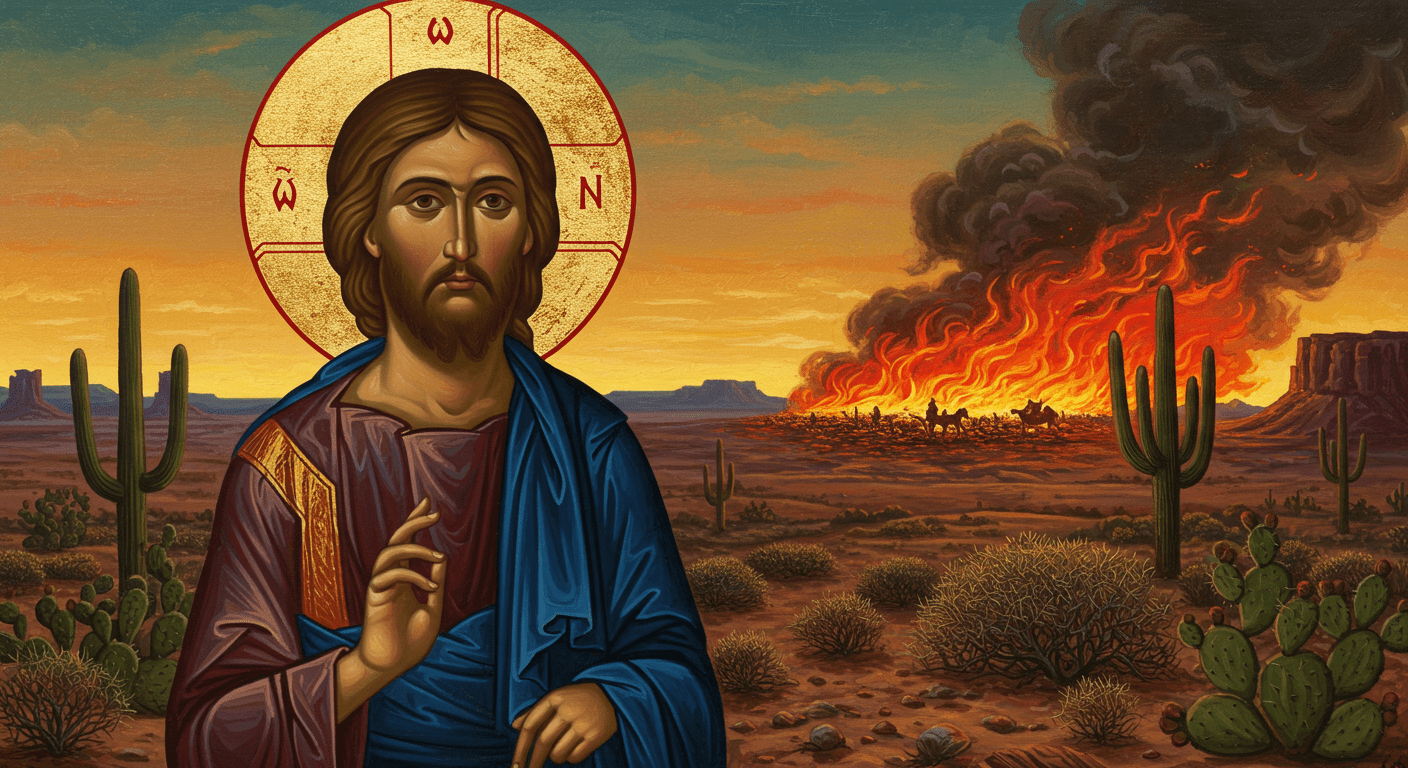
If you can’t tell by now, I wasn’t exactly the life of the party. There were reasons for this proverbial stick up my butt. I had severe and undiagnosed scrupulosity (religious OCD) that made straying from my college’s rules and regulations a terrifying prospect. No one in my family drank, not ever. But the biggest reason was the way my Baptist (bonus points if you guessed that detail) church community talked about alcohol. Whenever drinking came up, it was always in the context of grim sermons about meaninglessness. Why did unbelievers (it was always unbelievers) spend so much of their free time guzzling (it was always guzzling) beer and vodka and tequila and God knows what else? Because they were spiritually lost, of course — dead in their sins, without hope of salvation, blind to the source of true purpose. Drinking was a numbing agent, a lifeline when life became unbearable, liquid courage to face the abyss. It was killing time on a road to nowhere.
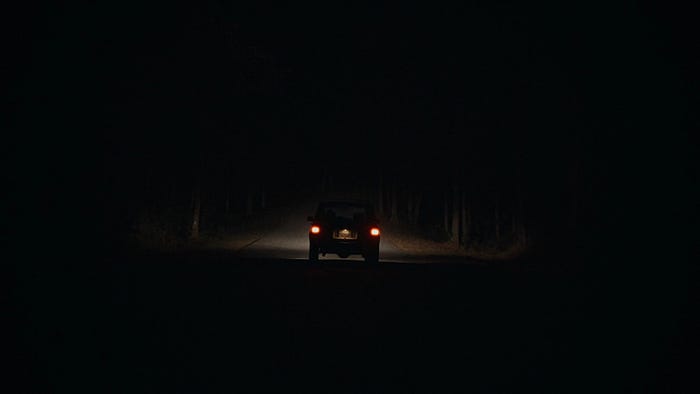
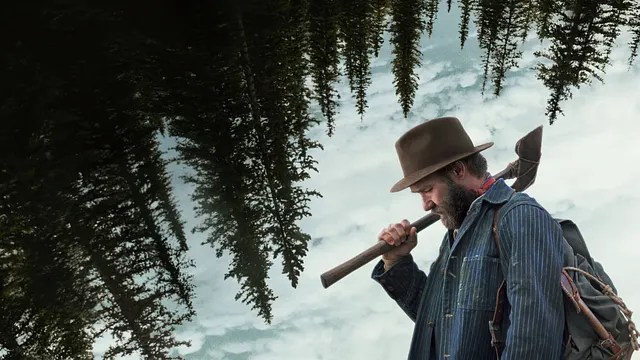
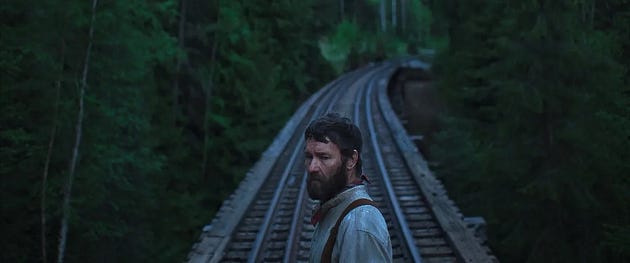
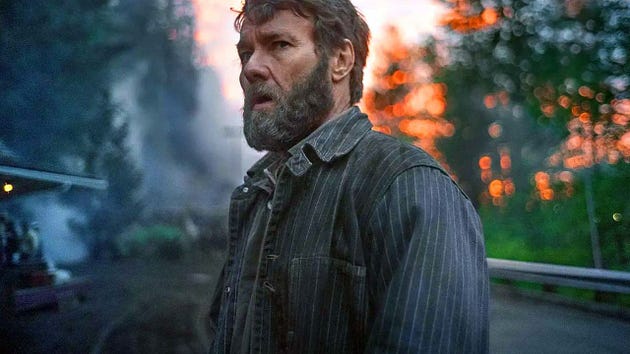
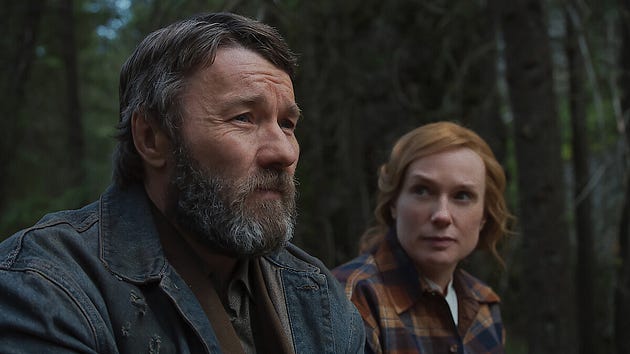
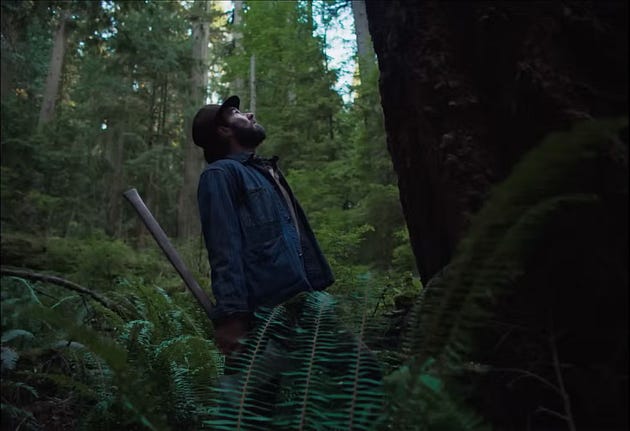
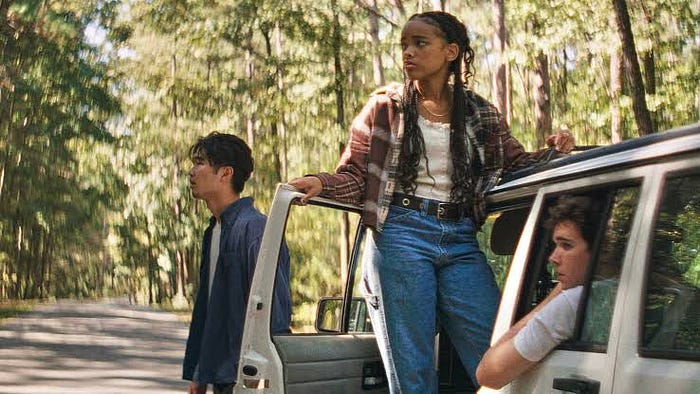
There’s no alcohol in the recently-released horror film It Ends, but there is a road trip and a dizzying dose of discussion about meaning and its absence. Alexander Ullom’s directorial debut has been hailed by critics as a “brilliant existential road thriller” (Variety). It’s got top-notch performances by actors you’ve never seen before, immersive sound, inventive cinematography, and an eerie, patient storyline that keeps you guessing right up to its finale. As I said at the top, I usually love road trips — the longer the better. This movie made me reconsider that part of myself. The premise is simple: Four recent college graduates take a celebratory night drive, only to find themselves on a seemingly endless road. When they stop and exit the car to explore their surroundings, terrifying things begin to happen. And with an apparently limitless supply of gas, they’re faced with two choices: keep on driving with no end in sight, or hit the brakes and succumb to the horrors of the woods.
Are you intrigued yet? You should be. Please, please, please: If you haven’t seen this movie yet, stop scrolling through this essay and come back to it once you’ve watched It Ends. Like its titular road, the story is full of twists, and I don’t want to spoil any of them for you. That said, spoilers be coming. When I emerged from the theater and took to the internet to process what I’d just watched, I was surprised to learn that most people are discussing the movie as a metaphor for Gen Z doomerism — that feeling of burning rubber through a late-stage-Capitalist hellscape you never wanted, where nothing’s scarier than getting left behind. As a Zillenial myself, I get it. Part of the movie’s brilliance is that you can ride its creepy narrative in multiple directions. I know Ullom’s low-budget stunner is hitting hard with the teens / 20s crowd for this reason, but it moved me for an entirely different one. In my opinion, It Ends speaks powerfully to the crisis of meaning that young people across the U.S. are navigating as they deconstruct and/or leave the religions of their upbringing — as I myself did 3 years ago. This is the angle I want to explore the movie from: What do you do when everything that gave your life meaning disappears around a turn in the road? When nothing fills the void that’s left? How do you move forward in a meaningless universe?
The road that It Ends’ cast travels may be devoid of signposts, but the film itself is layered with philosophical references that alert fans have spotted. Interestingly, all of these bear religious significance… and most of them are French. There’s the obvious parallel to Albert Camus’ The Myth of Sisyphus (the real origin of rock and roll, in case you didn’t know), with its rejection of the religious search for significance and its bold acceptance of meaningless monotony. There’s Jean-Paul Sartre’s No Exit, famous for its declaration that “Hell is other people”; is the frightening part of It Ends the screaming, clawing hordes who descend on the vehicle whenever it stops, or is it the prospect of spending an eternity trapped with the same people? And there’s Samuel Beckett (okay, he wasn’t French, but he lived in Paris) and Waiting for Godot, with its conversations on weighty religious subjects.
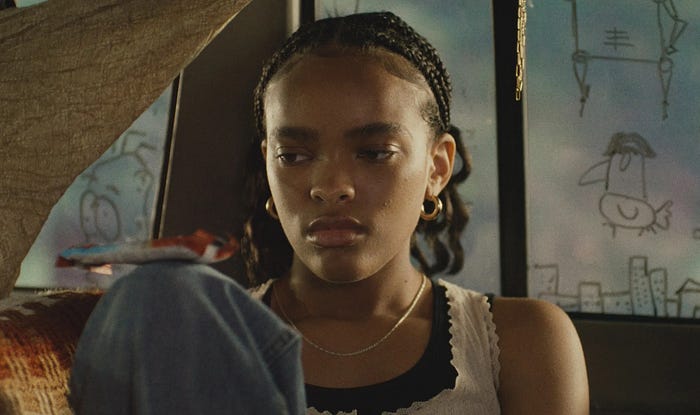
As their grim predicament solidifies and snaps into focus, our passenger protagonists start asking the “why” questions. Blunt and cerebral James (Phinehas Yoon) posits that they might’ve died and gone to hell, and he suggests they confess any secret sins, just in case. Sensitive Day (Akira Jackson) thinks purgatory is more probable. Nervous Fish (Noah Toth) regrets telling his mom that he’s not religious anymore, knowing she’ll conclude that he’s damned if word of his death reaches her. And practical Tyler (Mitchell Cole) wonders what all this theorizing amounts to. As in Godot, no answers arrive from the heavens. All that remains is the road and the woods — a barren, unchanging, purposeless wasteland, which is how many religious people (including my old self) imagine life without God. Camus argued that swapping critical thinking skills for the consolations of religious dogma was “philosophical suicide.” But as Tyler first, and then Day and Fisher, decide to leave the car, the analogy to real suicide — what Camus dubbed the “one serious philosophical problem”— becomes clear.
Growing up, my thinking on meaning and meaninglessness was highly influenced by Christian apologists like William Lane Craig. In his essay “The Absurdity of Life Without God,” Craig paints a bleak picture of life without religious faith — one that sounds an awful lot like the endless road:
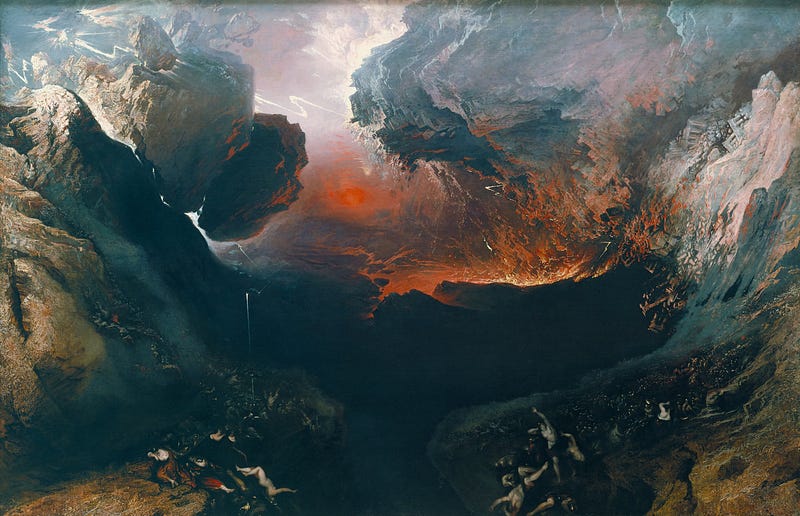
If there is no God, then man and the universe are doomed. Like prisoners condemned to death, we await our unavoidable execution. There is no God, and there is no immortality. And what is the consequence of this? It means that life itself is absurd. It means that the life we have is without ultimate significance, value, or purpose… If God does not exist, then life is objectively meaningless; but man cannot live consistently and happily knowing that life is meaningless; so in order to be happy he pretends life has meaning.
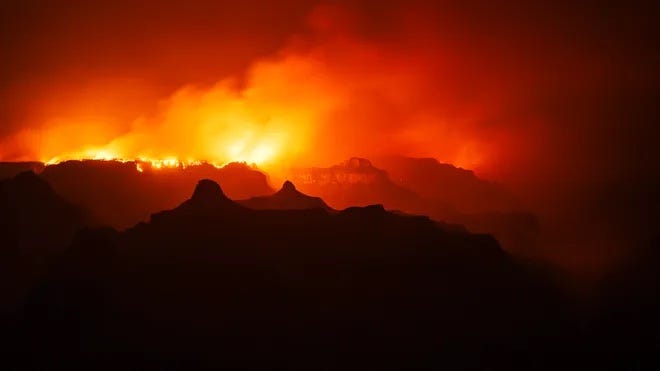
I swallowed this reasoning hook, line, and sinker when I was still religious. When I pictured life outside the walls of my church, I imagined (and pitied) countless secular people speed-running an early version of hell — lost like the zombies of It Ends, who miss the forest for the car (sorry, I couldn’t help myself) and fool themselves into thinking that anything they do will matter, or change their dire predicament. When I lost my faith — first in the Bible, then in Jesus, and finally in God — I was petrified that I would become one of them, binge-drinking to numb the ache until it eventually consumed me. I desperately wanted to believe that Christians like Craig were wrong about the meaninglessness of existence. Yet how could you get ultimate value or purpose without some divine personality to care for and design stuff? How could anything have objective significance outside of a cosmic storyline?
My memories of that season of soul-searching are dark. I remember lying awake at night, listening to the eerie silence inside my skull, and trying to reckon with the reality that none of my passions, projects, or relationships would survive the grave. Why build anything if nothing lasts? With no final destination to move towards… why was I moving in the first place? I read books on visions, near-death experiences, moral philosophy, and secular spirituality, hoping I’d stumble across an answer to the riddle that had eluded everybody else. Coffee shop convos with friends became difficult, as my OCD brain repeatedly base-jumped to other matters: Was there any divine spark in my friends’ eyes? Or were we just puppets — mashups of matter manipulated by forces beyond our control, whose chatter was as inconsequential as that of four college grads trapped in a Jeep? Once again: I wasn’t the life of the party. There had to be more than this… didn’t there?
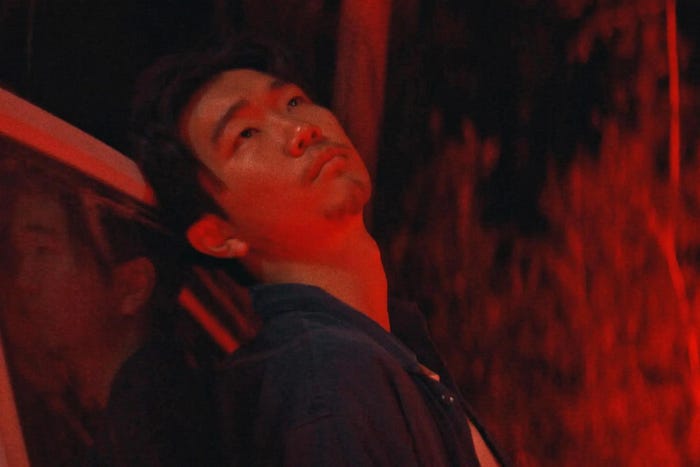
If you’ve seen It Ends, you can probably guess which character reminds me the most of my existentially flailing self. James may be a dick (my favorite Letterboxd review of the film, by user joj66: “I’d rather die than be in the car with James bro”), but he’s not a quitter; unlike his friends, he refuses to accept that the endless road has no higher purpose. As miles pass and the car’s odometer ticks upward, he keeps his eyes peeled for signs of change — a gust of wind, an abandoned car by the side of the road, less zombie-folks as the trip drags on. After learning that it takes their attackers a minute and a half to reach the vehicle, he spends these brief chunks of time scouring the forest for clues. Day and Fisher develop rituals to help them pass the time — meme-swaps, music sessions, 90-second dance parties, Dry-Erase marker doodles, therapeutic dialogues, and screaming when it all gets too heavy. James ain’t got no time for that shit. To him, these activities are just a distraction from their primary objective. Day wants to eat the one snack in the Jeep— a CLIF bar — but James protests that doing so might violate the road’s rules, since they aren’t hungry. “James, what do you think the road is?” Day asks him at one point. James says he doesn’t know, and while that might be true for the specifics, it’s clear that he thinks the road is a puzzle. There has to be an answer. There has to be. Otherwise, what was it all for?
James’ stoic exterior hides a deep vulnerability, brilliantly evoked by actor Phinehas Yoon. When Day and Fisher finally exit the car, James pleads with them to stay. When the car won’t start, he breaks down in tears as he turns the key in the ignition, pleading with God to fix it and promising that he’ll do anything in return. These scenes will resonate with anybody who has experienced the “dark night of the soul” — the agonizing silence of the skies as the faith that once imbued your life with hope gutters down to embers.
I used to take long prayer walks in the rain when I was a Christian. When I was mired in doubt or sorrow, something about gloomy weather made it easier to believe that Christ was near — not distant — and weeping with me. Some of my most anguished prayers were prayed in a downpour, especially once my faith was running on empty, and I started begging for miraculous signs — any signal at all — to keep it going. So, it’s no surprise that the most affecting scene of It Ends, for me, is when James whirls around in the rain outside the car, desperate to figure out if the new weather is “good or bad,” crashing out as he realizes that no response is coming from the heavens.
So, are Craig and his Christian apologist buddies right? Is the alternative to mustering up belief in a God one finds implausible… the endless road? My answer might surprise you, and it’s the same one that It Ends suggests. To fully grasp it, though, we need to rewind to the very beginning of the film — to a scene that befuddled me on first watch and astonished me on second.

It Ends opens with a scene that feels both laughably familiar and strangely out of place. James, Day, Fisher, and Tyler pile into a Jeep Cherokee outside a college dorm / apartment building, and the next 5–10 minutes feature an lengthy debate between James and Fisher about (*checks notes*) complete nonsense. More specifically, it’s a meme on Fisher’s phone: “Fifty hawks, dude with a gun, five gorillas, ten thousand rats — you’re going to pick two to defend you and you’re going to pick two to hunt you.” It’s the sort of shit that all chronically online youngsters argue about at some point, and it also introduces us to the various personalities in the car — James refusing to give an inch, Fisher high-strung, Day considerate, and Tyler exasperated. As the scene drags on, though, we find ourselves asking: Why is this being given so much screen time? We know we’re watching a horror movie, in which stakes will soon escalate and our protagonists will be pushed past their breaking points. Framed against that backdrop, this dialogue seems meaningless. It goes nowhere and accomplishes nothing, just like the endless road. Maybe that’s the point. Maybe this is life itself: a dumb joke stretched far too long.
Director Alex Ullom’s joke isn’t wasted, though. It returns, and unveils its deeper significance, after he hits us with another punchline. After driving a little more than 1,100,000 miles, James pulls over at the sight of dozens of abandoned vehicles. He gets out of the car and stares ahead with a blank expression. The low bass that has rumbled throughout the movie builds to thunder, then drops away as the camera pivots to show us what James sees:
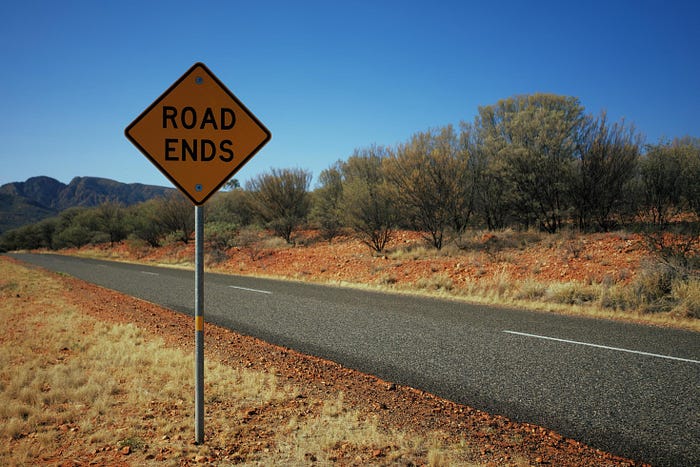
Shouldn’t we have seen this coming? Didn’t the film’s title — It Ends — tell us all we needed to know? It still comes as a shock. Like James, we didn’t want to accept the truth that Tyler and Day and Fisher grasped way sooner — that the riddle had no solution, because it wasn’t a riddle in the first place. The religious apologists are right. Life without God is objectively meaningless. If the road ends, and if there’s no plan, all is absurdity. Roll credits, right?
Nope. James sits, cross-legged like a meditating monk, and stares up at the sign until the following morning. He screams, just like his friends once did, into the infuriating and everlasting silence. He ambles back to the Jeep and finds the CLIF bar that Day kept asking him to eat. And he leans against the car and bites into it, weeping as he does so: “Fuck. It’s really good.” Looking up, he watches clouds drift across the canvas of the sky. Glancing over his shoulder, he sees the Dry-Erase doodles his companions made on the Jeep’s interior. Then he climbs back into the driver’s seat, turns on the radio, pulls a U-turn, and cruises back down the endless road until he spots an empty car. After dragging one of the zombie-humans from the woods and setting him shotgun in the Jeep, James asks the stranger a familiar question: Fifty hawks, dude with a gun, five gorillas, and ten thousand rats — you’re going to pick one two to defend you and you’re going to pick two to hunt you. The passenger pauses before answering: hawks (Fisher’s pick). “Hmm,” replies James, locking eyes with us in the rear view. And then the film really ends.
William Lane Craig might be right about the human predicament sans God: Life cannot have ultimate significance, value, or purpose without a divine intention. But he misses the obvious response: “So?” Since when have we required “ultimate” meaning to make meaning ourselves? Aren’t all of the goals, projects, passions, and relationships that animate our fleeting lives subjective — unique to each one of us — rather than objective? Craig claims that secular humanity “pretends” to have meaning with no basis for it. But that objection only works if you assume, at the outset, that the meaning(s) humans construct depend on non-human meaning for their validation. It’s a textbook circular argument: Subjective meaning is meaningless, because meaning must be objective to be meaningful. What if meaning-making was never the province of the gods? What if the drive to make sense sense out of mystery, to tell stories, and to invest our surroundings with significance is part of what makes us human — perhaps the most human thing about us?
Craig lists two source-points of true meaning: God and immortality. Sadly, his case neglects the two places where we actually find it: the world itself, and the people with whom that world becomes home. James once stared up at the sky in terror, trying to decipher signs in rainclouds. At the end of It Ends, he gazes at those same clouds in repose, simply taking them in as something beautiful. Once, he had no time for his friends’ “meaningless” doodles and screaming sessions, which he viewed as distractions from the main objective. Now, he participates in them and acknowledges what they always were: expressions of love and resolve. James was a jerk at the start of the movie, so fixated on having the “right” answer and winning a stupid argument that he forgot what a precious gift a road trip with friends is. As his new zombie companion voices a contrary opinion, he nods and listens, seeking connection instead of debate. This scene moved me deeply on re-watch, because I knew who the actor playing this stranger is: Director Alex Ullom, who has shared in interviews how a similar car-convo with a buddy (about this same meme) gave him hope in a season of depression. Whether the joke is absurd depends on how you look at it. Are our words — and our lives — meaningless within the void, or meaningful because they’re ours?

In the aftermath of my departure from Christianity, as I scrambled to build a new secular worldview, I remember telling a therapist: “I’m terrified that I’m gonna get the answers wrong.” She challenged me to ask myself: Why did I see life as a test? When I honestly reflected, I knew the answer to that question. My religious upbringing (aka indoctrination, if you’re spicy) had conditioned me to believe that my eternal fate, like the fate of every other human being who had ever lived, would depend on whether I believed the correct teachings about God. The “implacable grandeur” of existence — as Camus put it — was reduced to a riddle. Years after that therapy session, I find myself agreeing with writer Joseph Campbell, whose concept of the epic and existential “hero’s journey” Ullom’s film at first defies and then follows: “Life has no meaning. Each of us has a meaning and we bring it to life. It is a waste to be asking the question when you are the answer.”
Eight years after my college graduation, I drove to Grand Rapids, Michigan to spend a weekend with one of my best friends. While there, I took a bite of my own proverbial CLIF bar — that tantalizing thing I’d been warned not to touch — and got wasted on Vodka Red Bulls while dancing at a gay club (I know, I know; my devout college self would’ve probably had a hernia if God granted him visionary foreknowledge of this coming apocalypse). I’d been warned since childhood that such drinking was deadly and meaningless. I worried that I might not be able to enjoy it, given my religious trauma. But I had a blast. The partying wasn’t meaningless, no more than the glow of the strobe lights and the stars overhead as we stumbled out onto the sidewalks after closing time were meaningless, no more than the friend I partied with and the friends we met in that dark and dizzying dance were meaningless. It was meaningful because we made it so. The shadows were long, but they didn’t terrify me anymore. If I’m honest, I wanted that trip to last forever.