It’s been a while since I’ve posted content. Life has been WILD this summer, and with the school year kicking into gear, I haven’t had much time recently to write. However, I’ve got some exciting ideas for a future blog series, and I plan to start fleshing them out as soon as I can. In the meantime, I figured I’d share some movies that I’ve checked out over the past several months, along with my reflections on them. I loved some of these films, while others left me cold or drove me a bit nuts. But wherever my opinions may land, I hope you enjoy reading them. Whether you agree with me or think I’m absolutely wrong, I’d love to hear your feedback in the comments!
#1. Blade Runner Directed by Ridley Scott My rating: 2 and 1/2 stars
I had high expectations for this one based on its cultural impact, but I was mostly disappointed. The cinematography, sound design, and set pieces were very impressive, and I admired the fusion of cyberpunk with film noir elements. However, the dialogue was clunky, the storyline left me scratching my head, and the main characters felt underdeveloped. Worth watching for Rutger Hauer’s “Tears in Rain” monologue alone, though.
#2. King Richard Directed by Reinaldo Marcus Green My rating: 3 and 1/2 stars
Showed this to my family, and they loved it! My respect for it has only grown since my first watch. Will Smith gives a fierce, career-best performance, bringing out the complexity in a character who so easily could become cliché. Over and over again, this movie takes risks that elevate its story past familiar biopic territory, right up to its surprising conclusion. It may be about sports legends, but King Richard cares far more deeply about the inner worlds of its characters than any wins or losses. Plus, the fidelity to real-life details is remarkable.
#3. Bottle Rocket Directed by Wes Anderson My rating: 4 stars
Almost finished watching through Wes Anderson’s filmography, and wow, his first movie is a pure delight! So much youthful energy, characters you can’t help but love, a killer soundtrack, and brilliant stylistic flourishes that foreshadowed the wonders to come. Anthony (played by Luke Wilson) may be the hero of this story, but Dignan (played by a never-better Owen Wilson) is its beating heart, the spark of magic that sets it alight.
#4. The Matrix Directed by Lana and Lilly Wachowski My rating: 2 and 1/2 stars
I know, I know, rating this sci-fi classic so low (especially after I did the same for Blade Runner) may seem like heresy.
I’ve gotta say, I did enjoy the experience of watching it with my wife, and I can now see why it’s so well-loved. Keanu is as likable as ever, the high-concept is thought-provoking, and the stunt sequences kick ass (they still look great decades on!).
Maybe I would have liked it more if I knew less about the premise going in. Regardless, I couldn’t get past its flaws. I didn’t know enough about Neo’s character to really root for him, and much of the story seemed like setup for the action sequences. Plus, a few plot points had me shouting at the screen in exasperation (to my wife’s delight): Neo pours several rounds of high-powered machine gun fire into a skyscraper office, demolishing the entire window and much of the room, and doesn’t expect to hit Morpheus, who’s tied to a chair in the center of it? Trinity lingers to explain complicated backstory to Neo while they’re literally being pursued by fast-teleporting, invincible enemies who have just killed most of their party? Plus, I’m no fan of the sudden, unexplained hero power-up at the decisive moment. Whatever crazy shit Neo learns how to do (with no hint as to why), I feel like the other characters could look at each other, shrug, and say, “He’s The One.”
Respect, but not my cup of tea.
#5. Whale Rider Directed by Niki Caro My rating: 5 stars
Wow. Saw this five years ago at my Dad’s recommendation (he said I’d love it as an anthropology major), and I’d forgotten what a gorgeous, deeply compassionate film it is. So much feeling communicated in every camera shot, every word and look and gesture, yet nothing is overplayed. Keisha Castle-Hughes shines in this lyrical coming-of-age tale, which explores the difficult dance between tradition and innovation and offers a fascinating glimpse into Māori culture. Makes me miss my Kiwi friends a whole lot, and remember why I love whales. Also, Disney’s Moana was clearly influenced by this movie, and the echoes are pretty hard to miss.
#6. Quantum of Solace Directed by Marc Forster My rating: 2 stars
Utterly predictable, and a big step down after Casino Royale. I expected to like the Bond franchise more than Mission: Impossible, but so far, it feels like one long advertisement for suits, cars, boats, planes, hotels, and fancy drinks (with a few fun action sequences thrown in to keep things interesting). Daniel Craig’s good looks do all the heavy lifting here. I lost count of all the times he ran away from people and vehicles in this movie. Gotta say, I still enjoyed the experience of watching it with my wife, but that may have been more due to the sushi we were eating…
Excited for Skyfall, though. I’ve heard good things.
#7. The French Dispatch Directed by Wes Anderson My rating: 5 stars
Not too long ago, I probably would have ranked this as one of my least favorite Wes Anderson films. I left the theatrical showing back in 2021 feeling delighted, but also dizzy and bewildered. I’ve always enjoyed the heightened style and narrative complexity of Anderson’s films, but this movie seemed far too abstruse. Were Anderson’s detractors right? Had the legendary director finally lost the beating heart of his story in the dense, decorative artifice of his storytelling?
I knew it needed a second viewing, and I’m happy to report that no, The French Dispatch isn’t Anderson off the rails. In fact, it might just be his magnum opus. Now familiar with the complex structure of the film, I was able to enjoy so much that I missed the first time around: the way the cinematography of each vignette mirrors the personality of its narrator; the subtleties of the performances (not a false note among them; the innumerable jokes tucked into the script (it’s easily the funniest film Anderson has ever made); the warm brass of the soundtrack, wistful and joyous and heartbreaking all at once, which moved me every time it appeared; and scenes of breathtaking emotion that hit far harder than I remembered (a prison guard encouraging a convict in an electric chair, two young lovers reveling in each other’s presence, a desolate married couple in the back of a taxi, a solitary writer confessing his loneliness, and that glorious final sequence).
Like any great art, Anderson’s films are challenging the first time you experience them, but deeply rewarding as you revisit them. This was no exception. What might have been a misstep from my all-time favorite director is now probably my all-time favorite of his films, and I can’t wait to revisit it.
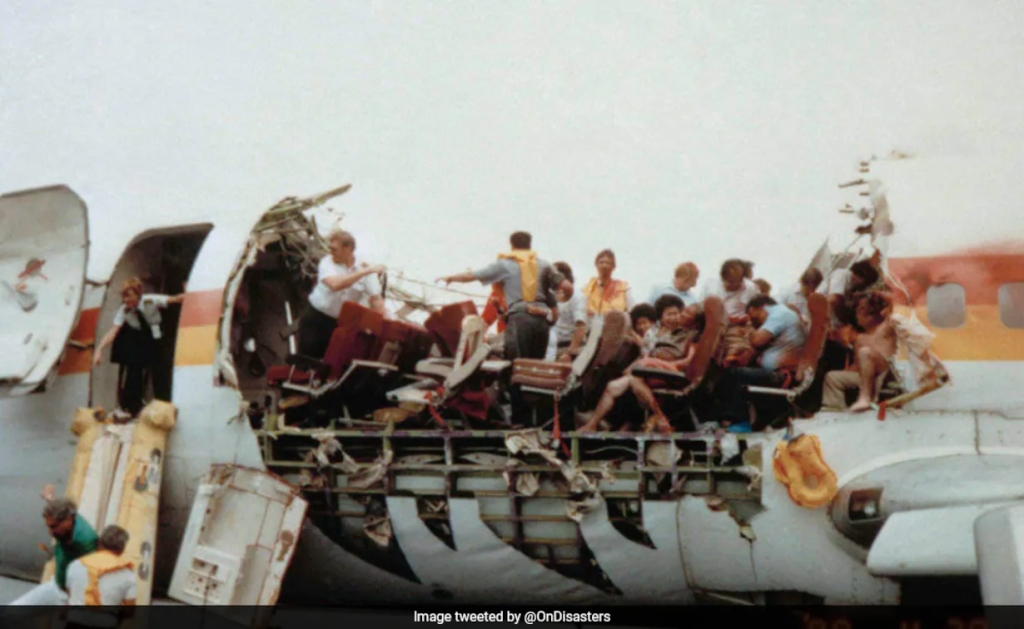
Those words, which are visible on a newspaper headline adorning the cover of Vampire Weekend’s fifth album, were spoken by a survivor of one of the strangest disasters in aviation history.1 On April 28, 1988, the passengers of Aloha Airlines Flight 243 watched in horror as their airplane’s ceiling was torn off mid-flight. Incredibly, despite a flaming engine, the aircraft landed safely at Kahului Airport on the island of Maui; aside from a flight attendant, who was sucked out of the plane by extreme winds, there were no fatalities. The statement above made the front page of the New York Daily News, and it expresses the mixture of fear and awe that the passengers must have felt, exposed to sky at 24,000 feet above the Pacific Ocean.2
Image Credit: NDTV
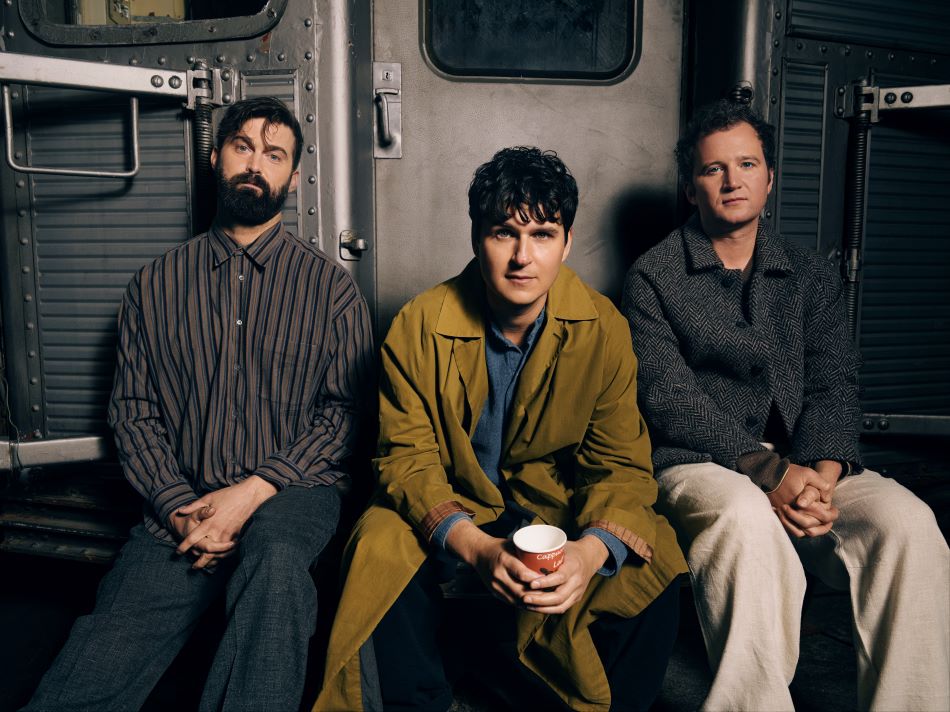
This newspaper headline isn’t the only surreal element of Vampire Weekend’s new album cover. Behind the man holding the paper, another figure stands on the window of a subway car, appearing to levitate above the ground. Surprisingly, the picture contains no special effects. It was snapped by artist Steven Siegel at a subway graveyard in New York City, where train cars lay overturned.3 The reader in the foreground is actually lying down, and the entire photograph has been flipped on its side. Vampire Weekend left the image unedited, and it’s easy to see why. On Only God Was Above Us, the band explores a world out of whack – the chaos and confusion of modern life, where familiar structures implode without warning, where disaster looms around every corner, and where (in spite of everything) hope might still be found in unexpected places.
Siegel’s photograph is one of many allusions to Vampire Weekend’s hometown sprinkled throughout Only God Was Above Us. Songwriter Ezra Koenig elaborated in a recent interview with The New York Times: “Weird, half-baked memories and pictures and thoughts and family history… That’s the version of New York that’s floating through this record.”4 The album’s tone complements its subject matter; in many ways, the record reveals Vampire Weekend’s crew (lead singer Koenig, bassist Chris Baio, and drummer Chris Thompson) returning to their lyrical and sonic roots. Koenig’s cheeky wordplay is back (the album’s opener sees him rhyming “Albanians,” “Romanian,” and “Transylvanian” in the span of a couple lines), enlivened by playful classical flourishes that recall the band’s earliest work. However, these arrangements are also layered with shadow – gritty, piercing, distorted sounds unlike anything else in Vampire Weekend’s catalogue. Koenig framed the band’s experimentation this way:
With every album we have to push in two directions at once… Sometimes that means we have to be poppier and weirder. Maybe with this record, it’s about both pushing into true maturity, in terms of worldview and attitude, but also pushing back further into playfulness. There’s a youthful amateurishness along with some of our most ambitious swings ever.5
If Modern Vampires of the City was a sonic left turn, the new record is off the grid. Yet, for all its harshness, the soundscape is far more riveting than grating, thanks to brilliant production from the band’s longtime collaborator, Ariel Rechtshaid. The music captures the clash between optimism and cynicism that suffuses the album’s songs – what Koenig has called “a journey from questioning to acceptance, maybe to surrender.”6
Image Credit: The AU Review. Left to Right: Chris Thompson, Ezra Koenig, and Chris Baio
In the introduction to this series of blog posts, I described a narrative through line that I believe connects all of Vampire Weekend’s work. Beginning with their self-titled debut, the band unfurls a coming-of-age story that focuses on our relationship to the world at large, asking how we might continue to love a planet that has repeatedly broken our hearts. While this narrative is visible in each of the band’s records, Only God Was Above Us is the album that enabled me to see it – the climax that ties long-running threads together. Last week, on Father of the Bride, Vampire Weekend attempted to recapture their zeal for the Earth by pursuing social justice and embracing life’s mysterious gifts. Now, as the band members approach middle age (Koenig turned forty shortly after the album’s release)7, they confront their most difficult dilemma yet: How should we respond when our best efforts to mend the world – to make it lovable – fall hopelessly short?
Analysis
“Fuck the world” You said it quiet No one could hear you No one but me Cynical, you can’t deny it You don’t wanna win this war Cuz you don’t want the peace
So begins the opening track of Only God Was Above Us. Once again, as on Father of the Bride, Vampire Weekend’s global focus is immediately apparent, as Koenig presents us with a bitter dismissal of the world. The narrator isn’t cynical himself; he has grown and matured, leaving behind the existential despair of Modern Vampires of the City. However, he empathizes with his unidentified companion, who complains that proposed solutions to the planet’s ills aren’t really solutions at all. The song quickly builds to a frenzy, depicting various forms of civil strife that haunt the narrator’s imaginings. The title of the track – “Ice Cream Piano” – is a homophone for the chorus: “In dreams I scream piano.” In musical language, piano represents something that is played or sung quietly. Here, the narrator is trapped in a nightmare from which he can’t awake, futilely calling for help. His dreams reflect reality, where the legacy of past sins wreaks havoc on the present: “We’re all the sons and daughters of vampires who drained the old world’s necks.” With this song, the narrator introduces the twin themes of the album: intergenerational conflict (six of the album’s ten songs reference “wars” and/or “generations”) and the fragility of hope in contemporary society.
Sustaining the disquietude of the album’s opener, the following track (“Classical”) examines the grisly underbelly of western civilization. Koenig recognizes that history is written by the victors, and he also knows that high culture often disguises dark secrets: “Untrue, unkind, and unnatural / How the cruel, with time, becomes classical.” Things are always deteriorating, and what stands the test of time is usually determined by power and privilege, not by goodwill:
I know that walls fall Shacks shake Bridges burn And bodies break It’s clear Something’s gonna change And when it does Which classical remains?
“Capricorn,” the album’s third track, sounds like something straight off Modern Vampires of the City. Still speaking to someone else, the narrator muses over this person’s loss of faith in God and in society’s leaders, which has led them to a grim defeatism:
Can’t reach the moon now Can’t turn the tide The world looked different When God was on your side
Who builds the future? Do they care why?
In writing the song, Koenig was inspired by the idea of someone born at the end of December, unable to experience their birth year: “Capricorn, the year that you were born / Finished fast, and the next one wasn’t yours.” This simple metaphor evokes the alienation of modern youth – the struggle to maintain a stable identity in an ever-shifting society.8 This difficulty bleeds into the next song, “Connect,” which portrays the search for community in the internet age. Aware that technology can bridge vast distances, the narrator remains befuddled by his inability to form meaningful relationships: “Now is it strange I can’t connect?” His despondency in the chorus might sound like the grumbling of somebody kicked off the Wi-Fi, but the stakes are much higher than that. The song laments the loss of life-giving connection – intimacy with others, or a worldview that could provide him with an orienting sense of purpose:
I know once it’s lost It’s never found I need it now The grid is buried in the ground Hopelessly down
“Prep School Gangsters,” the fifth track on the record, alludes to a 1996 New York Magazine story about wealthy students selling drugs. In his interview with The New York Times, Koenig explained the reflections that this article prompted:
The prep-school gangster – these are the people who run the vast majority of institutions… It’s very possible, especially in America, that every now and then the prep-school gangster’s grandfather was once a disadvantaged youth, and that the disadvantaged youth’s grandson will be the prep-school gangster. And here they are in this brief moment of time, meeting together.9
Koenig’s quote highlights the complexity of family trees, which are shaped by disparities of wealth and influence. Social stratification doesn’t emerge from a vacuum; all too often, vulnerable people paid the cost of the privileges that we enjoy. In this way, the abuse of power creates a vicious cycle, generating fractures in future generations. The chorus of the song suggests that those who are oppressed often become oppressors, and it reminds us that many of our blessings are contingent on past injustices:
Call me jealous Call me mad Now I’ve got the thing you had Somewhere in your family tree There was someone just like me
“The Surfer” references Water Tunnel 3, an underground project that was designed to supply New York City with water in the ’70s and that remains unfinished.10 The reference has a dual effect, evoking the hidden fractures beneath our social landscape and also reinforcing “Capricorn”‘s sense of missed potential. Like that earlier tune, the chorus of “The Surfer” depicts characters who aren’t equipped to meet the demands placed on them by society:
Fake fortune teller Scandalized by fate Broke bodybuilder Crushed beneath the weight Lost and deluded Trying to find your place Inept long-distance runner Losing every race
The opening verse of “Gen-X Cops” captures the brooding, apocalyptic anxiety of our age with unsettling precision. Forget about crises of meaning and identity. Today’s youth have scarier things to worry about: environmental degradation, climate change, political polarization, rampant inflation, information privacy, threats of nuclear war, and unchecked technological innovation, to name a few. Fear prompts restlessness – an inability to savor the comforts enjoyed by former generations:
Blacken the sky and sharpen the axe Forever cursed to live unrelaxed We make no bones, a house is not a home And a home is nowhere we can stay
Despite his misgivings, the narrator is unable to avoid the conflict thrust upon him by his forebears: “Dodged the draft, can’t dodge the war.” He must bear the weight of history. However, while he could easily spiral into bitterness, Koenig chooses to engage in empathy, acknowledging that no generation is immune to pride and shortsightedness. He might not be equipped for modern problems, but that doesn’t mean that his ancestors were equipped for the struggles of their own time and place. Like those who came before, Koenig’s contemporaries will make their own share of mistakes:
It wasn’t built for me It’s your academy But in my time, you taught me how to see Each generation makes its own apology
While the album’s tunes may be upbeat, the lyrics on Only God Was Above Us are weighty, illumined only by sparse patches of light. This trend continues on “Hope,” the album’s eight-minute finale (which features some of Koenig’s best lyrical work to date). In verse after verse, the singer lays out a litany of complaints against the world: injuries, deaths, prophecies of doom, hatred, secrets, broken promises, ruins, murderers acquitted, loss of faith, and more. Sandwiched between these disturbing stanzas is a refrain that, on first listen, might sound anything but optimistic:
I hope you let it go I hope you let it go Our enemy’s invincible I hope you let it go
These lyrics recall the pre-chorus of “Capricorn,” where Koenig comforted a weary listener with these words:
Good days are coming Not just to die I know you’re tired of trying Listen, baby You don’t have to try
What is the narrator saying here? Is he urging us to abandon the fight for justice? Does he think that the world is irredeemable? In order to grasp the import of Koenig’s words, we’ll conclude by rewinding to the album’s eighth track, which I believe offers the narrative resolution of Only God Was Above Us (and which might be the best song that Vampire Weekend has ever written): “Mary Boone.”
The first verse of “Mary Boone” introduces us to a young artist who has just arrived in New York City. The youth’s naïvety and idealism are evident in their efforts to obtain work where there are no vacancies:
Painted white New in town You weren’t hiring But I was looking
The artist, we soon discover, has come looking for a true-life art dealer named Mary Boone. Presumably, the youth feels a kinship with Boone, who moved to NYC from small-town Pennsylvania and was the daughter of Egyptian immigrants.11 The narrator waits for their art to be noticed by the famous collector, standing in the shadows of Boone’s gallery: “Mary Boone, Mary Boone / I’m on the dark side of your room.”12 They yearn to follow in the collector’s footsteps, shaping the city’s artistic legacy. However, NYC doesn’t hold the same promise for Boone that it once did. Injustice is on the rise (“Crooked crime / Petty cop”), and Boone has contributed to it, earning herself a 30-month sentence in federal prison for tax fraud.13 Her legacy has been tarnished irreparably, and her days are filled with regret: “In a quiet moment at the theater / I could feel your pain.” Standing in the ruins of her former life, she has plenty of reasons for cynicism. Now, in her exchange with the young artist, we witness the confrontation between hope and despair, between the restlessness of a new generation and the sins of the old guard, that Koenig has woven throughout Only God Was Above Us. And we’re left wondering: How will these characters move forward?
Koenig’s peculiar answer comes in the bridge of the song, where the young artist lists a seemingly random collection of objects:
Book of hours and Russian icons and Sand mandalas and Natarajas and Hex sign barns Ando churches and Whirling dervishes Long exposures and…
Does this sound familiar? Here, Koenig’s lyrics hearken back to Vampire Weekend’s debut album, which reveled in similar flurries of exotic words. Like the narrator of that earlier album, the young artist of “Mary Boone” loves the items listed in all their particularity, breathlessly gushing about them the way a child would (notice the repetition of “and” between the lines). Each of these objects is an example of religious folk art, the kind of thing that an aesthete like Mary Boone would be fascinated by.14 Here, the young artist invites the famous art dealer to pause and notice beauty. It’s as if they’re saying, “Look at all these things! Aren’t they wonderful?” In doing so, the youth challenges Mary Boone to remember her first love – the childlike wonderment that led her to New York in the first place. This exhortation echoes the final lines of the chorus: “Mary Boone, Mary Boone / Well, I hope you feel like loving someone soon.” Aware of the many reasons for Boone’s cynicism, the youth nevertheless encourages her to open her heart again – to glimpse the glory that surrounds her, if only she has eyes to see it.
A photograph of a Tibetan Buddhist sand mandala. Image Credit: Wikipedia
Like a beautiful tapestry, “Mary Boone” joins musical and lyrical motifs woven throughout Vampire Weekend’s catalogue. Descriptions of New York’s cityscape swirl together with artistic references. Classical strings and piano mingle with hip hop beats, occasionally giving way to soaring choral harmonies. The choir is a throwback to “Ya Hey,” the climax of Modern Vampires of the City. On that song, the narrator wrestled with God, venting his despair over the brokenness of the world. On “Mary Boone,” he reaches a kind of spiritual epiphany. The world may be broken, but its beauty remains undimmed, as worthy of exploration and celebration as it ever was. The narrator’s plea to Mary Boone sounds almost like a prayer: “Let me bring you my masterpiece / You’re the author of everything / Use this voice and let it sing.” Here, Koenig depicts a confluence of generations, one that spawns possibilities for spiritual and cultural renewal. Perhaps, Koenig suggests, old and young might have something valuable to teach one another, after all.
Observing the young artist’s quest to make an impression on NYC, one can easily imagine four wide-eyed Columbia grads with their world at their feet. Yet I believe that the members of Vampire Weekend see themselves in Mary Boone, too. The band has come a long way since the release of Vampire Weekend and Contra. Their enthusiasm for life has been chastened, and their efforts to make a lasting difference in the world may have fallen short. Yet, in recalling the idealism that once sparked their youthful creativity, they uncover an important truth: Childlike wonder may ebb and flow, but as long as this broken and beautiful globe keeps spinning itself around, spilling its colorful fragments together into kaleidoscopic patterns, that wonder can always be recovered.
Conclusion This, in the end, is why Vampire Weekend’s work moves me so deeply (and why I’ve now written six blog posts about it!). Taken alone, each of their albums is musical masterpiece. Yet, when viewed as a whole, the band’s discography emerges as a profound work of literature – an epic, multilayered narrative that rewards thoughtful analysis.
On Vampire Weekend, we were invited to love the world as a child loves it: breathlessly, effortlessly, and automatically. Sadly, this instinctive love isn’t sustainable. As we saw on Contra, the planet we call home is a hostile place, capable of shattering the very dreams it inspires. Faced with the loss of innocence, we may be tempted to turn our backs on the world, as the band was on Modern Vampires of the City. Alternatively, we can take our cue from Father of the Bride, striving to make the world a better place. This activism might content us for a while, but our best efforts to improve ourselves and to repair social systems will inevitably fall short. When that happens – when sinister forces become overwhelming, threatening to erase everything we’ve worked for – how can we possibly continue to love?
The answer, offered by Vampire Weekend on Only God Was Above Us, is a decision. We must reopen our hearts to the world, as painful as that process might be. We must exchange the automatic love of childhood for the strenuous love of adulthood. We must choose to love life again and again – not overlooking the world’s defects in an effort to make it lovable, but loving it in spite of them, actively cherishing the beauty that makes life worth living. After all, as a wise old nun in Greta Gerwig’s film Lady Bird said, “Love is attention.”16 We demonstrate our fidelity to the world through the sacred act of noticing and appreciating its fragile glory, just as Ezra Koenig does in the bridge of “Mary Boone.” Failure to do so may numb our heartaches, but it will also rob us of life’s deepest, hardest-won joys.
Now, finally, we can properly appreciate the chorus of the album’s closing track, “Hope.” When the narrator tells us to “let it go,” he’s not advocating pessimism – not by a long shot. Rather, he’s urging us to turn our attention from obstacles we can neither control or surmount to the goodness that already surrounds us. It’s a simple, unassuming response to a tidal wave of suffering. Yet, faced with the sum total of the world’s wounds, what can we say except a weary, “Yes, all this is true, and yet you are loved still”? The future isn’t guaranteed; we may only have today. But isn’t that all we’ve ever really had? Sure, the roof of the airplane might be torn off. But, my goodness, what a glorious sky!
I’d like to close this series by sharing a poem by Ellen Bass:
The Thing Is
to love life, to love it even when you have no stomach for it and everything you’ve held dear crumbles like burnt paper in your hands, your throat filled with the silt of it. When grief sits with you, its tropical heat thickening the air, heavy as water more fit for gills than lungs; when grief weights you down like your own flesh only more of it, an obesity of grief, you think, How can a body withstand this? Then you hold life like a face between your palms, a plain face, no charming smile, no violet eyes, and you say, yes, I will take you I will love you, again.16
I didn’t want it to be a cool photograph of the earth in space; I wanted it to have a little bit of that tension of being Mother Nature, the planet we live on, but also something border-line uncomfortable with the raw digital whiteness surrounding it.
This was how Ezra Koenig described the cover of Vampire Weekend’s fourth album, Father of the Bride. Since their start, the band had exuded a restless fascination with life in all its complexity, asking big questions about their place in the world. Global subjects and sounds had filled their previous albums – Vampire Weekend, Contra, and Modern Vampires of the City. But now, on Father of the Bride, the globe itself was front and center. The album artwork depicted a planet that was not only bright and whimsical, but also vulnerable, suspended in emptiness that threatened to swallow it up, Yet the minimalist portrait had another effect. By placing the globe on a blank canvas, Vampire Weekend invited listeners to reexamine their whirling, watery habitat with fresh eyes – the eyes of an artist.
Father of the Bride was released in 2019, six years after the Vampire Weekend’s previous record. Much had happened in the interim. In January of 2016, songwriter, producer, and multi-instrumentalist Rostam Batmanglij had announced his departure from the band.1 Frontman Ezra Koenig had moved from New York City to Los Angeles, and he had also fathered a son with his partner, actress Rashida Jones.2 Following these changes and an unusually long hiatus, fans weren’t sure what to expect from Vampire Weekend. After garnering critical praise with Modern Vampires of the City, an album that explored spiritual and existential angst, the band teetered on the brink of its own identity crisis. Would they stay together and release new songs? If so, how would they move forward in a changing musical landscape?
The answer, which fans received in May of 2019, was a project at once familiar and fresh – the sound of a band reborn. Many features of the album were recognizable. Father of the Bride marked a return to the sunny, cosmopolitan palette of the band’s earliest work. According to Koenig, the band was striving for a “spring-time” vibe,3 a fitting complement for lyrics that focused on growth and rebirth. Wizard producer Ariel Rechtshaid was back at the helm, crafting a vivid, three-dimensional soundscape. And just like Modern Vampires of the City, Vampire Weekend’s new record rode a wave of critical acclaim, snatching a second Grammy Award for Best Alternative Music Album.4
Yet despite these similarities, Father of the Bride was an anomaly. On the one hand, the album was essentially a solo project by Koenig, whose bandmates (bassist Chris Baio and drummer Chris Thompson) trusted him to chart a new course for their trio.5 On the other hand, the album marked Vampire Weekend’s first collaborations with fellow indie artists like Danielle Haim (featured on the songs “Hold You Now,” “Married in a Gold Rush,” and “We Belong Together”) and Steve Lacy (featured on “Sunflower” and “Flower Moon”). The band may have shrunk, but in another sense it felt bigger than ever. The tunes, which delved into new genres like folk, country music, soul music, and R&B,6 were looser and more easygoing than any of the band’s previous work. Inspired by rapper Kanye West and country artist Kasey Musgraves, Koenig had also refined his songwriting, opting for lyrics that were uncharacteristically stripped-down and straightforward.7 Together, these transformations revealed an older, wiser band taking stock of itself, considering its place in the world, and opening itself up to new possibilities.
Image Credit: GQ
In this series of posts, we have examined Vampire Weekend’s lyrical fascination with the world around them. On the band’s self-titled debut album, we witnessed their love for the world on vibrant display. Later, on Contra, we found Koenig and co. reckoning with the world’s potential for hostility. Last time, on Modern Vampires of the City, we saw the band in a tailspin, broken by a world insensitive to their suffering. Their cynicism and skepticism were well justified. Life refused to let up, and the maps left by former generations had done far more harm than good. However, tragedy cannot define us, and existential dread isn’t a sustainable place to live. When all that was familiar has washed away, how do we move forward? What should we build in the brief lifetime granted to us on this Earth? Once lost, can the spark of childlike wonder be rekindled?
On Modern Vampires of the City, Vampire Weekend asked the question that beats at the heart of their discography: How can we continue to love a world that has broken our hearts time and time again? Now, on Father of the Bride, they will attempt to answer it.
Analysis When I first heard the interlude that separates the verses of Father of the Bride‘s opening track, “Hold You Now,” I recognized it immediately, and I was awestruck. The sample is taken from Hans Zimmer’s soundtrack to The Thin Red Line, my all-time favorite war movie. During the Guadalcanal campaign of World War II, the members of a Polynesian village come together to sing the Lord’s Prayer, asking that God’s will “be done on earth as it is in heaven.” It’s the first example of Biblical imagery (weddings, gardens, serpents, curses, sacred signs, and more) scattered throughout the album.8 On Modern Vampires, choral harmonies were used to haunting effect, summoned like dirges for the death of God. Here, they evoke a new kind of spirituality – a hope that persists in spite of suffering, looking beyond the world as it is and dreaming of the world as it might someday be. Brilliantly interwoven with Koenig’s acoustic melody, this refrain introduces the central theme of Father of the Bride: the longing for restoration.
Like many of Vampire Weekend’s previous songs, the tracks on Father of the Bride reference global hardships: political corruption and echo chambers on “Harmony Hall,” religious fundamentalism and militarism on “Bambina” and “Sympathy,” climate change in “How Long,” greed and consumerism on “Rich Man” and “Married in a Gold Rush,” and refugee crises on “My Mistake.” However, criticism of the world without is now balanced by an honest appraisal of the world within. No longer can the narrator stand above society’s dysfunction; he bears some share of responsibility for the problems he sees in the world. Once again, Koenig draws on Biblical language, likening the failure of society’s leaders to the Fall of Eden: “Anybody with a worried mind could never forgive the sight / Of wicked snakes inside a place you thought was dignified.” Then, in a surprising twist, he identifies himself with those he criticizes:
Within the halls of power lies A nervous heart that beats Like a young pretender’s
Beneath these velvet gloves I hide The shameful, crooked hands Of a moneylender
The opening lines of “This Life” express a similar sentiment – the realization that life’s brokenness doesn’t discriminate: “Baby, I know pain is as natural as the rain / I just thought it didn’t rain in California.” While “Hannah Hunt” showed our narrator railing against a dishonest lover, this track reveals him confessing his part in a ruptured relationship:
You’ve been cheating on, cheating on me I’ve been cheating on, cheating on you You’ve been cheating on me But I’ve been cheating through this life And all its suffering Oh Christ Am I good for nothing?
The songs on Father of the Bride move beyond the lamentations of Modern Vampires, pondering the conditions that might enable justice to flourish. It isn’t enough to tear broken structures down, Koenig suggests; new things must be built in their place. Hope for progress has returned – more tentative than it was before the wasteland of Vampire Weekend’s previous album, but still present. According to Koenig, the motif of ecology that runs through Father of the Bride’s songs was inspired by the optimism of the 1990s environmental justice movement. He elaborates in an interview with Coup de Main Magazine:
It was almost a weird feeling to have nostalgia for environmentalism, because obviously it’s something that is hugely important now and of course people have never stopped fighting that fight, but it was weird to remember how when I was a kid (and depending how old anybody else is they probably have similar memories) everything about Earth Day and “Save the Rainforest.” And then it became less of a theme in children’s programming. So it was interesting to think back to that moment; what was it about that moment that people had more optimism? And even then, there was almost a feel-good nature to it, “Listen, things are really bad, but you’re going to be the generation that changes things. Whereas now, it feels truly apocalyptic.9
On “Married in a Gold Rush,” two lovers reflect on the troublesome news headlines, reckless spending, and systemic injustices that surround them:
Something’s happening in the country And the government’s to blame We got married in a gold rush And the rush has never felt the same
They may have benefited from systems that disadvantaged others, but now they want no part in that kind of privilege. They’ve been gripped by the vision of a world where everyone wins:
I want to put things back together I want to give, don’t wanna take Time to disavow the gold rush And the bitterness that flourished in its wake
On “Sympathy,” the narrator bemoans the perennial strife between Jews, Christians, and Muslims. Yet, as on “Harmony Hall,” he sees himself in the face of the other, framing this identification as a springboard toward healing:
Now we’ve got that sympathy What I’m to you You are to me Let’s go
The narrator’s attitude toward relationships has also matured. On Contra and Modern Vampires, romantic heartbreaks provoked feelings of anger and disillusionment. On Father of the Bride, Koenig recognizes that all relationships are gifts. We aren’t owed happiness, we don’t know how long relationships will last, and we can’t control the affections of those around us, however much we may want to. On “Hold You Now,” the narrator pines for an ex-lover who is about to be married. While he could allow his bitterness to fester, he instead attributes his loss to the mysterious hand of providence and chooses to find solace in the present: “I did my best and all the rest is hidden by the clouds / I can’t carry you forever, but I can hold you now.” Similarly, the heady romanticism of “We Belong Together” is restrained by an awareness that relationships are malleable and unpredictable: “Baby, it don’t mean we’ll stay together.”
“Rich Man,” a song packed with references to numbers and wagers, sees Koenig describing his lover as a rare and precious gift, one that graces his life against the odds: “10,000 to 1: could I possibly bet? / I’m compelled by your love and I haven’t lost yet / Clearly you’re the one.” Later, on “Married in a Gold Rush,” the narrator reaffirms his marital vows, expressing a desire to leave the noise of society behind with his beloved. Like “Hold You Now,” the song is presented as a dialogue between lovers. Yet now we see them working things out, reiterating their feelings for each other. This romantic banter continues on “We Belong Together,” where the lovers draw on a dizzying array of metaphors – pots and pans, surf and sand, bottles and cans, lions and lambs, etc. – to celebrate their compatibility. The narrator invests their bond with spiritual significance, intrigued by notions of providence that had frightened him on the band’s previous album:
Hallelujah, you’re still mine All I did was waste your time If there’s not some grand design How’d this pair of stars align?
Although the songs on Modern Vampires of the City were steeped in uncertainty, Vampire Weekend hinted at a path through existential despair with the refrain of the album’s closing track: “You take your time, young lion.” We might not know how to cope with unrelieved suffering. The questions that haunt us might ultimately be unanswerable. But we can take things day by day, living in the tension of reality and making peace with mystery. This sentiment becomes the thesis statement on Father of the Bride. While the unknowns of Modern Vampires generated anxiety, the uncertainties of Vampire Weekend’s fourth album kindle curiosity. Sure, the universe is a hostile place. But it’s also a miraculous place that enables love, growth, wonder, discovery, and the myriad other things that make life worth living.
Solace is found in the rhythms and cycles of nature, which remind the narrator of his kinship with creation. On former tracks like “Obvious Bicycle” and “Unbelievers,” Koenig depicted the world as a massive, dangerous, and insensitive force, framing his own smallness as a serious liability. Now, on “This Life,” he sees his smallness as an asset. He isn’t simply a cog in a machine; he’s a member of a living, breathing community, connected to something far bigger than himself. This awareness of the whole is vital to maintaining social harmony: “Darling, our disease / Is the same one as the trees / Unaware that they’ve been living in a forest.” Similarly, on “Big Blue,” the narrator is moved and comforted by the enormity of the ocean. He might not have the answers he seeks, but maybe the simple act of being a creature in this wild, wondrous world – of finding “your place in the family of things,” as the poet Mary Oliver recommended10 – is enough.
This narrative reaches its climax on the song “Strangers,” which sees the narrator reveling in relationship – not the youthful infatuation of Vampire Weekend and Contra, but rather a settled confidence in a partner’s unconditional acceptance. The narrator breathlessly recounts the ways his partner’s actions have transformed him. Then he turns his focus on life itself. He isn’t a kid anymore, and he knows that his planet is routinely brutal. But now he sees that love and beauty persist despite the mess, worthy of celebration. Existence isn’t an either/or; it’s a both/and, equal parts deadly and delightful, perilous and priceless, broken and beautiful. Life may remain an enigma, but in the arms of his partner, the narrator can rest easy. The alienation of Modern Vampires is gone, replaced by a steady sense of belonging in the world:
I used to look for an answer I used to knock on every door But you got the wave on, music playing Don’t need to look anymore
I-I-I–I Things have never been stranger I-I-I-I Things are gonna stay strange I-I-I-I I remember life as a stranger I-I-I–I But things change
Conclusion As Father of the Bride draws to a close, it may seem like Vampire Weekend’s narrative journey has also reached its conclusion. After having his heart broken by the world, the narrator has processed his grief and found a way forward, reorienting himself through self-reflection, social justice, committed relationship, and openness to mystery. He feels reborn, and he yearns to see the world around him restored as well.
Yet, as on Vampire Weekend, Contra, and Modern Vampires of the City, the final track of the album signals that the story remains unfinished. Titled “Jerusalem, New York, Berlin,” the song draws upon Koenig’s ethnic heritage, referencing three cities that bear deep significance for Jewish people. Jerusalem is the holy city of Judaism, the place where many devout Jews expect a final redemption to occur; New York is a hub of the Jewish diaspora; and Berlin is emblematic of Jewish suffering in the shoah, or holocaust. The song also references the Balfour Declaration of 1917, which paved the way for the creation of a Jewish state in Palestine. Once again, Koenig identifies his personal journey with something beyond himself11 – this time, the struggles and longings of his ancestors.
Like followers of Judaism all over the world, the narrator yearns for a kind of restoration – a harmony that can atone for the sins of the past. Yet, life remains incredibly messy. Koenig recognizes that the optimism sparked by the Balfour Declaration has dissipated through decades of civil unrest (“Now the battery’s too hot / It’s burning up in its tray”) and that religious aspirations for the holy city have caused untold bloodshed (“But this prophecy of ours / Has come back dressed to kill”). Over and over again, humanity has proved incapable of righting its wrongs. This isn’t just a political phenomenon; the same deterioration happens in our everyday relationships: “Young marriages are melting / And dying where they lay.” It seems that our best intentions aren’t always enough.
The song opens with these lines: “I know I loved you then / I think I love you still.” Who is the narrator speaking to? At some points, he seems to be talking to his partner, concerned that their relationship might not stand the test of time. Yet the chorus reveals another interlocutor: “O, wicked world / Just think what could have been.” Here, Koenig speaks to the world at large. He longs to believe in it wholeheartedly, as he once did, and he feels the warmth of affection returning. But how can he love a planet that continues to confound his hopes? Ultimately, the narrator’s yearning for global justice echoes his yearning for relational wholeness: “All I do is lose, but baby / All I want’s to win.” While he wants these things more than ever before, he’s beginning to think they might be unattainable.
When the world breaks our hearts, dashing the very dreams that it birthed in us, we can throw in the towel, or we can redouble our efforts to make the world a better place. On Father of the Bride, Vampire Weekend urges us to take the latter course. But what if our best intentions and efforts aren’t enough? What if things go from bad to worse? Can we love a world that continues to deteriorate? These questions will form the bedrock of Vampire Weekend’s fifth album (and the final installment of this series): Only God Was Above Us.
The final stanzas of “Jerusalem, New York, Berlin” aren’t rosy. Faced with seemingly insurmountable odds, Koenig’s longing for justice becomes a desperate plea for unity, one that is as relevant for our current political moment as it would have been in 2019 and 1917:
Our tongues will fall so still Our teeth will all decay A minute feels much longer With nothing left to say
So let them win the battle But don’t let them restart That genocidal feeling That beats in every heart
Tune in next week for my lyrical analysis of Vampire Weekend’s 2024 album, Only God Was Above Us!
In Fyodor Dostoevsky’s novel The Brothers Karamazov, there’s a scene where two brothers, Ivan and Alyosha, are discussing religion in a tavern. Ivan is a skeptic, and he objects to God’s goodness on account of the world’s suffering. According to Ivan, the future “harmony” that believers long for, where all sorrows will be consoled and all wrongs made right, can’t justify the suffering that God allows in the present, especially the misery of children. If God’s future world depends on such suffering, then Ivan doesn’t want any part of it:
I don’t want harmony. From love of humanity I don’t want it… I would rather remain with my unavenged suffering and unsatisfied indignation, even if I were wrong. Besides, too high a price is asked for harmony; it’s beyond our means to pay so much to enter on it. And so I hasten to give back my entrance ticket, and if I am an honest man I am bound to give it back as soon as possible. And that I am doing. It’s not God that I don’t accept, Alyosha, only I most respectfully return him the ticket.1
Whether or not we believe in a higher power, Ivan’s objections are painfully familiar to those of us who have reckoned with the world’s brokenness or have been broken by life ourselves. Standing in the rubble of our former innocence, we feel cheated and confused. We begin asking questions that, to borrow writer Maria Popova’s phrase, “raze to the bone of life”2: Why is the world we call home, the planet we long to love unreservedly, such a hostile place? Does life’s goodness depend on the decay and devastation that surround us? And if it does, do we want any part of the arrangement? Faced with these dilemmas, we muddle through life as best we can. Yet many of us, including Ivan Karamazov and a certain indie rock band from New York City, find ourselves stuck. We aren’t kids anymore, and we can’t settle for easy answers. We have entered the dark night of the soul.
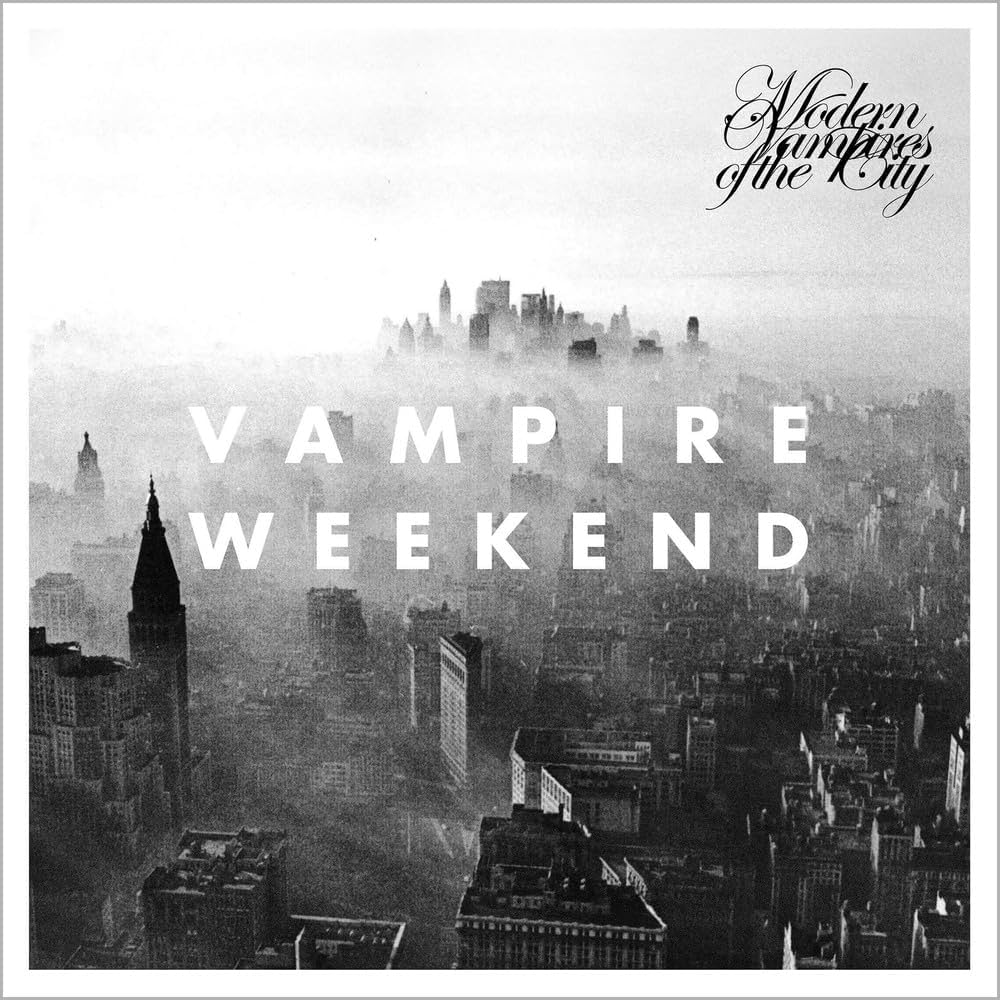
If Vampire Weekend fans expected anything after the band’s debut and sophomore albums, 2013’s Modern Vampires of the City wasn’t it. A seismic shift had occurred, and its aftershock was impossible to miss. In stark contrast to the bright, whimsical covers of Vampire Weekend and Contra, the new album’s artwork featured a spooky, black-and-white photo of a New York City skyline shrouded in smog. The band chose the image for its dystopian vibe, suggesting (ominously) that it depicted “some kind of future.”3 In a brilliant artistic stroke, their hometown was rendered unfamiliar, foreshadowing the displacement and disillusionment that would drift like ghosts throughout the album’s songs.
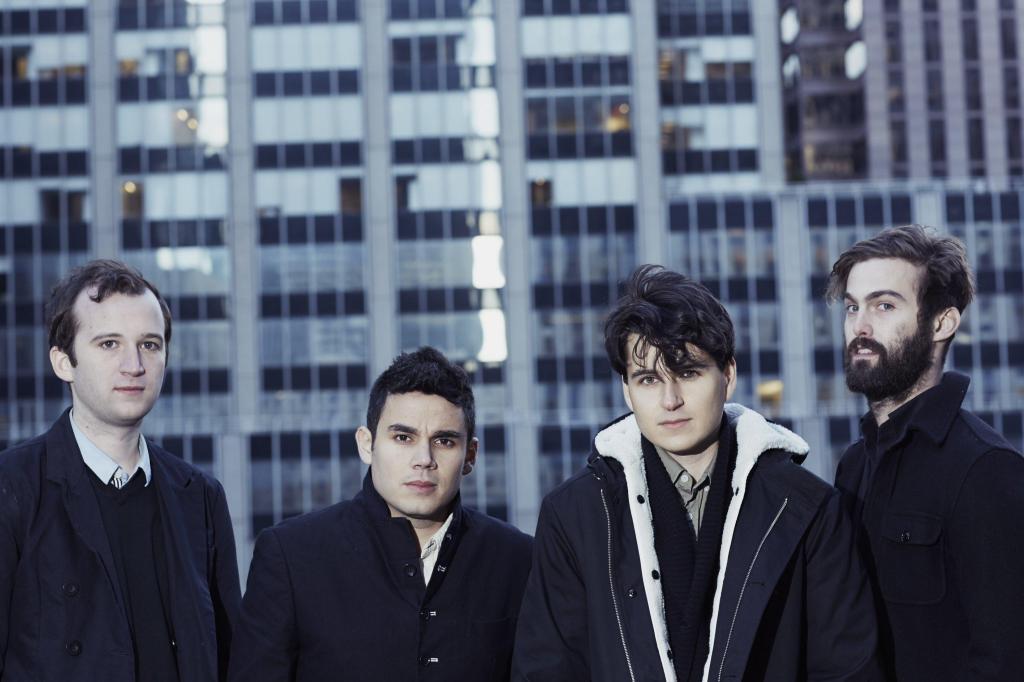
Image Credit: Grammy.com. Left to Right: Chris Baio, Rostam Batmanglij, Ezra Koenig, and Chris Thompson
The band’s music had shifted too, distanced now from the African and Caribbean grooves that infused their former records. The new tracks crackled with electronics, distortion, and layered production, lending the album a darker and grittier feel. Modern Vampires marked the beginning of Vampire Weekend’s long-running collaboration with innovative producer Ariel Rechtshaid, who joined Rostam Batmanglij behind the soundboard. According to Rechtshaid, the band had thrown away their sonic playbook, eager to explore uncharted territory: “Whenever we came up with something familiar sounding, it was rejected.”4 The effect was a disorienting one for many listeners, and that was exactly what the group wanted.
If Vampire Weekend’s new sound invited listeners to join them in the wilderness, so did lead singer Ezra Koenig’s lyrics. While still present on a couple tracks (“Step” and “Finger Back”), the cheeky wordplay of Vampire Weekend and Contra was largely gone, replaced with more straightforward meditations on life’s rough edges. If Contra dipped its toes into existential angst, Modern Vampires was a cannonball into the deep end, tackling a host of weighty topics: loneliness, aging, fear of death, alienation from modern society, grief, and loss of faith. As Koenig sings on the chorus of Modern Vampires‘ third track, “The gloves are off, the wisdom teeth are out.” The scrappy, wide-eyed dreamers from Columbia University had finally come of age, and they weren’t pulling any punches.
While not all of Vampire Weekend’s fans were thrilled by the new direction, Modern Vampires of the City was widely hailed as both a masterpiece and the band’s best work to date. Critics praised the scope and maturity of the project, and several publications declared it the best album of the year.5 In January of 2014, Vampire Weekend took home their first Grammy award for Best Alternative Music Album.6 For all its shadows, Modern Vampires had struck a chord with listeners. It remains my favorite Vampire Weekend record and, according to Rolling Stone Magazine, one of the greatest albums ever made.7
Throughout this series, we’ve analyzed the lyrics of Vampire Weekend’s albums, exploring the central question of their discography: How can we continue to love a world that has broken our hearts time and time again? On Vampire Weekend, we witnessed a narrator falling in love with the world. On Contra, we saw that same narrator developing a broader consciousness of the world and making uneasy space for its suffering. Now, on Modern Vampires, we’ll see our protagonist returning his ticket, offering a breakup letter to the world that broke his heart. It’s heavy stuff, but the music is thrilling and propulsive from start to finish.
Are you ready? Then brace yourself. It’s going to be a bumpy ride.
Analysis Like the opening lines of Vampire Weekend‘s “Mansard Roof” and Contra‘s “Horchata,” the first two stanzas of “Obvious Bicycle” (perhaps my favorite Vampire Weekend song) depict the narrator taking in his surroundings. However, unlike the imagery of those earlier songs, this landscape is utterly devoid of warmth or comfort:
Morning’s come, you watch the red sun rise The LED still flickers in your eyes Oh, you ought to spare your face the razor Because no one’s gonna spare the time for you
No one’s gonna watch you as you go From a house you didn’t build and can’t control Oh you, ought to spare your face the razor Because no one’s gonna spare the time for you You ought to spare the world your labor It’s been twenty years and no one told the truth
Floating atop eerie percussion (which sounds, interestingly, like rattling chains or a pair of scissors opening and shutting), Koenig’s lyrics depict a planet insensitive to our welfare. The narrator likens this world to a house we “didn’t build and can’t control,” reminding us of a series of uncomfortable truths: We didn’t choose to be born, we don’t know when we’ll die, and we have a puny grasp of reality. Albert Einstein agreed: “Our situation on this earth seems strange. Every one of us appears here involuntarily and uninvited for a short stay, without knowing the whys and the wherefore.” Later in the song, Koenig wonders why people would fuss over their physical appearance, since we’re all destined to be forgotten by the societies we inhabit. His words echo those of the Biblical poet: “No one remembers the former generations, and even those yet to come will not be remembered by those who follow them” (Ecclesiastes 1:11). In light of these realities, detachment seems the safest course. Don’t put down roots that’ll only get ripped up, the narrator suggests. Better to “Take your wager back and leave before you lose.”
Listening to Koenig, we realize that the youthful optimism endangered on Contra is now irretrievably lost. The maps handed to the narrator by former generations have led him on a wild goose chase, triggering resentment: “It’s been twenty years and no one told the truth.” As the album unfolds, this cynical sentiment continues. The song “Unbelievers” opens with a mournful declaration: “Got a little soul / The world is a cold, cold place to be” Once, the vastness of the world was a summons to discovery. Now, it threatens to overpower the narrator, and there’s no guarantee that other people will come to his aid. Later, the song “Finger Back” lets loose a barrage of grisly images, examining the perennial strikes and counter-strikes that threaten to pull the fabric of society apart. With a tongue-in-cheek reference to the abandoned baroque instruments of their former albums, the band paints this picture with vivid, apocalyptic zeal:
The harpsichord is broken and the television’s fried The city’s getting hotter like a country in decline Everyone’s a coward when you look them in the eyes But baby, you’re not anybody’s fool
The bridge of the song devolves into chaos, with the narrator screaming the word “blood” over and over. History is littered with corpses. Nature may be beautiful, but it’s also a bloodbath, filled with incomprehensible amounts of animal suffering. The narrator wants no part of this cycle of destruction, and yet he’s trapped inside of it: “I don’t wanna live like this, but I don’t wanna die.”
This fearful admission could be the thesis statement of the album, which explores the narrator’s anxiety regarding death with remarkable vulnerability. On “Step,” we discover that growing up has lost its appeal: “Wisdom’s a gift, but you’d trade it for youth / Age is an honor, it’s still not the truth.” The lyrics of the next song, “Diane Young,” reach the same conclusion: “Nobody knows what the future holds / It’s bad enough just getting old.” Like a good Irish comedian, the narrator confronts death with a sardonic smile, wielding humor to cope with heartbreak. The song’s title puns on the phrase “dying young,” and its lyrics reference both the assassination of John F. Kennedy and the poet Dylan Thomas (“Do not go gentle into that good night”), portraying life as a doomed car ride:
Irish and proud baby, naturally But you got the luck of a Kennedy So grab the wheel, keep holding it tight ‘Till you’re tottering off into that good night
Yet the narrator isn’t laughing when the song “Don’t Lie” rolls around. Here, his defenses drop, and we see him desperately trying to make sense of the fact that he and everyone he loves will one day cease to exist:
I want to know, does it bother you? The low click of the ticking clock There’s a headstone right in front of you And everyone I know
Throughout Contra, we witnessed the narrator’s budding realization that failed romances leave lasting scars. The breakups on Modern Vampires of the City prompt full-blown existential despair. On “Step,” the narrator mourns his lover’s vulnerability and the prospect of irreversible loss: “Maybe she’s gone and I can’t resurrect her.” On “Hannah Hunt,” after enduring yet another heartbreak, he howls into the void, identifying his lover’s betrayal as the last straw: “If I can’t trust you, then damn it, Hannah / There’s no future, there’s no answer.”
The narrator’s relational woes are inseparable from a deeper spiritual malaise. On Modern Vampires, Koenig grapples with God for the first time, exploring the religious heritage handed down by his Jewish forebears. Critic Barry Lenser summarized this spiritual quest well in his review of the album:
Modern Vampires of the City is indeed a God-haunted work… Koenig doesn’t give any indication that he himself is a believer (more often just the opposite), but there is a recurring sense of engagement with God throughout the album, a sense of wrestling with the implications and possibilities of faith. By accident, or, more likely, by design, this builds and builds until Koenig puts everything on the table and addresses God directly.8
On “Unbelievers,” the narrator ponders the widespread religious conviction that those who reject Christian or Muslim dogmas are destined for eternal hellfire. Bewildered, he asks, “Is this the fate that half of the world has planned for me?” Existence already seems grim enough without the prospect of a torturous afterlife. Yet the narrator has become convinced that religion offers false comfort, and he defiantly refuses to take refuge in church:
We know the fire awaits unbelievers All of the sinners the same Girl, you and I will die unbelievers Bound to the tracks of the train
Later, on “Everlasting Arms,” the narrator swings to the other side of the pendulum, referencing Deuteronomy 33:27 in his plea for God to shield him from death: “Hold me in your everlasting arms / Looked up, full of fear, trapped beneath a chandelier that’s going down.” He’s terrified of life without purpose or meaning, but he isn’t sure he wants to believe in a divine monarch who demands humanity’s allegiance:
If you’d been made to serve a master You’d be frightened by the open hand, frightened by the hand Could I be made to serve a master? Well, I’m never gonna understand, never understand
Choral music crops up throughout Modern Vampires of the City, underscoring the album’s haunting tone and spiritual exploration. On “Worship You,” a chorus of voices delivers an anguished prayer:
We worshipped you, your red right hand Won’t we see you once again? In foreign soil, in foreign land Who will guide us through the end?
Here, we discover that the narrator’s alienation isn’t a solitary struggle. His lyrics evoke the cries of the Jewish people, who were repeatedly driven from their homeland into exile, who still await the arrival of their messiah and the renewal of their holy city, and who still say, “Next year in Jerusalem!” at Passover, as Koenig himself does on “Finger Back.” Like the false promises of the modern world on “Obvious Bicycle,” religious expectations of deliverance from strife remain unfulfilled. And like his ancestors, Koenig struggles to get his bearings in unfamiliar territory, disillusioned by the silence of God.
The narrator’s anger reaches its thunderous crescendo on “Ya Hey.” Like Jacob, the Biblical patriarch who squared off with God in the desert and was renamed Israel, Koenig wrestles with the creator he doesn’t believe in. First, he asserts that the worship God receives doesn’t amount to anything: “Oh, good God / The faithless they don’t love you / The zealous hearts don’t love you.” Next, he castigates God for sitting idly by while his world goes to ruin: “And I can’t help but feel / That you’ve seen the mistake / But you let it go.” Finally, he accuses God of abandoning his people:
Through the fire and through the flames You won’t even say your name Only, “I am that I am” But who could ever live that way?
In the Hebrew Bible, when asked for his name by the prophet Moses, the God of the Israelites replied, “I am that I am” (Exodus 3:14). This statement became the name “Yahweh,” a title so sacred that the Israelites refused to pronounce it aloud. On “Ya Hey,” a song whose chorus puns on the divine name, Koenig frames God’s response to Moses as an evasion – a choice to remain hidden rather than to deal directly with his people. The blaze of human suffering burns unchecked, as it has for thousands of years, and still God refuses to step in and right his world. As the flames of the narrator’s rant subside, guttering down to ashes, the choirs on “Hudson” sound a funeral dirge. The heavens remain silent. God (if he ever existed) hasn’t reversed the tide of suffering and death, and the narrator’s mortality still looms on the horizon. It seems the world he loved was against him from the start. As wrenching as it sounds, Koenig’s question in the second verse of “Ya Hey” seems the only fitting response: “Oh, the motherland don’t love you / The fatherland don’t love you / So why love anything?”
Conclusion At last, the storms which have swept the landscape of Vampire Weekend’s third record fade, giving way to the soft piano and soothing harmonies on the album’s finisher, “Young Lion.” According to band member Rostam Batmanglij, the song’s lyric was inspired by a memorable encounter with a stranger that Ezra Koenig had at a Dunkin Donuts in Brooklyn. On his way to the studio to finish recording Contra, Koenig was stopped by an elderly Rastafarian man, who said these words to him: “You take your time, young lion.”9
The stranger’s comment is a fitting finale to a record steeped in existential crisis – perhaps the only conclusion that makes sense. At this point on the album, none of our questions have been answered, none of our fears relieved. Assurances that used to comfort us would feel glib after what we’ve just heard. If we’re as honest as Ezra Koenig, the world looks far bleaker than it did during our youth. All we’re left with, in the end, is a simple encouragement from those who’ve gone before us to keep going ourselves – to patiently live our questions, as the German poet Rainer Maria Rilke recommended,10 acknowledging the messiness and mystery of reality as we make peace with our own limitations. This will become the central theme of Vampire Weekend’s next album, Father of the Bride, a work that I’ll explore in-depth in a future post.
Ultimately, like the stranger who inspired “Young Lion,” the members of Vampire Weekend exhort us to hold on to our tickets, at least for a little bit longer. We might not know where we’re going. Even if we did, we might never make it there. Yet the wilderness has its own grandeur, and sorrows beautifully sung still bind us together with our fellow travelers, carrying us through the night.
Click below for the fourth chapter of my Vampire Weekend series!
When we are young, our relationship to the world can aptly be described as a kind of infatuation. Like a kid with a crush, we’re carried away by the thrill of discovery, convinced that the object of our love can do no wrong. Yet as we grow older, we all experience a “loss of innocence” – a realization that life isn’t as safe or hospitable as we imagined it to be. This is a gradual process for some, a sudden and painful revelation for others. It can be prompted by many things – parental divorce, the death of a loved one, physical or emotional abuse, chronic illness, bigotry or racial prejudice, and economic hardship, to name a few. Whatever the cause may be, we grapple with feelings of disillusionment, struggling to reorient ourselves in a world we thought we knew.
My last post examined Vampire Weekend’s self-titled debut album, a groundbreaking musical romp that pulsates with childlike curiosity and enthusiasm. On that album, we met four college dudes infatuated with life in all of its particularity, dizzy with young love, and itching to see the world. However, a storm loomed on the horizon. The album’s closing track, “The Kids Don’t Stand a Chance,” portrayed an impending conflict between youthful idealism and uncontrollable, oppressive forces. It also raised an unsettling question: Will our narrator be able to maintain his innocence when confronted with life’s harsher realities? This track leads us directly into Vampire Weekend’s second album: Contra.
Image Credit: NME. Left to Right: Rostam Batmanglij, Ezra Koenig, Chris Baio, Chris Thompson.
Released in 2010, the sequel to Vampire Weekend debuted at number one on the US Billboard 200 charts,1 launching the band to new heights of superstardom. Like its predecessor, Contra was a musical smorgasbord, jam-packed with buoyant classical arrangements, lively drum fills, and rollicking guitar riffs. Like its predecessor, it also exuded youthful optimism. But the sonic palette was richer this time, enlivened by a host of new colors and textures: ska, dancehall music,2 electro-pop, Auto-Tune,3 Latin beats, speed rap, and rave music4 (all seamlessly interwoven by the ingenious production of Rostam Batmanglij). Listening to the songs, you get the sense that the band is traveling, refining their sound as they expose themselves to new influences. Yet their expanded vision of the world is accompanied by a deeper awareness of life’s hardships. Life, it turns out, is much more complicated than they thought.
As we’ll see in this week’s analysis, the lyrics on Contra explore the loss of innocence. Life still excites our narrator, but doubt has begun to seep in, threatening to spoil his enjoyment of the world around him. On Vampire Weekend, the planet was a crush fluttering its eyelashes, a friend with its arm slung around our shoulders. But on Contra, we discover that it’s also capable of throwing punches.
Analysis The title of Vampire Weekend’s sophomore record has deep thematic significance. As lead singer Ezra Koenig elaborated in an interview with Pitchfork,
… what’s so interesting about the word “contra” – and why people make a big deal of it as an album title – is that it means so many different things that are linked by the root of the word, which is “against.” So even though it refers to the counter-revolution in Nicaragua, and the video game, and the contrabassoon, and Marx-contra-Hegel, it all means the same thing. It’s an incredibly basic, primal idea.5
Contra, the Latin foundation for words like “contrary,” “contrarian,” and “contradict,” signifies opposition, a fitting label for an album that reckons with the world’s potential for hostility. The album’s songs unspool this thematic thread, tracing the variety of ways that conflict surfaces as we come of age.
“Horchata,” Contra‘s first song, echoes the opening track of Vampire Weekend in its fascination with concrete imagery – lips, teeth, boots, fists, chairs, sidewalks. Koenig’s loose, shimmering wordplay is still present, too, evidenced by the song’s clever rhyming of balaclava, aranciata, and Masada. It’s a warm, inviting introduction. Yet the environment isn’t as cheery as the Cape Cod of “Mansard Roof.” Changing seasons now cause discomfort: “Winter’s cold is too much to handle / Pincher crabs that pinch at your sandals.” They also expose a sobering fact: The narrator’s delight is fleeting, vulnerable to dissipate as time passes: “Here comes the feeling you thought you’d forgotten… Oh, you had it, but oh no, you lost it.” Looking around him, the narrator witnesses decay in surroundings that once arrested his attention. Sadly, he sees this deterioration for what it is – an unavoidable, universal part of life:
Years go by and hearts start to harden Those palms and firs that grew in your garden Are falling down and nearing the rosebeds The roots are shooting up through the tool shed
On the song “Holiday,” the narrator displays similar desires to relish life’s comforts. Yet once again, he finds his rest and relaxation tainted by the prospect of loss. The song may celebrate escapism, but it also contains unnerving references to civil unrest, bombs, and AK-47s – a wider world steeped in conflict. The narrator wonders whether he’s capable of distracting himself from life’s grim realities: “But if I wait for a holiday / Could it stop my fears?” Covering his ears doesn’t block out the noise.
Later on the album, “Giving Up the Gun” explores the passing of time in more detail. Here, the lyricist speaks with two voices. The first is an aging warrior who reflects on the loss of his former strength and prominence:
When I was 17, I had wrists like steel And I felt complete But now my body fades behind a brass charade And I’m obsolete
The second voice affirms the validity of these complaints, acknowledging that the warrior’s sword has “grown old and rusty” and is now “locked up like a trophy / Forgetting all the things it’s done.” Yet this voice also offers reassurance, suggesting that the warrior’s fight isn’t over: “I see you shine in your way / Go on, go on, go on.” Time’s relentless onslaught may have shaken our protagonist, but it hasn’t dulled his determination to make an impact on the world. Not yet, anyway.
While Vampire Weekend‘s preoccupation with the broader world hummed below the surface, audible in the album’s instrumentation and the songwriter’s vocabulary, Contra references the planet directly. The narrator remains enchanted with the world, and he yearns to love it as he once did, with youthful abandon. But he’s starting to wonder whether that’s possible when society seems headed downhill. In the glorious chorus of “California English,” the narrator revels in technological progress, awed by humanity’s ability to communicate across vast distances:
Blasted from a disconnected light switch Through the condo that they’ll never finish Bounced across a Saudi satellite dish And through your brain to California English
In the song’s bridge, the narrator meditates on the destructive aftermath of this progress, which may be irreversible. Yet he also refuses to relinquish hope, urging his lover to stay optimistic: “If it’s all a curse / And just getting worse / Baby, please don’t lose your faith in the good Earth.”
Later, on “Run,” the lyricist offers a succinct and sobering picture of life in a disempowering capitalist society: “Every dollar counts / And every morning hurts / We mostly work to live / Until we live to work.” Our narrator has entered the working world, and he isn’t sure that its promised profits are worth the cost. Mired in the daily grind, he fantasizes about ditching responsibility with his lover: “It struck me that the two of us could run.” But we’re left wondering: Is this hope as brittle as the doomed escapism of “Holiday”?
“Cousins,” a blistering, frenetic jam session that showcases Vampire Weekend’s raw instrumental prowess, continues this theme of disillusionment. On the surface, the song celebrates creativity, culture, self-discovery, and legacy. Yet its bridge bears an ominous refrain: “You could turn your back on the bitter world.” For the first time, the narrator realizes that capitulation is possible. He might surrender to the world’s opposition, abandoning faith in its goodness and following the same path that he urged his lover to flee. Success is no longer a given. Like the song “Cousins” itself, the narrator has boatloads of energy and potential. But he can only take so many hits, and one day, he might reach a breaking point.
Contra‘s loss of innocence is most apparent in its examination of relationships. While Vampire Weekend explored the excitement of budding romance, Contra exposes fault lines beneath the surface of the songwriter’s love. On “Aristocrat,” the narrator reflects on an argument with his partner, lamenting his doubts about the relationship and his inability to express them. He and his partner are “Nostalgic for garbage, desperate for time” – simultaneously disgusted by their troubled history and unable to let go of what they have. A once life-giving connection has now become hostile territory:
In the shadow of your first attack I was questioning and looking back You said, “Baby, we don’t speak of that” Like a real aristocrat
The struggle to communicate continues on “Diplomat’s Son,” which narrates a seaside tryst between gay lovers set in 1981. The lyrics are shrouded in uncertainty and hesitation. The narrator yearns for physical intimacy, and he knows that his friend is a willing partner. Yet he’s also aware that he isn’t ready to commit, and he worries that his departure may break his lover’s heart: “To offer it to you would be cruel / When all I want to do is use, use you.” Once again, the narrator’s relationships are revealed as a double-edged sword, as capable of inflicting wounds as they are of defending what he cares about.
Conclusions As the album draws to a close, Vampire Weekend strips back their instrumentation, making room for Koenig’s softest and most heartbreaking vocal yet. “I Think Ur a Contra” hearkens back to the central theme of the album, and its lyrics show our narrator crumbling under the full weight of disillusionment. The opening stanzas mourn the loss of romantic innocence:
I had a feeling once That you and I Could tell each other everything For two months
But even with our oath With truth on our side When you turn away from me It’s not right
Then, in a gutting twist, the narrator turns his gaze away from the world’s opposition, identifying his lover as an embodiment of the same hostility: “I think you’re a contra.” As the song continues, the narrator vents feelings of anger, abandonment, and betrayal. Yet the finale of the song is gentle and plaintive, suffused with unrequited longing:
Never pick sides Never choose between two But I just wanted you I just wanted you
It’s as if the narrator is saying, “Was love too much to ask for?” While he speaks of a breakup here, his words take on a larger significance in light of Contra‘s narrative journey. We can hear them as the cries of an anguished lover, or we can hear them as the sorrows of all people broken and bruised by the world they longed to love unreservedly. The same planet that kindles our affections with its beauty also dashes our dearest hopes with its brutality. Standing in the rubble of tragedy, bruised and bewildered, we begin to wonder whether we were foolish to open our hearts. Existential crises open and fester, challenging our most cherished beliefs. Why love a world that will inevitably ruin us? This haunting question lingers at the edges of Contra, and it also foreshadows Vampire Weekend’s magnum opus, the album that cemented their status as all-time greats. On Contra, our narrator glimpsed clouds gathering on the horizon. But next week, on Modern Vampires of the City, he will step into the very heart of the storm.
Click below to read the third chapter of my vampire weekend series!
Take a moment and think back to your childhood, adolescence, and/or young adulthood. How did life look from those perspectives? Everyone’s upbringing is unique, and some people are forced to grow up much too fast. However, for many of us, these years were characterized by the thrill of discovery. There was eagerness to map the world around us – an insatiable yearning to see and try and learn everything we could. We didn’t have to be told to love the world; on the contrary, we loved it effortlessly and automatically, inhaling it like oxygen. Our enthusiasm for existence may have been foolhardy, but we didn’t care. For all its hardships, life was a grand adventure story, and we couldn’t wait for the next page.
When Vampire Weekend’s self-titled debut album was released in 2008, it took the indie music scene by storm, delighting audiences with its diverse instrumentation and unabashed, youthful exuberance. The members of the group – lead singer and lyricist Ezra Koenig, multi-instrumentalist Rostam Batmanglij, bassist Chris Baio, and drummer Chris Thompson – met during their undergraduate years at NYC’s Columbia University.1 From the very beginning, the band evinced a restless fascination with world music, infusing their songs with baroque classical arrangements and Afro-Caribbean grooves.2 Their sound was heavily influenced by Paul Simon’s Graceland, an album which introduced South African jive music to American audiences.3 Like that album, Vampire Weekend was upbeat, expansive, and totally irrepressible.
Left to right: Rostam Batmanglij, Ezra Koenig, Chris Baio, & Chris Thompson. Image credit: Rolling Stone Magazine
Vampire Weekend’s musical bent may have stemmed from their diverse roots. Koenig’s Jewish family emigrated from Hungary and Romania, Batmanglij is the son of Iranian refugees, and Baio and Thompson can trace their roots to Italy and Ukraine, respectively.4 The group’s success also sparked a movement toward musical diversity, as numerous indie bands began incorporating world sounds into their albums. Yet none of these works loomed as large as Vampire Weekend, which was ranked as the 24th best debut album of all time5 and also earned a spot in Rolling Stone’s list of the 500 greatest albums ever made.6
In my introduction to this series of posts, I shared the question that I believe is a narrative through line woven throughout Vampire Weekend’s entire discography: How can we continue to love a world that has broken our hearts time and time again? In this post, I’ll begin my literary analysis of the band’s lyrics, exploring how their first album introduces this theme. As we’ll see, the poetry on Vampire Weekend invites us to recall what the world looked like when we were young – a dazzling, kaleidoscopic marvel, unimaginably large and brimming over with possibility.
Analysis Fittingly, Vampire Weekend’s exploration of humanity’s relationship to the world begins with a childlike act of noticing. In the opening lines of “Mansard Roof,” Vampire Weekend‘s first track, the narrator examines his surroundings in Cape Cod, moving from one sight to the next without any attempt at interpretation:
I see a mansard roof through the trees I see a salty message written in the eaves The ground beneath my feet, the hot garbage and concrete And now the tops of buildings, I can see them too
This attention to detail is a harbinger of what’s to come. As the album unfolds, listeners are presented with a flurry of exotic words (pueblo huts, turquoise harmonicas, Louis Vuitton,kwassa kwassa, buddha, French kids, madras, kefir, keffiyeh, occident, English breakfast, Spanish brown stone) and place names (New Mexico, Washington Heights, Oxford, Cape Cod, Khyber Pass, Darjeeling, San Juan, Hyannisport, Wellfleet, Provincetown). At first glance, these words might seem random and disconnected. Critics of Vampire Weekend have sometimes accused the band of writing absurd, intentionally opaque lyrics. Yet there’s more going on here than meets the eye (or the ear). In an interview with TheIrish Times, Koenig described his lyrics as “impressionistic,” more akin to collages than traditional stories.7 Unlike artists who strive for realism, impressionists attempt to capture feelings (or “impressions”) about their subject through the use of more spontaneous imagery. On Vampire Weekend, Koenig’s colorful vocabulary exudes a youthful delight in particularity. Listening to his lyrics, you can imagine a kid breathlessly rattling off every cool thing he’s just seen and heard. The kid doesn’t care whether his observations are coherent. The items he’s describing are beautiful, each one worth mentioning and celebrating for its own sake.
As the album continues, we witness the blossoming of youthful romance. On “Cape Cod Kwassa Kwassa,” the narrator eagerly anticipates making love with a college classmate. Later, on “Bryn,” he revels in the thrill of being noticed by someone he cares about, struggling to process his emotions:
Here in the heartland, a feeling so startling I don’t know what I should do
Oh, Bryn, you see through the dark Right past the fireflies that sleep in my heart
Here is infatuation undimmed by heartache. Where break-ups are mentioned, they aren’t dwelt upon, and the narrator hurries to new subjects. There’s so much more to see and do! On “M79,” lyrics about someone leaving get brushed aside with a “but anyway” and buried under an avalanche of travel imagery – parks and taxi cabs and stairs and mountains and an “arch of glass.” On “Campus,” the narrator pines for a former lover en route to classes: “How am I supposed to pretend / I never want to see you again?” Yet he expresses these thoughts wistfully, describing his ex as a “cruel professor studying romances” and enjoying the tranquility of his college environment: “In the afternoon, you’re out on the stone and grass / And I’m sleeping on the balcony after class.” Later, on “One (Blake’s Got a New Face),” the narrator pokes fun at youthful heartache: “Oh, your collegiate grief has left you / Dowdy in sweatshirts, absolute horror!”
As you listen to Vampire Weekend, you can’t help feeling that these four college kids are having tons of fun, shooting for the moon with little regard for convention or what society thinks. On “Oxford Comma,” the narrator yearns for authenticity, lampooning the artificial rules and regulations of former eras:
Who gives a fuck about an Oxford comma? I’ve seen those English dramas too, they’re cruel So if there’s any other way To spell the word, it’s fine with me, with me
Similarly, on “I Stand Corrected,” the narrator eschews convention to draw closer to a loved one: “Forget the protocol, I’ll take your hand / Right in mine.” On the album’s second-to-last track, “Walcott” (a fan favorite at Vampire Weekend’s live shows), the band abandons any pretensions, nailing all its quirky colors to the mast. The song, which is based on a short film that Koenig envisioned over summer vacation (and that gave the band its name), depicts a man traveling to Cape Cod to warn the mayor of an impending vampire invasion.8 It also references the Holy Roman Empire, for good measure.
Conclusions Vampire Weekend isn’t just a genre-bending musical landmark. It’s also a lyrical ode to youth – a headstrong, joyous romp that captures the feeling of growing up with the whole wide world at your feet. As shown above, Ezra Koenig and co. have no trouble loving the planet on which they find themselves; on the contrary, they’ve fallen head over heels in love with it, relishing life in all its particularity. Here, the world is an adventure to be embarked upon, a lover to be pursued, and a gift to be received with wide-eyed wonderment. Add the band’s signature blend of exuberant, cosmopolitan sounds into the mix, and you’ve got the makings of a legendary album.
Yet all is not well. On Vampire Weekend‘s final track, “The Kids Don’t Stand a Chance,” our narrator encounters the first hint of hostility from the world he inhabits. Ominous lyrics roll like storm clouds over the song’s sunny chords, depicting an impending clash between kids and forces beyond their control – specifically, a capitalist system that prioritizes wealth, status, and privilege over youthful idealism:
You criticize the practice By murdering their plants Ignoring all the history Denying them romance
The pin-striped men of morning Are coming for to dance Forty-million dollars The kids don’t stand a chance
As the record draws to a close, we’re left with unsettling questions: How should we make sense of this unexpected opposition from the world? What can we do when life’s grim realities threaten to destroy our youthful innocence? To learn how Vampire Weekend explores these themes, tune in next week for a lyrical analysis of their remarkable sophomore album, Contra. In the meantime, why not prepare for summer by giving the band’s self-titled debut another spin?
Click below to read the second chapter of my Vampire Weekend series!
Nine months ago, when my wife and I packed our belongings and moved from West Michigan to Chicagoland, I did something I’d never done before: Alone in the U-Haul, I listened to four albums in a row by the same band, start to finish. Typically, when I’m on the road, I like to mix things up, checking out new tunes after jamming to old favorites. Three hours is a long time to listen to any group or artist, regardless of how much I like their sound. But this time was different. Cruising down the interstate, I needed to process the wildest year of my life, and I couldn’t think of a better soundtrack for that reflection than the collected works of my favorite band, Vampire Weekend.
In November of 2022, I renounced the religion of my upbringing and came out publicly as an agnostic. This decision was the most difficult step I’d ever taken. I grew up in a devout, tight-knit Christian community, the son of evangelical missionaries. As far back as I can remember, faith was the animating center of my life, the framework through which I interpreted everything. Consequently, when I left the church, I found myself in a mental and emotional tailspin. Questions flooded in, swirling over the rubble of my old worldview: If God doesn’t exist, then what’s the point of it all? Is life meaningless if it ends at the grave? Does the universe care about my welfare? How do I make ethical decisions if there’s no transcendent standard of good and evil? Is there any hope for humanity, or is everything doomed to extinction? I had no answers to these questions, and I didn’t even know where to start looking. All my maps were gone.
My spiritual deconstruction wasn’t the only change requiring attention. Around the time I stopped attending church, I also got married, moved into a new apartment, left a long-standing position in social work, embarked on a stressful job hunt, and finally said goodbye to a beloved hometown and community. In a matter of months, my whole world had rearranged itself, and I was knee-deep in an existential crisis. So, as I fired up the U-Haul in preparation for my journey to Chicago, I decided to get my bearings – to reflect on where I’d come from, where I was going, and who I was in the in-between. I needed to chart a course through the wilderness, and that’s why Vampire Weekend’s catalog was queued up.
If you listen to Vampire Weekend’s music long enough, you’ll start to notice connections popping up everywhere. Despite their distinctiveness, the group’s albums aren’t easily separated. They flow together like threads in a tapestry or chapters in a book – each one building on its predecessor and setting up its sequel, each one tackling familiar topics from new angles, and each one drawing meaning from its place in a larger whole. Lead singer Ezra Koenig has repeatedly alluded to a narrative arc in Vampire Weekend’s discography, framing it as a Bildungsroman or “coming of age” tale.1 Beginning with the bright, rollicking notes of their self-titled debut, expanding into the variegated colors and textures of Contra, descending into the dark strains of Modern Vampires of the City, and easing into the loose-limbed grooves of Father of the Bride, Vampire Weekend evoked the passage of time with thoughtful lyrics and ingenious, genre-bending indie rock.
After digging into the band’s music for the past several years, mulling over their lyrics, and reading many reviews and interviews, I thought I had Vampire Weekend’s trajectory figured out. That changed on April 5, when the group dropped their fifth album – Only God Was Above Us – to critical acclaim. As I’ve studied the new songs and revisited the band’s earlier work, I’ve been challenged to reexamine a familiar narrative with fresh eyes. This has led to a thrilling discovery: The whole is far deeper and richer than I could have imagined. Vampire Weekend’s latest album answers a question that beats at the very heart of their work, pulsing like lifeblood through everything they’ve created: How can we continue to love a world that has broken our hearts time and time again? Put differently, when life itself becomes unrecognizable, confounding all our expectations, how do we reorient ourselves and keep moving forward?
There are lots of great articles that examine the musical progression of Vampire Weekend’s albums. Yet I haven’t found many that discuss the band’s catalog from a lyrical perspective, tracing narrative threads from the first album to the latest. As a literature teacher, I geek out over well-told tales, and I’m convinced that Vampire Weekend’s discography isn’t just a series of musical masterpieces; it’s also a sweeping, timeless story that begs for literary analysis. Like any great work of literature, these lyrics reward contemplation, gracing careful listeners with profound insights into the human condition.
So, without further ado, I’m excited to announce a new series of blog posts! Over the next several weeks, to celebrate the release of Only God Was Above Us, I’ll analyze each of Vampire Weekend’s albums through a literary lens, situating it within the band’s narrative exploration of the world we inhabit. If you’ve never checked out Vampire Weekend (!!!), or if you’re one of those people who never ventured beyond “A-Punk” and “Oxford Comma,” I hope these posts will inspire you to give their records a spin. Trust me, you’ll be grateful that you did. If you’re already a Vampire Weekend fan, I hope these posts will unearth treasure in familiar ground, deepening your appreciation for the band. Whether you savor each album separately or swallow them all in a single gulp, these works of art will change you if you let them. And if, like me, you’re wrestling with changing seasons or are struggling to find your way in a world you thought you knew, these indie rockers are welcome companions for the journey.
Click below to read the first chapter of my Vampire Weekend series!
Two days ago, I braved icy winds and traveled by train and foot to the Music Box Theater in north Chicago, eager to watch Andrew Haigh’s new film, All of Us Strangers. It’s a bizarre, lyrical, and devastating story, impossible to categorize and easily one of my favorite films of the year. I expect I’ll be thinking about it for quite some time, but one line of dialogue in particular has stuck with me.
The film’s protagonist, Adam (played with astonishing vulnerability by Andrew Scott, the guy who acted Moriarty to Benedict Cumberbatch’s Sherlock) is a wounded, reclusive screenwriter struggling to process his upbringing in 1980s suburban London. At the beginning of the film, Adam meets a charming and lonesome stranger named Harry (played by Paul Mescal, who gave my favorite performance of 2022 in Charlotte Wells’ Aftersun) and visits his childhood home in a quest for inspiration. Then some really strange things start to happen. I won’t spoil the surprises, but I will say that Andrew Haigh’s film dives headfirst into mystery, blurring the line between reality and fantasy and grappling with some of life’s biggest questions: How can we cope with unimaginable loss? How can we confront the past without being consumed by it? How can we build a stable sense of identity in an ever-shifting world? Finally, how can we overcome our ever-present loneliness and find true, life-giving connection?
Thankfully, All of Us Strangers refuses to provide easy answers to these questions. But it does provide us with a sort of thesis statement – a line of dialogue tucked mid-way through the film. Lying beside Harry, pondering their budding romance and the fantastical circumstances he’s been swept into, Adam murmurs: “I want to go out. You and me, together, into the wild.”
If you’ve been following this blog for a while, then you know that 2023 was, for me, a year marked by change. I got married (*pumps fist*). My wife and I left our community and moved to a new city. Very soon, I’ll be starting a new job teaching English literature (*pumps fist again*). Most notably, I abandoned my religious tradition and came out publicly as an agnostic. This transition was both agonizing and incredibly disorienting, and it left me reeling with a host of unexpected questions. I’ve been able to process a lot of things (therapy has helped significantly), and I’m much more at peace with my situation than I was back in January of 2023. Yet, my struggle to rebuild from the wreckage of my former worldview persists. I may not be navigating otherworldly events like Andrew Scott’s character in All of Us Strangers, but Adam’s feelings of grief, isolation, and confusion resonated with me on a profound level. As I wrote in my post “The Child in the Library,” I created this blog to encourage wanderers with spiritual insight. I never expected to become a wanderer myself.
As I’ve reflected on the stories and songs that affected me most in 2023, I’ve noticed a through line running through many of them: attempts to make sense of mystery. Whether it was the existential crises at the heart of movies like Barbie, Past Lives, and Asteroid City; the unsettling and paradigm-shifting observations in books like Alexandra Horowitz’s On Looking and Maria Popova’s Figuring; or the mingling of wonderment and bewilderment that colored albums like J Lind’s Alchemy and Gang of Youths’ Go Farther in Lightness, the tales that topped my year-end favorites list refused to shy away from life’s ambiguities. Themes of uncertainty and existential struggle were front-and-center for me this year. I don’t know about you, but judging from the issues that swirled through our newsfeeds in 2023 (gender debates, artificial intelligence, war in Europe and the Middle East, church corruption) and the movies that drew us to theaters (Oppenheimer, Poor Things, Anatomy of a Fall), these same themes are on many people’s minds. The stories we tell ourselves, it seems, reveal a lot about the questions we’re asking ourselves.
This year, as I analyze more books and movies, I’m ready to ask some of those big questions. Who are we? Why are we here? What is our place in the universe? How should we live? Spoiler alert: I don’t expect to figure everything (or even most things) out. This blog is simply a record of my own musing, meandering, and becoming. But I do believe wholeheartedly that there’s value in the search for truth – joy and beauty in connecting the dots that makes this life worth living. And, like Adam in All of Us Strangers, I want to invite you to come along for the ride – “into the wild.”
So, without further ado, here’s my super exciting plan for 2024 (drumroll, please)…
In selecting books, films, and music to review this year, I’m used three criteria: First, in keeping with my 2024 theme of uncharted territory, I’m prioritizing art created by women, people of color, and artists from countries outside the United States. Looking back on my lists of favorite stories, I’m aware that these demographics are underrepresented, and I want to do a better job of learning from people whose experiences and worldviews differ from my own. Storytelling generates empathy, and there’s no better way to explore the human condition than considering human stories in all their variety.
Second, I’m prioritizing stories that reflect on the meaning, beauty, and significance of everyday life. I’m not primarily interested in amusement (which, if you break it down to its linguistic building blocks, literally translates to “not thinking”). I’m looking for art that challenges me reexamine my surroundings instead of encouraging me to escape from them, that inspires me to live deeply and to love wholeheartedly. The films that I’ve chosen to watch, for example, aren’t new or particularly exciting. Yet, they’re renowned for their thematic and contemplative power. They’re the kind of tales that just might change the way you see, if you let them.
Third and finally, I’m prioritizing titles on my bookshelf. Like many readers, my pace of accumulating books usually far outstrips my pace of reading them (Used book stores are wonderful – and wonderfully addictive – places!). In the spirit of good ol’ Wendell Berry, who challenges readers to press into “the given life,” I’ve decided to explore the titles which have been sitting right under my nose – stories that were gifted to me, recommended to me, or had already caught my attention in one way or another. There’s a reason these pilgrims ended up at my door, and it’s high time I heard what they have to say.
I hope that you’ll join me as I embark on this new journey. If these posts inspire you to think in new ways, to take a closer look at this weird and wondrous planet, or just to discover some meaningful art, then my labor will have been well worth it! I think Marcel Proust was on to something when he wrote: “The only true voyage… would not be to visit strange lands but to possess other eyes, to see the universe through the eyes of another, of a hundred others, to see the hundred universes that each of them sees, that each of them is.”
Well, it’s that time of year again! Everywhere you turn, art nerds are shouting their lists of favorite books, music, and movies discovered in 2023 from the proverbial rooftops. Why, you may ask, would we bother doing this?
I can’t speak for every list-maker out there, but I’ve got two motives. First, the act of creating these lists challenges me to examine artwork more deeply, prompting interesting questions – Why did that book resonate with me? Was this album meaningful and well-crafted, or was it superficial and derivative? Why did my opinion of that movie change over time? Second, list-making is an opportunity to share works of art that have impacted me with others, paying the joy of discovery forward. Like a bedraggled mariner, returning dazzled by lands too wild and wondrous for words, I can point beyond the edges of the maps and say, “Look! Here be dragons!”
As you scroll through the lists below, you’ll notice that most of the titles were released prior to 2023. Once again, there are two reasons for that. First, because I have a personal life and don’t get paid to read and watch movies (*sigh*…If only…) I’m always playing catch-up when it comes to cool stuff. Second, if I haven’t discovered these titles until now, chances are you may not have discovered them yet either! With that said, thanks for reading. I hope you enjoy these lists, and happy exploring!
Contents: Part 1 – Top 5 Books Part 2 – Top 5 Albums Part 3 – Top 5 Songs Part 4 – Top 5 Movies
PART I – BOOKS:
Honorable Mentions:Educated by Tara Westover, Encountering Mystery: Religious Experience in a Secular Age by Dale C. Allison Jr., Surrender by Bono, Undeniable: Evolution and the Science of Creation by Bill Nye, Unfollow: A Memoir of Loving and Leaving the Westboro Baprist Church by Megan Phelps-Roeper, Where the Light Fell by Philip Yancey
5. A Gentleman in Moscow by Amor Towles “In 1922, Count Alexander Rostov is deemed an unrepentant aristocrat by a Bolshevik tribunal, and is sentenced to house arrest in the Metropol, a grand hotel across the street from the Kremlin. Rostov, an indomitable man of erudition and wit, has never worked a day in his life, and must now live in an attic room while some of the most tumultuous decades in Russian history are unfolding outside the hotel’s doors. Unexpectedly, his reduced circumstances provide him entry into a much larger world of emotional discovery.
Brimming with humor, a glittering cast of characters, and one beautifully rendered scene after another, this singular novel casts a spell as it relates the count’s endeavor to gain a deeper understanding of what it means to be a man of purpose.” (Synopsis quoted from Amazon.com)
4. Virgil Wander by Leif Enger “Movie house owner Virgil Wander is ‘cruising along at medium altitude’ when his car flies off the road into icy Lake Superior. Though Virgil survives, his language and memory are altered. Awakening in this new life, Virgil begins to piece together the past.
He is helped by a cast of curious locals—from a stranger investigating the mystery of his disappeared son, to the vanished man’s enchanting wife, to a local journalist who is Virgil’s oldest friend. Into this community returns a shimmering prodigal son who may hold the key to reviving their town.
Leif Enger conjures a remarkable portrait of a region and its residents, who, for reasons of choice or circumstance, never made it out of their defunct industrial district. Carried aloft by quotidian pleasures including movies, fishing, necking in parked cars, playing baseball and falling in love, Virgil Wander is a journey into the heart of America’s Upper Midwest.” (Synopsis quoted from Amazon.com)
3. Behind the Beautiful Forevers: Life, Death, and Hope in a Mumbai Undercity by Katherine Boo “In this breathtaking book by Pulitzer Prize winner Katherine Boo, a bewildering age of global change and inequality is made human through the dramatic story of families striving toward a better life in Annawadi, a makeshift settlement in the shadow of luxury hotels near the Mumbai airport.
As India starts to prosper, the residents of Annawadi are electric with hope. Abdul, an enterprising teenager, sees ‘a fortune beyond counting in the recyclable garbage that richer people throw away. Meanwhile Asha, a woman of formidable ambition, has identified a shadier route to the middle class. With a little luck, her beautiful daughter, Annawadi’s ‘most-everything girl,’ might become its first female college graduate. And even the poorest children, like the young thief Kalu, feel themselves inching closer to their dreams. But then Abdul is falsely accused in a shocking tragedy; terror and global recession rock the city; and suppressed tensions over religion, caste, sex, power, and economic envy turn brutal.
With intelligence, humor, and deep insight into what connects people to one another in an era of tumultuous change, Behind the Beautiful Forevers, based on years of uncompromising reporting,carries the reader headlong into one of the twenty-first century’s hidden worlds—and into the hearts of families impossible to forget.” (Synposis quoted from Amazon.com)
2. On Looking: Eleven Walks with Expert Eyes by Alexandra Horowitz “Alexandra Horowitz shows us how to see the spectacle of the ordinary—to practice, as Sir Arthur Conan Doyle put it, ‘the observation of trifles.’ Structured around a series of eleven walks the author takes, mostly in her Manhattan neighborhood, On Looking features experts on a diverse range of subjects, including an urban sociologist, the well-known artist Maira Kalman, a geologist, a physician, and a sound designer. Horowitz also walks with a child and a dog to see the world as they perceive it. What they see, how they see it, and why most of us do not see the same things reveal the startling power of human attention and the cognitive aspects of what it means to be an expert observer.
Page by page, Horowitz shows how much more there is to see—if only we would really look. Trained as a cognitive scientist, she discovers a feast of fascinating detail, all explained with her generous humor and self-deprecating tone. So turn off the phone and other electronic devices and be in the real world—where strangers communicate by geometry as they walk toward one another, where sounds reveal shadows, where posture can display humility, and the underside of a leaf unveils a Lilliputian universe—where, indeed, there are worlds within worlds within worlds.” (Synpopsis quoted from Amazon.com)
1. Figuring by Maria Popova “Figuring explores the complexities of love and the human search for truth and meaning through the interconnected lives of several historical figures across four centuries—beginning with the astronomer Johannes Kepler, who discovered the laws of planetary motion, and ending with the marine biologist and author Rachel Carson, who catalyzed the environmental movement.
Stretching between these figures is a cast of artists, writers, and scientists—mostly women, mostly queer—whose public contribution have risen out of their unclassifiable and often heartbreaking private relationships to change the way we understand, experience, and appreciate the universe. Among them are the astronomer Maria Mitchell, who paved the way for women in science; the sculptor Harriet Hosmer, who did the same in art; the journalist and literary critic Margaret Fuller, who sparked the feminist movement; and the poet Emily Dickinson.
Emanating from these lives are larger questions about the measure of a good life and what it means to leave a lasting mark of betterment on an imperfect world: Are achievement and acclaim enough for happiness? Is genius? Is love? Weaving through the narrative is a set of peripheral figures—Ralph Waldo Emerson, Charles Darwin, Elizabeth Barrett Browning, Herman Melville, Frederick Douglass, Nathaniel Hawthorne, and Walt Whitman—and a tapestry of themes spanning music, feminism, the history of science, the rise and decline of religion, and how the intersection of astronomy, poetry, and Transcendentalist philosophy fomented the environmental movement.” (Synopsis quoted from Amazon.com)
PART 2 – MUSIC ALBUMS:
Honorable Mentions:Broken by Desire to be Heavenly Sent by Lewis Capaldi, Javelin by Sufjan Stevens, Like in 1968 by Moddi, Optimist by FINNEAS, Seven Psalms by Paul Simon, Signs of Life by Foy Vance, So by Peter Gabriel, Spectral Lines by Josh Ritter
5. Unreal Unearth by Hozier “During the pandemic, Hozier found himself catching up on literature that had long been on his to-read pile, including Dante Alighieri’s Inferno. Not the lightest of reading, but a line from Dante struck a chord. ‘There’s a passage in Dante’s Inferno, when he’s describing what’s above the door to Hell. The third line is: “Through me, you enter into the population of loss,”‘ the Irishman tells Apple Music. ‘That line just resonated with me. It felt like the world we were in. The news reports were just numbers of deaths, number of cases. It was a surreal moment.”
It struck him that the format and themes of Dante’s 14th-century epic, in which the poet descends through the nine circles of Hell, could be the perfect prism through which to write about both the unreal experience of the pandemic and the upheavals in his personal life. ‘There’s such a rich tapestry there. I didn’t study classics and I’m not an academic, but for me, all those myths are happening around us all the time,’ he says. ‘You can play with them a lot and reinterpret them and then subvert them as well.’
The result is Hozier’s most ambitious and emotionally powerful album to date. It’s a remarkable journey, taking in pastoral folk, soaring epics, and tracks addressing the devastation caused by colonialism.” (Synopsis quoted from Apple Music)
4. To Pimp a Butterfly by Kendrick Lamar “Following 2012’s electrifying good kid, m.A.A.d city, the supremely gifted, Compton-bred rapper delivers another uncompromising and deeply affecting listening experience. Packed with jazzy, dreamlike production and staggering lyrical work, To Pimp a Butterfly finds Kendrick Lamar grappling with the weight of his newfound fame – as a representative of his community and as a young black man. Through the funky menace of ‘King Kunta,’ Lamar makes blistering reference to the protagonist of Alex Haley’s Roots, while the feverish standout ‘The Blacker the Berry,’ sees him attack black-on-black crime with singular precision and ferocity.” (Synopsis quoted from Apple Music)
3. The Jesus Hypothesis by Derek Webb “This album is likely his most important to date. Those who are still strong adherents to the more traditional Christian scene would do well to pay attention to his lyrics and ask the probing questions he asks here that are necessary to move forward. Those outside the church or who have felt pushed away or alienated by it can benefit from knowing they are not alone in feeling that way, and that there might still be some truth there even if it is not the same truth that they had always been taught.” (Quoted from Jeremy Zerby’s album review for Medium.com)
2. Alchemy by J Lind “What comes to mind when you think of alchemy? Is it a primitive science, a predecessor to modern chemistry? Is it a spiritual quest for eternal youth, the transformation of a pretty stone into an elixir of life? Or is it that hippie-run crystal shop in the beach town that burns incense all summer long? Alchemy is many things, but the strand I’m reaching for is that of transubstantiation: the mysterious transfiguration of one essence, one essential and indivisible identity, into another.
When I reflect on my own transfigured (disfigured?) essence, I’m struck by the apparent absence of design in it all: swirling colors, clashing frequencies, crossed wires. It’s a beautiful amalgamation of poor decisions and pointed surprises. Really, though. It seems like so many of my most prized seashells are the ones I wasn’t really looking for in the first place: my passions, my friends, my marriage. Maybe I’d woken up early to see a pacific sunrise, but I hadn’t counted on the beauty lurking in the tidepools.
These moments of resonance that anchor the story I tell myself, the stories we all tell ourselves, about ourselves—these moments of unsought and unexpected meaning, attained through a lack of searching, a rejection of all optimization and aim—maybe these are the raw ingredients of alchemy. Maybe the path to the deepest treasure looks a lot like wandering.” (J Lind, quoted from Jlindmusic.com)
1. Go Farther in Lightness by Gang of Youths “There’s a strong current coursing through Gang of Youths’ second album. It’s a document of transformation told through a steady rush of epic rock. ‘Fear and Trembling’ kicks off with the crashing power of the E Street Band. And like a young Boss, vocalist Dave Le’aupepe searches for spiritual and philosophical truths buried in the past. ‘The Heart is a Muscle’ reveals hard-earned truths. ‘Our Time is Short’ and ‘Say Yes to Life’ are emotional rearview-mirror reflections. If Gang of Youths’ goal was to inspire others to search for their own patch of peace, they’ve succeeded.” (Synopsis quoted from Apple Music)
PART 3 – SONGS:
Honorable Mentions: “Does God” by Forrest Clay, “God in Drag” by Derek Webb, “i” by Kendrick Lamar, “If Christopher Calls” by Foy Vance, “My Back Pages” by Bob Dylan, “Our Father’s War” by Josh Ritter, “Until Morning” by Kate Rusby, “You Can Always Give Up” by Moddi
5. “Generous” by J Lind
As I made my way back to the cancer infirmary I hardly noticed the fight breaking out at the pharmacy I asked a man about the course of his terminal disease He said, “The Lord has always been good to me.”
4. “Achilles Come Down” by Gang of Youths
Hear those bells ring deep in the soul Chiming away for a moment Feel your breath course frankly below And see life as a worthy opponent Today of all days, see how The most dangerous thing is to love
3. “Little Blue” by Jacob Collier
Little blue, be my anchor Be my light, my compass star Be my darkness, be my danger Be the strings of my guitar
2. “Only a Lifetime” by FINNEAS
It’s family and friends and that’s the truth A fountain doesn’t give you back your youth It’s staying up too late at night and laughing under kitchen lights So hard you start to cry
1. “Magic Kingdom” by Ben Shive
When you wake you won’t remember this But I won’t forget When we were a pair of starlit stowaways Going God knows where, so wild and afraid
PART IV – MOVIES:
Honorable Mentions:After Yang, Apostasy, The Banshees of Inisherin, Barbie, Begin Again, Boyhood, Brokeback Mountain, Eating Animals, The Grand Budapest Hotel, Letting Go of God, Malcolm X, Marcel the Shell with Shoes On,Moonlight, Mr. Holmes, That Sugar Film
5. Past Lives
“Nora and Hae Sung, two deeply connected childhood friends, are wrest apart after Nora’s family emigrates from South Korea. 20 years later, they are reunited for one fateful week as they confront notions of love and destiny.” (Synopsis quoted from Letterboxd.com)
4. Aftersun
“Sophie reflects on the shared joy and private melancholy of a holiday she took with her father twenty years earlier. Memories real and imagined fill the gaps between the miniDV footage as she tries to reconcile the father she knew with the man she didn’t.” (Synopsis quoted from Letterboxd.com)
3. Manchester by the Sea
“After his older brother passes away, Lee Chandler is forced to return home to care for his 16-year-old nephew. There he is compelled to deal with a tragic past that separated him from his family and the community where he was born and raised.” (Synopsis quoted from Letterboxd.com)
2. Asteroid City
“Set in a fictional American desert town circa 1955, the itinerary of a Junior Stargazer/Space Cadet convention (organized to bring together students and parents from across the country for fellowship and scholarly competition) is spectacularly disrupted by world-changing events.” (Synopsis quoted from Letterboxd.com)
1. Call Me By Your Name
“It’s the summer of 1983, and precocious 17-year-old Elio Perlman is spending the days with his family at their 17th-century villa in Lombardy, Italy. He soon meets Oliver, a handsome doctoral student who’s working as an intern for Elio’s father. Amid the sun-drenched splendor of their surroundings, Elio and Oliver discover the heady beauty of awakening desire over the course of a summer that will alter their lives forever.” (Synopsis quoted from IMDb.com)
During college, I spent four years living with a guy who loved The Legend of Zelda. Not only did he own the classic Zelda video games, but he enjoyed playing through them all in release order. He would start with Ocarina of Time, follow that up with Majora’s Mask, Wind Waker, and Twilight Princess, and finish with Skyward Sword (this was before Breath of the Wild was released). Sounds like an impressive feat, right? Oh, and I forgot to mention: He completed this marathon every semester.
Now, based on the summary above, you might already be forming a mental image of my roommate: a bleary-eyed hermit, perhaps, huddled over a GameCube console in the shadows, surrounded by Mountain Dew cans and half-eaten bags of Doritos. While that description fit other gamers I knew in college, it wasn’t true of Luke. My roommate was a gregarious human being with great grades, multiple jobs, an active social life, and time to spare. So, how on earth did he manage to trudge through the Zelda canon every semester? Simple. He didn’t trudge. He played it fast. Really fast.
Luke had been playing Zelda games for years, and he knew the tricks to fly through each level. His pace was mesmerizing. Often, my friends and I would settle into the sofa and spend hours watching him play, fascinated by his dexterity and delighted by his goofy commentary. I’ll never forget the night when Luke received a phone call while battling a particularly difficult boss. Without hesitation, he picked up his phone in one hand and completed the level with the other. Those of us watching could only stare, slack-jawed in amazement.
In sharp contrast to my roommate, I knew little about video games and nothing at all about The Legend of Zelda. When the name Zelda came up in conversation, I asked: “Isn’t that the guy in the green hat?” Luke’s slow head-turn and blank stare told me that I’d committed blasphemy (or, at the very least, made a serious mistake). Zelda, it turns out, was a princess, and the green-clad adventurer I’d referred to was named Link. As the years passed, I learned lots more about the kingdom of Hyrule – its geography, wildlife, citizens, and history – and developed an appreciation for the franchise’s unique artistry and storytelling. My roommate’s enthusiasm for the games was contagious, and before I knew it, I had caught the Zelda bug. To this day, while I’ve never played through a Zelda game, I enjoy learning more about the series and revisiting its soundtrack, and I think of the games with immense fondness.
Recently, Luke sent me a YouTube video analyzing elements of Twilight Princess. The video prompted me to ponder why The Legend of Zelda hooked me years ago and why it continues to resonate. I’m a different person than I was in college. My beliefs, goals, and struggles have changed in significant ways. Yet might Link’s adventures in Hyrule have something insightful to say about the adventures I’m currently navigating – about the journeys that all of us find ourselves in? If we take a closer look at the guy in the green hat, what might he have to teach us?
Lesson #1: Adventures Emerge from the Ordinary
Ordon Village, Twilight Princess
At first glance, Link’s exploits in the Zelda franchise are anything but ordinary. He’s a reincarnated warrior, after all, striving to save the life-giving Triforce from the clutches of Ganon, a restless embodiment of evil. As he journeys to face Ganon, Link explores far-flung realms, unearths magical items, wields an ancient sword, befriends a host of fantastical creatures, and wins the heart of a princess. Chances are that you’re not doing the same, unless a mysterious stranger has visited your house recently with a message of great and perilous import (in that case, carry on, and best of luck to you). So, how might Link’s extraordinary adventures relate to our ordinary lives?
Link’s adventures might be remarkable, but they rarely start that way. Usually, when Zelda games introduce us to Link, his surroundings and activities are very mundane. In Twilight Princess, for example, Link spends his days running errands for neighbors in his village, fishing in local ponds, laboring as a ranch hand, and herding perpetually wayward goats. In both Ocarina of Time and Wind Waker, he’s depicted as a sleepy, somewhat lazy youth, and in the former game, he lives with his grandmother (tender, surely, but not so thrilling). Link’s roots are rural, his concerns simple, and his pace of life unhurried. If you weren’t already familiar with Zelda‘s plot, you might not peg him as anyone special.
Unlike many video games, Zelda games accentuate the mundanity of their hero’s quest. Link spends a lot of time walking through nature. He stops often to converse with common folk, helping them with a variety of menial tasks. This emphasis on the ordinary is expanded in later games like Wind Waker and Breath of the Wild, where hefty stretches of time are allotted to sailing the open sea, gathering ingredients for meals, and horseback riding across the countryside. It takes time for Link to get places and to get things done, and there are plenty of literal and figurative rabbit trails along the way.
When I think about Link’s origins and wanderings, I’m reminded that human life is marked by mundanity. No matter who we are, where we come from, or what we accomplish, we’ll spend most of our lives on earth doing simple, unremarkable things. The numbers are startling. According to a 2017 Huffington Post article (see reference list below), the average person spends 26 years of their life sleeping, 7 years trying to get to sleep, 13 years working, 11 years looking at screens, and 4.5 years eating. How much cumulative time do you spend on the toilet? You don’t want to know. Add in things like daily commutes, office visits, paperwork, homework sessions, grocery shopping, household chores, etc., and the hourglass looks nearly empty. Pulitzer Prize-winning poet Annie Dillard was on to something when she wrote: “How we spend our days is, of course, how we spend our lives.”
No matter what adventures we embark on, we can’t seem to escape the ordinary. Humans are wired to seek novelty, experts at wanting to be anywhere else. Our media-saturated culture reinforces this instinct. We post highlight reels on our social media pages, rummaging through the daily grind for what is eye-catching and impressive. Similarly, our movies compress lives into two-hour increments, spotlighting “key events” and filtering out “non-essential details.” This creates the illusion that a life well-lived consists of continuous drama. Comparing our experiences to the carefully curated images flickering on our screens, we start to worry that our lives are dull, static, and uninspired. Arriving at long-awaited destinations, we realize they weren’t as satisfying as we’d hoped, and we struggle to recall the scenery that flashed by our windows en route.
Confucius once said that a journey of a thousand miles begins with a single step. That quote may excite would-be wayfarers, but there’s a deeper truth tucked within the philosopher’s words, one which we routinely forget. The same adventures that begin with a single step also consist of single steps – millions of ordinary, repetitive paces, one footfall following another. Why is there a crap ton of walking in the Lord of the Rings books? Because that’s what J.R.R. Tolkien’s adventurers spend the vast majority of their time doing. No quest is immune from drudgery and monotony (just ask fans of Twilight Princess about iron boots in the Goron mines and watch for the involuntary shiver). Adventures, as thrilling as they may be, remain imbued with the everyday.
Not only do our journeys emerge from and consist of the mundane, but they also draw their meaning from the mundane. If Link’s life was an endless string of hairbreadth escapes, hand-to-hand combat sequences, and death-defying stunts, I’m willing to bet he wouldn’t be as keen on accepting new adventures. He’d probably want some time off (and maybe some melatonin). Without the backdrop of the ordinary, the extraordinary becomes meaningless. The joy is in the juxtaposition. Link’s journeys thrill us precisely because they burst unexpectedly into a previously tranquil life, yanking the protagonist from his comfort zone. They’re wondrous because they aren’t commonplace, and they’re wondrous because other things are.
Why does Link embark on adventures in the first place? Is he dissatisfied with an ordinary existence in Hyrule, sick of herding those pesky goats, antsy for some novelty and monster-punching? Nope. Link’s heroism in extraordinary circumstances is simply an extension of his fidelity in ordinary ones. Our green-capped hero values the rhythms of rural life, the customs of his village, and the eccentricities of his neighbors. He leaves home to defend these things from destruction, not to flee from them. Love is the impetus for his adventures – love for people, love for place, and love or all the beauty wrapped up in those simple words. For Link, the ordinary isn’t a tedious diversion from grand exploits; it’s a treasure to be safeguarded at all costs. His gaze may be set on Ganon, but he never loses sight of the journey, pausing to help strangers all along the way. No good deed is too small to merit his attention, because no good deed is insignificant in the collective struggle to liberate Hyrule from tyranny. Link’s reverence for simple things recalls Gandalf’s words in The Hobbit: An Unexpected Journey:
Saruman believes it is only great power that can hold evil in check, but that is not what I have found. I’ve found it is the small things, everyday deeds of ordinary folk, that keeps the darkness at bay. Simple acts of kindness and love.
Luke and I got into some wild escapades in college (most of them instigated by him). However, when I think back on those years, what I miss most is the quiet river of ordinary moments that ran beneath our friendship – the hours spent walking to and from class together, sharing meals in the cafeteria, making trips to the grocery store, helping each other with homework (or interrupting each other’s homework), and talking late into the night. Unlike Link, we weren’t dueling any goblins or revivified skeletons (Well, there was that one time…). We were just doing life together, laughing and crying and bickering and apologizing and encouraging, trying to figure ourselves out and to love each other well. Those days may have been simple, but they had far-reaching consequences. They inspired me to approach future relationships with greater sensitivity and care, to love my neighborhood well, and to seek out perspectives that differed from my own. Most of all, they challenged me to savor the mundane, showing my the beauty of faithful, generous presence over the long haul. Like Link’s village, they were treasures worth fighting for.
Lesson #2: Adventures Must Be Received
The Old Man, Breath of the Wild
In every Zelda game, Link’s adventures begin unexpectedly. Sometimes, it’s a summons from another character – a message from a fairy in Ocarina of Time or a fireside chat with a hooded stranger in Breath of the Wild. Other times, it’s an inciting event – a skirmish with a forest thief in Majora’s Mask, a kidnapping in Wind Waker, or a mysterious cyclone in Skyward Sword. Link isn’t ready to face Ganon yet. To tell the truth, he’s woefully unprepared for the journey. “Can Hyrule’s destiny really depend on such a lazy boy?” muses the fairy in Ocarina’s opening scene. As his story unfolds, Link will undergo trial by fire, testing his mental and physical limits against a host of unwelcome surprises. Our hero has a lot to learn, and his growth will depend on his ability to roll with the punches.
Link’s lack of preparation underscores a fundamental truth of the universe: Life isn’t something we control. From the moment we enter the world, existence unfolds and reveals itself to us, shaping the very lenses that we’ll use to navigate it. We can try to chisel existence to fit our designs, but reality still sets the rules, and life’s rough edges have a way of asserting themselves when it’s least convenient. Like Link’s summons, most of our adventures will arrive unbidden. Take a moment to reflect: How many of your most cherished experiences, relationships, interests, and discoveries were things that you saw coming? How many, by contrast, swept into your life unexpectedly, beckoning you to places you never expected to go?
It may be misleading, but the siren song of control is hard to resist. Like many people in our world, Ganon chases power with fiery abandon, intent on bending everything and everyone in Hyrule to his will. This single-minded pursuit may enable him to achieve his aims, but it also causes myopia, blinding him to countless blessings available along the way. Inevitably, the tide comes in, and the castles that we’ve built begin to crumble. Surrounded by flotsam, will we breathe a prayer of thanks, surrendering gifts that the sea gave us? Or, like Brad Pitt’s workaholic character in the movie Tree of Life, will we be filled with regret, murmuring that we “dishonored it all and didn’t notice the glory”?
My favorite musical discovery this year was J Lind’s album Alchemy, a work that concludes the trilogy he began with two of my all-time favorite records: 2019’s For What It’s Worth and 2021’s The Land of Canaan. Lind’s third album explores the theme of unexpected detours, asking what unsought and unearned epiphanies (what he calls moments of “alchemy”) might teach us about the human condition. In an essay inspired by the album, Lind quotes an old cliché, “Happiness is a butterfly,” arguing that satisfaction often eludes our pursuit, settling on us when we aren’t chasing or expecting it. Elaborating on this idea, he writes:
Like falling asleep each night, so many of life’s most important ventures are more about grace than grit; they come to us unexpected, unearned, and nevertheless incomparable in their meaning. Try as we might, we can never fully engineer them. Remember that electric ripple down your spine when the tired view from your 5th-floor walkup was painted over with a thin blanket of fresh snow? Remember how that chance encounter with the stranger at 7th and Broadway left you reeling with conviction, youthful once more?… It seems like so many of my most prized seashells are the ones I wasn’t really looking for in the first place: my passions, my friends, my marriage. Maybe I’d woken up early to see a pacific sunrise, but I hadn’t counted on all the beauty lurking in the tidepools.
For fans of the Legend of Zelda franchise, “lurking beauty” is a huge part of the video games’ appeal. Sure, you could beeline straight for Ganon’s fortress, dodging all unnecessary pit stops. But oh, how much magic you’d miss! What would Link’s travels be without Chuchus, Keese, and Pebblits around every corner, without rubies and potions buried in the sand, without hidden passageways to spelunk and colorful vagabonds to befriend? Some of Link’s side-quests have little or no relevance to his journey, but others are pivotal, providing him with items, allies, and skills that will prove invaluable in the war against Ganon’s forces. Link can’t foresee which detours are dead-ends and which might decide his fate. All he can do is take them as they come, gleaning whatever wisdom they have to offer.
As I reflect on Link’s circuitous route through Hyrule, I’m inspired to hold my plans loosely, keeping my eyes peeled for unexpected joys and opportunities. My friend Luke exemplified this openness in his play-throughs of Zelda games, never too fixated on his destination to use items in silly ways, dance around an irritated goblin, or toss an unsuspecting chicken off a cliff. He also exemplified it in his daily life. Everywhere he went, Luke seized opportunities to brighten people’s days with unexpected goofiness – belting out the Penn State University fight song in public, breaking out his dance moves on a whim, raising absurd hypothetical scenarios, firing off endless dad jokes, and laughing himself to tears over verbal mix-ups. Life with Luke was never predictable, and I didn’t want it to be. I’m reminded that we became roommates by happenstance: I had submitted my housing preference form late, and he hadn’t submitted his, so the college stuck us together. Our mutual lack of preparation led to a deep, lasting friendship, one that has shaped both of our trajectories in countless ways. A detour worth taking? You bet.
Lesson #3: Adventures Must Be Pursued
The Great Sea, Wind Waker
“Hold on a second!” I hear you saying, a bit exasperated. “I thought you just said that adventures must be received, not pursued. You spent a long time expounding that claim, time that I could’ve used to watch a considerable quantity of cat videos. What the heck’s going on?” I won’t deny the apparent contradiction, but I think there’s something to it. Bear with me.
In every Zelda game, Link has an urgent mission. The stakes couldn’t be higher. If he doesn’t strike out into the unknown, if he gives up, or if he gets too distracted along the way, then his story can’t unfold, and all that he loves will be lost. No matter what, he must press onward, doggedly persisting despite the odds. Hyrule as he knows it hangs in the balance.
You’ve probably heard the slogan that life’s about the journey, not the destination. This sounds super cool and Zen, and it’s true to an extent. As we’ve already seen, the majority of our lives is spent on the way, not in the arrival. On the flip side, destinations matter. We need worthy goals to strive for, objectives that call us out of ourselves, connect us to others, and challenge us to work for things that matter. Aimless wandering might be fun for a time, but take it from a guy with no sense of direction: It gets old fast. Without a compass of some kind, your expedition is more likely to founder, and you’re also less likely to venture into the unknown in the first place. Link’s mission to save the Triforce is, after all, what launches him into the wilds of Hyrule, enabling him to experience wonders he never dreamed possible. So… which is it? Should we release control, waiting for adventures to knock at our door? Or should we double down, pursuing our chosen destinations come hell or high water? And even if we choose the latter, how do we know when to push forward and when to pull back?
If there’s anything that I’ve learned from The Legend of Zelda, it’s that there’s no one correct way to play a Zelda game. Some people, like my friend Luke, sprint across Hyrule like a caffeinated gazelle. Others keep a steady pace, tempering forward movement with occasional, necessary detours. Still others meander, leaving the trail to hunt mushrooms and antagonize birds. On planet earth, as in Hyrule, there’s no magic formula for decision-making. Our choices depend on a host of factors, including our goals, personalities, beliefs, histories, circumstances, and relationships. Furthermore, none of these things is static; all of them evolve over time. However black and white our beliefs about the world may be, we will inevitably encounter gray areas – messy, complex situations lying just beyond the edges of our maps. This wilderness is the breeding ground of adventure. How do we find our way within it?
Spoiler alert: I don’t have a foolproof strategy (Adventure for Dummies) to offer. As someone whose worldview recently underwent a seismic shift, I’m grappling with the burden of uncertainty like never before, and decisions can feel paralyzing. However, I’ve become increasingly convinced that danger lies in the extremes – that wisdom is a balancing act. Ganon’s relentless campaign for control is certainly toxic, but so is unchecked passivity (think Toby Flenderson from The Office) that stifles any sparks of risk-taking or experimentation. At times, I’ve fallen headfirst into Ganon’s trap, putting projects before people and missing the beauty of the everyday. At other times, I’ve surveyed my steps with regret, wishing that I’d taken more chances or fought harder for what I believed in. Finding a healthy balance between ambition and openness isn’t easy, but it’s as vital as Link’s Hyrulean quest. Our well-being, like the flourishing of the places and people we love, depends on it.
When I was growing up and struggling to make decisions, my dad would remind me that sailboats need two things to function: wind and forward momentum. If air currents aren’t filling its sails, then a boat is dead in the water. If, on the other hand, that same boat isn’t already moving forward, then the sailor straining at the ropes can’t tack into the wind and harness its power. The point? Drive and patience are equally necessary. We must seek, and we must also receive. Additionally, proper balance isn’t achieved by sitting back and ruminating, but through experience – by hopping into a sailboat, trying and failing and trying again, until each tightening or loosening of the ropes becomes instinct, each sudden surge of seawater an unexpected guest.
Like Link, hurtling across the waters of the Great Sea in Wind Waker, we’ve got to keep a lookout for floating signs and uncharted islands, holding our plans loosely and allowing each discovery to shape our course. Yet we also need a far harbor to propel us forward and a hero’s task to sustain us when storm clouds roll in. As I watch Link’s story unfold, I’m comforted by the knowledge that, like me, he’s figuring things out as he goes along, trusting that the way will become clear as he is faithful to the journey.
When I think about my college self, the images that surface aren’t flattering. I remember a shy, awkward kid, full of inarticulable longing and loneliness, desperately trying to get life right and terrified of making a wrong move. That kid would have loved easy answers to his questions, but that wasn’t what he needed. He needed a friend – a goofy, gregarious, overconfident companion who could show him that life was an adventure to be pursued, all the more beautiful for its unpredictability. He needed someone whose antics could chip away at his own self-consciousness, whose courage to try and fail could dissolve his own fear of screw-ups, and whose loyalty could carry him through some of his darkest moments. He needed a Link to blaze the trail and to show him that it was safe. And he got him.
That, in the end, is why The Legend of Zelda means so much to me, even though I’ve never played through a Zelda game. Link’s adventures remind me to savor the gift of the ordinary, to stay alert for bends in the road, and to chase after what matters. But more than that, they remind me of a person who embodied those lessons when I needed it most, teaching them by example.
I wish I could say that I’ve completely outgrown my college self. Sure, I’m a different person than I was back then (less acne, thankfully), but many of the same insecurities still haunt my steps, drawing near in times of disorientation. When that happens, when the way forward isn’t clear, I’ll remember the guy in the green hat and the friend who made him real. I’ll remember that love beats at the heart of the greatest adventures. And I’ll remember Sheik’s speech to Link in Ocarina of Time: “The passion of friendship will soon blossom into a righteous power and through it, you will know which way to go.”
Thanks a million, Luke.
References: – “We’ve Broken Down Your Entire Life Into Years Spent Doing Tasks” – HuffPost – “The Powerful Responsibility of Twilight Princess” – Liam Triforce, YouTube – “A Word on Alchemy” – J Lind Music (jlindmusic.com)