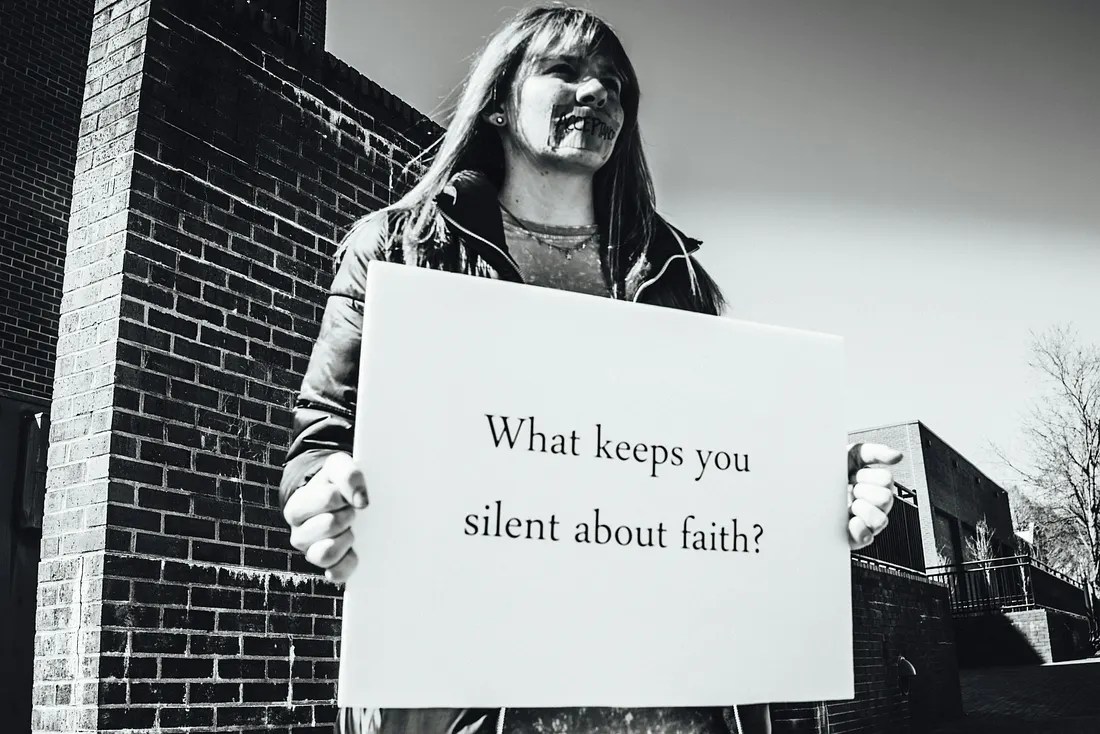
When I stopped attending church and started calling myself an atheist in the winter of 2022, there was only one ex-Christian who I knew personally: me. Almost all of my friends and family members were devout believers, many of whom were deeply shocked, saddened, and worried about my decision; the few non-Christians who I occasionally hung out with either hadn’t grown up religious or hadn’t taken their parents’ religious beliefs seriously. As you might imagine, I was eager to help people understand why I’d apostatized. I didn’t want them to think I was crazy, or that I was hostile to faith, or that I’d neglected the relational aspects of Christianity in favor of an obsessive intellectual quest. So, what did I do? I typed up a footnoted, 150-page document called “The Case Against Christ” and sent it to them.
In retrospect, this probably wasn’t the wisest course of action. It certainly didn’t make my community worry less (In my defense, I was stuck on the mental and emotional equivalent of a tilt-a-whirl at the time). They had already interpreted my attempts to explain my deconversion as potshots aimed at their worldview. I felt embarrassed by my mega-document, and I spent the next several months lobbing a hasty flurry of apologies, fretting that I’d divulged too many of my reasons for disbelief, and telling people that I had zero interest in convincing them to change their minds. This wasn’t exactly true, though. Part of me desperately wanted them to see the cracks in the foundation that had sent me scrambling out of my twenty-seven year place in the pews — a place I loved with every fiber of my being. I felt a lot like Jim Carrey in the Truman Show, waving my arms at people and yelling, “Don’t you see? This whole town is a set-up!” while they just stood there, watering their lawns with concerned looks on their faces. But another part of me didn’t want to cause anyone to doubt. The crisis of faith that preceded my departure from Christianity was the most existentially terrifying and disorienting thing I’d ever experienced, and I wished that waking nightmare on nobody. Thus, in my efforts to avoid seeming like a cranky Reddit skeptic or a downright paranoid lunatic, I kept apologizing and quietly withdrew my opinions from all conversations about religion.
Now, I’m done hiding. The decision to publicly come out as an atheist is a complex one. Not only does it often follow a long, arduous, and intensely personal journey of soul-searching, but those who make it sometimes risk alienating their loved ones or losing vital community support. Others can’t afford to be honest about their beliefs due to threats of physical violence, especially in countries where atheism isn’t socially acceptable. I was lucky in these respects, but the fear of making others uncomfortable can still be strong. Talking about why you abandoned a religion can feel insensitive or unnecessary, like pineapple on pizza. Still, despite worry and stigma, I’m convinced that those who have left (and who are safe) should strive to be outspoken about their unique decisions to do so. Here are 7 reasons why:
Reason #1: Truth Matters
As a Christian, I was taught to revere truth as something sacred. My fellow churchgoers and I spent countless hours studying our Bibles because we believed scripture was “God-breathed” and “useful for teaching, rebuking, correcting and training in righteousness” (2 Timothy 3:16), and we worshipped Jesus himself as “the way, the truth, and the life” (John 14:6). “All truth is God’s truth” was a motto at my evangelical college — the notion that no facet of existence fell outside the scope of God’s plan, so any new discoveries in fields like science, philosophy, or psychology should sharpen rather than blur our view of the divine. I owe my deeply ingrained need to pursue truth at any cost to my upbringing, and though it eventually led me away from Christ, I’m grateful for it. Christianity taught me that truth isn’t trivial; it links us to reality’s beating heart, and we discard it to our peril.
Why not allow blissful ignorance — the noble lie, like Batman’s at the end of The Dark Knight? If religious beliefs imbue people with purpose, encourage them to build communities, and spur them to invest in charitable causes, then why critique those beliefs, even if you become convinced that they’re misguided? We shouldn’t deny the positive impact that religion can have on people’s lives. Yet the intellectual compromise of individuals — my refusal to admit when I think a religious dogma is false — has a way of eroding our collective grasp of reality. You may know that humans aren’t exactly truth magnets; psychologists have identified over 200 distinct cognitive biases that keep us from accurately sussing out facts (But a quick scan of your Facebook feed could’ve told you as much). As anyone who has thumped their head against the wall after trying to reason with their flat-earther uncle Darryl knows, false beliefs rarely occur in isolation. They tend to accumulate over time, shuttering us off from the world outside our front doors. Honest inquiry exposes our blind spots and ugly parts of reality we’d rather not see. Yet it also opens us up to connection with others, facilitates growth instead of stagnation, and inspires appreciation of this planet’s precarious beauty. As Maria Popova writes in her book Traversal, “The search for truth demands unselfing, pericopes outward, casts light,” and is “the source from which all our quickenings, reckonings, and episodes of creative restlessness arise.” Truth can seem harsh, but it’s actually hopeful in its essence, as French atheist philosopher Simone de Beauvoir explains:
It is because I reject lies and running away that I am accused of pessimism; but this rejection implies hope — the hope that truth may be of use. And this is a more optimistic attitude than the choice of indifference, ignorance or sham.

Surprise: We atheists have our own biases, too. Our skepticism shouldn’t keep us from learning what our religious neighbors have to teach us. On the contrary, it should make us more willing to examine the fault lines in our own worldviews. Ask any scientist: There are few things as thrilling as working together to unravel the universe’s great mysteries. If comfort and conflict avoidance are our highest priorities, we all miss out on wonder.
Reason #2: Love Speaks Up
“I’m saying this because I love you.”
I’ve heard this phrase from lots of evangelicals since I left Christianity. It’s usually followed by declarations about the state of my soul and the need for repentance. Sure, it can be annoying, but I understand it as an expression of genuine concern for my well-being. If you really believe (as I once did) that those who reject Christ are going to be barbecued until time ceases to have meaning, how could you not urge them to reconsider their beliefs? Evangelicals like to remind us that love requires us to speak hard truths.
Could the same logic apply to non-Christians? If we come to believe that a religion is harming someone, and that leaving it behind would be in their best interest, shouldn’t we say so? I was pretty progressive as evangelicals go, but my deconversion still forced me to reexamine many beliefs that I now view as problematic: the aforementioned hell, the notion that LGBTQ+ relationships violated nature and God’s design, the concepts of original sin and total depravity, marital gender roles that I hoped my then-girlfriend would vibe with (and that she rightly clocked and resisted as patriarchy), the inability to trust my own reason and desires or make decisions without agonizing over God’s will, shame surrounding my sexuality, resistance to any arguments in favor of abortion, and cognitive dissonance about Bible passages that violated my conscience (to name a few). Lots of progressive Christians would see these ideas as toxic, too. Yet, based on my own unique upbringing, I probably wouldn’t have changed my mind on these subjects without first losing my confidence in the divine inspiration of scripture (I had reached these conclusions after studying each topic at length). These beliefs influenced how I voted, what social causes I supported or fought against, who I interacted with and who I avoided. We’re now experiencing the effects of many of them across our nation, whether we want to or not.
In his first letter to the Corinthians, the apostle Paul writes that “if Christ has not been raised, our preaching is useless and so is your faith… If only for this life we have hope in Christ, we are of all people most to be pitied” (15:19). The implication of his words is clear: If we don’t believe that Christ shimmied out of his grave clothes and assumed command of the universe, then we shouldn’t be afraid of telling Christians so. If, to paraphrase the philosopher Albert Camus, someone is missing the fullness of this life because of their preoccupation with the next one; if they’re suppressing who they really are due to fear of divine judgement; if their faith is keeping them from trusting nonbelievers or hearing their marginalized neighbors’ cries for help — then maybe Christians are right: love means speaking up.
Reason #3: Faith is Resilient
I was surprised when friends and family members read my hastily-typed tome on rejecting Christianity, shrugged, and responded, “I still believe.” Okay, I hadn’t expected them to be decked by heavenly light like Paul on the road to Damascus. But I’d assumed (arrogantly, in hindsight) that my case against the reliability of the New Testament was too ironclad to fail. What I’d envisioned as a battering ram fell as flat as a whoopee cushion.
Looking back, I can see how naïve I was. A year before my deconstruction, I would’ve responded in the exact same way to criticisms of Christianity, and for good reason. The reluctance to embrace competing narratives isn’t restricted to people of faith; it’s a human universal. Our deeply-held beliefs are extremely durable. They usually change very slowly, and we’ll resist and rationalize in all sorts of ways before giving them up. There’s a ton at stake in reckoning with the possibility that we might be wrong about the things we’ve built our lives on. If not for the specific season of mental and emotional anguish that I was navigating as 2022 drew to a close, I wouldn’t have been ready to jettison my entire worldview. I’m so glad that other ex-Christians were able and willing to help me cross that dizzying tightrope.
If, as I once did, you fret about doing irreparable damage to your religious friends and family by expressing your qualms with their beliefs — pushing them onto the same nightmare slip ‘N slide that you just stopped scream-sliding down — don’t. They won’t begin the process of deconstruction unless they’re ready to; if they are, your honesty might give them the permission to start. In the meantime, don’t patronize their beliefs like I was tempted to, and respect their ability to absorb challenges to their thinking with grace.
Reason #4: Dialogue Changes Minds
Evolution created the world as we know it, and it’s also a virtue. The idea that discourse — religious, political, or otherwise — means hunkering down on the edges of a social media battlefield and refusing to change until your trench explodes is, in the immortal words of Winston Churchill, “just the biggest load of horse-shit I’ve ever heard” (All right, maybe that was me). Our inability to talk to each other about sensitive subjects isn’t something we decided on; it’s a lie foisted on us by wealthy jerks who’d rather not see us unite on the concerns that we share, like our ability to afford groceries.
Dialogue is, quite simply, how we evolve as human beings. We’ve all held beliefs that needed debunking (It hurts to admit this, but I didn’t realize that grocery store eggs weren’t fertilized by chicken sex until a couple years ago…), and we’re all capable of revising our opinions — even our long-held, fiercely defended, and self-sabotaging ones. According to Christians, that’s part of why we all need a measure of unmerited grace. Yet the converse also holds true: If our beliefs aren’t challenged, then they rarely change.

In her book Unfollow: A Memoir of Loving and Leaving the Westboro Baptist Church, Megan Phelps-Roeper recounts her exodus from a notoriously fundamentalist Christian cult that protested military funerals, attacked queer rights campaigns with hate speech, advocated for the death penalty, and prayed for the destruction of literally everyone outside their church. She was the group’s Twitter spokeswoman, and now she’s an advocate for tolerance, free speech, and compassionate dialogue. How was she able to escape her judgmental community and worldview? Through conversation — specifically, Twitter debates with people who read her hateful posts and responded to them. In her view, such responses are critically important:
As kind as my friends on Twitter were, if they hadn’t actually made their arguments, it would’ve been so much harder for me to see the world in a different way. We are all a product of our upbringing, and our beliefs reflect our experiences. We can’t expect others to spontaneously change their own minds. If we want change, we have to make the case for it.
Notice that those who confronted Phelps-Roeper via Twitter did so kindly. There’s a huge difference between “speaking the truth in love” (Ephesians 4:15) — which involves empathy and active listening just as surely as it entails stating one’s truth — and clobbering people over the head with our opinions in an attempt to win arguments. The former tactic softens ground for growth; the latter provokes people to start building ideological fences.
Reason #5: Beliefs Have Faces
Growing up, I was trained to see unbelievers as hostile to God’s truth. My mental image of an atheist was an especially cranky version of Richard Dawkins, who many evangelicals viewed as a personal friend of the devil, and I regarded folks outside my church with a mixture of fear (They might corrupt my morals!) and pity (They were spiritually lost!). That is, until I met Aaron — a dude who brought his copy of Dawkins’ The God Delusion to our high school choir class. I started evangelizing to him; he told me why religion didn’t make sense. We kept discussing theology and philosophy via Facebook and, as the years passed, he became one of my very best friends.
When we own our unbelief, we show fundamentalist religious folks that skeptics don’t have to be scary. Instead of faceless blobs prowling internet comments sections, burning Bibles, and using witchcraft to turn kids gay, we become flesh-and-blood humans who they can talk to — awkwardly and tentatively at first, but then with increasing ease. Once, I would have been intimidated by democratic socialists who drank, swore, and advocated for veganism. Now that I am one… I know that labels don’t define a person. If my Christian friends made prejudiced comments about atheists, I could retort: “Aaron isn’t like that.” Now, those friends can do the same for me.
Reason #6: We Are Not Alone
As stated above, part of the reason I was so hesitant to admit my unbelief in 2022 was that I didn’t know anyone else who had renounced faith. All it took was a Google search to find that I was in good company — about 30% of U.S. adults are religiously unaffiliated, according to surveys by the Pew Research Center. That’s a whole lot of us. But it’s also a bit surprising, given how loud religious voices in our society are compared to secular ones.
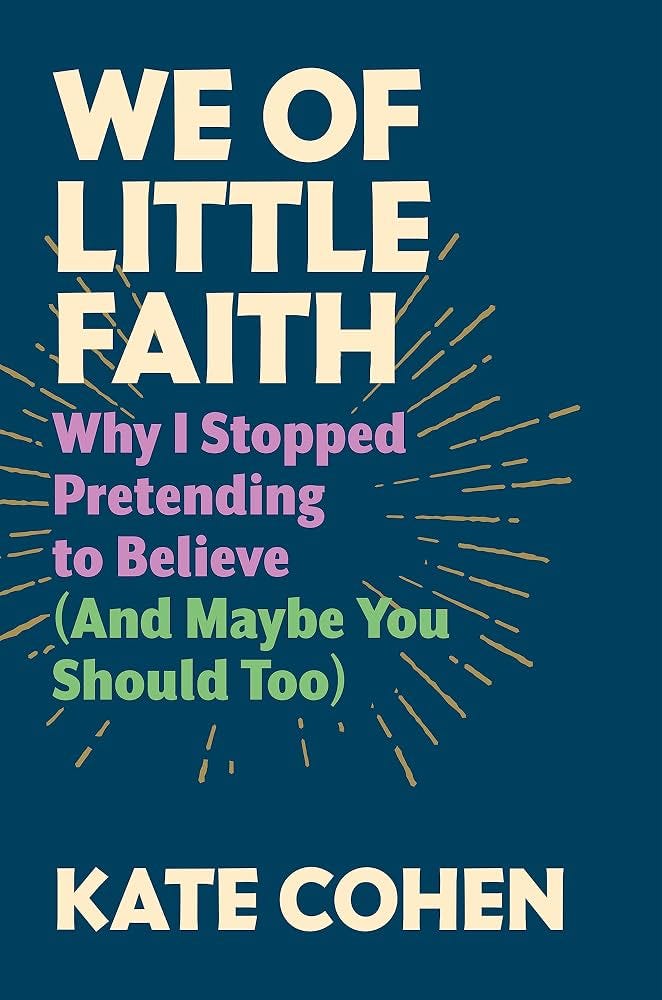
In her book We of Little Faith: Why I Stopped Pretending to Believe (And Maybe You Should Too), Kate Cohen explores various reasons why atheists tend to avoid expressing their skepticism in public discourse — stigma, fear of reprisals, worries about offending or confusing, etc. This group shyness may seem harmless, but it isn’t. Not only does it prevent closeted skeptics from finding community and voicing their doubts, but it also cedes ground to religious bigots who are dead-set on controlling U.S. political institutions — through anti-LGBTQ+ legislation, publicly funded religious schools, bans on abortion services, and more. When we speak out, we show our leaders and neighbors that atheists deserve respect and the ability to participate in the national conversation. It can be difficult, but it’s worth it. Cohen herself learned this when she took that “tiny, terrifying step” of sharing her doubts with an elderly Southern man near her home in the Shenandoah valley — only to discover that this neighbor had doubts, too… and a gay son, and lots of concerns about his church’s poor treatment of women and gay people:
We all go around — I once did, too — assuming that everyone else is a believer. I’ll bet every private atheist in America knows someone who thinks they’ve never met an atheist before. I’ll be every private atheist in America sometimes feels like the only atheist in the room while chatting with another atheist who feels like the only atheist in the room… We won’t know the truth until we tell the truth.
Reason #7: You Deserve to Be You
In the months following my departure from religion, I spent so much time hiding and sugarcoating and apologizing for my disbelief that people close to me started forgetting I wasn’t a Christian anymore. I was getting along great with everyone by refusing to rock the religious boat, but I left many interactions with the queasy feeling that I’d been disingenuous — that I was showing people a cardboard cutout of my old self instead of allowing them to get to know the new person I was becoming. I wasn’t just apologizing for my beliefs, but for myself — my thoughts, values, emotions, and desires. I’d berated myself for sharing that 150-page document with people, anxious that it might seem like a campaign to bulldoze their faith. Yet, when I was honest with myself, I knew the document had never been about that. It was a cry for help — an attempt to let people in to the anguish I had experienced during my deconstruction, to explain why my journey away from faith had meant so much to me. I hungered to be seen, understood, and loved as the world I thought I knew collapsed. What if I’d told my friends and family this directly instead of burying it in pages of evidence and arguments? What if I accepted the fact that my voice deserved to be heard? What if you do, too?

Thanks so much for taking the time to read this essay through to the end! I really appreciate it. I work very hard to craft each piece of writing as thoughtfully and beautifully as I can, with no use of A.I., and your support makes that often challenging process worthwhile. If you’d like to read more of my writing on life after religion, you can follow me on Medium or subscribe to this blog, wordsforwayfarers.com. I’d also love to hear your thoughts in the comments! 🙂


well done! All of those are great reasons to speak up.
LikeLike
Thanks so much for reading!
LikeLike
Way to go, congratulations on achieving such acute awareness. Nice of you to try to have conversations with believers – not something I see that much point to, since most of them are so stuck on their culture of irrational subjection.
LikeLike