Take a moment and think back to your childhood, adolescence, and/or young adulthood. How did life look from those perspectives? Everyone’s upbringing is unique, and some people are forced to grow up much too fast. However, for many of us, these years were characterized by the thrill of discovery. There was eagerness to map the world around us – an insatiable yearning to see and try and learn everything we could. We didn’t have to be told to love the world; on the contrary, we loved it effortlessly and automatically, inhaling it like oxygen. Our enthusiasm for existence may have been foolhardy, but we didn’t care. For all its hardships, life was a grand adventure story, and we couldn’t wait for the next page.
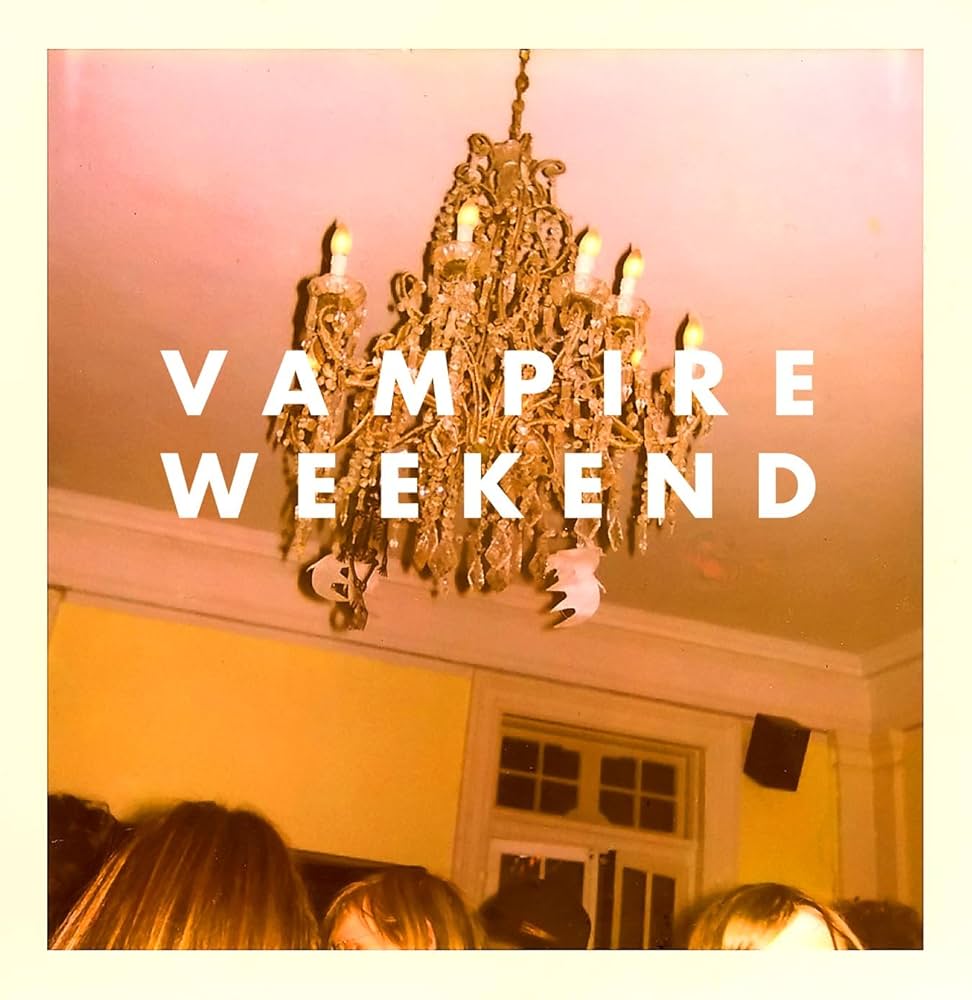
When Vampire Weekend’s self-titled debut album was released in 2008, it took the indie music scene by storm, delighting audiences with its diverse instrumentation and unabashed, youthful exuberance. The members of the group – lead singer and lyricist Ezra Koenig, multi-instrumentalist Rostam Batmanglij, bassist Chris Baio, and drummer Chris Thompson – met during their undergraduate years at NYC’s Columbia University.1 From the very beginning, the band evinced a restless fascination with world music, infusing their songs with baroque classical arrangements and Afro-Caribbean grooves.2 Their sound was heavily influenced by Paul Simon’s Graceland, an album which introduced South African jive music to American audiences.3 Like that album, Vampire Weekend was upbeat, expansive, and totally irrepressible.
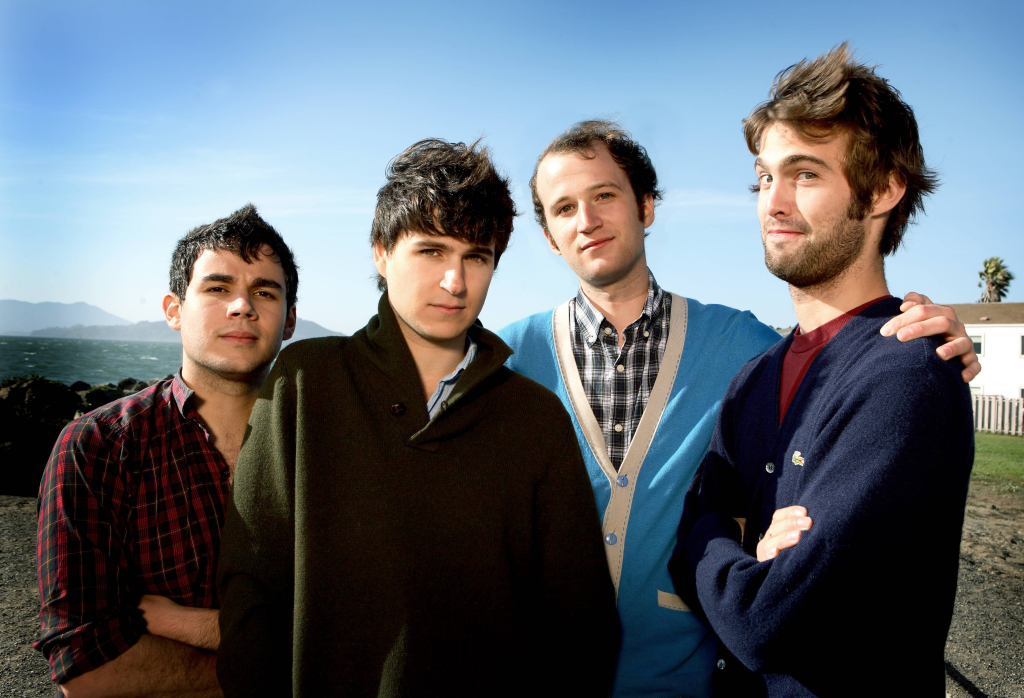
Vampire Weekend’s musical bent may have stemmed from their diverse roots. Koenig’s Jewish family emigrated from Hungary and Romania, Batmanglij is the son of Iranian refugees, and Baio and Thompson can trace their roots to Italy and Ukraine, respectively.4 The group’s success also sparked a movement toward musical diversity, as numerous indie bands began incorporating world sounds into their albums. Yet none of these works loomed as large as Vampire Weekend, which was ranked as the 24th best debut album of all time5 and also earned a spot in Rolling Stone’s list of the 500 greatest albums ever made.6
In my introduction to this series of posts, I shared the question that I believe is a narrative through line woven throughout Vampire Weekend’s entire discography: How can we continue to love a world that has broken our hearts time and time again? In this post, I’ll begin my literary analysis of the band’s lyrics, exploring how their first album introduces this theme. As we’ll see, the poetry on Vampire Weekend invites us to recall what the world looked like when we were young – a dazzling, kaleidoscopic marvel, unimaginably large and brimming over with possibility.
Analysis
Fittingly, Vampire Weekend’s exploration of humanity’s relationship to the world begins with a childlike act of noticing. In the opening lines of “Mansard Roof,” Vampire Weekend‘s first track, the narrator examines his surroundings in Cape Cod, moving from one sight to the next without any attempt at interpretation:
I see a mansard roof through the trees
I see a salty message written in the eaves
The ground beneath my feet, the hot garbage and concrete
And now the tops of buildings, I can see them too
This attention to detail is a harbinger of what’s to come. As the album unfolds, listeners are presented with a flurry of exotic words (pueblo huts, turquoise harmonicas, Louis Vuitton, kwassa kwassa, buddha, French kids, madras, kefir, keffiyeh, occident, English breakfast, Spanish brown stone) and place names (New Mexico, Washington Heights, Oxford, Cape Cod, Khyber Pass, Darjeeling, San Juan, Hyannisport, Wellfleet, Provincetown). At first glance, these words might seem random and disconnected. Critics of Vampire Weekend have sometimes accused the band of writing absurd, intentionally opaque lyrics. Yet there’s more going on here than meets the eye (or the ear). In an interview with The Irish Times, Koenig described his lyrics as “impressionistic,” more akin to collages than traditional stories.7 Unlike artists who strive for realism, impressionists attempt to capture feelings (or “impressions”) about their subject through the use of more spontaneous imagery. On Vampire Weekend, Koenig’s colorful vocabulary exudes a youthful delight in particularity. Listening to his lyrics, you can imagine a kid breathlessly rattling off every cool thing he’s just seen and heard. The kid doesn’t care whether his observations are coherent. The items he’s describing are beautiful, each one worth mentioning and celebrating for its own sake.
As the album continues, we witness the blossoming of youthful romance. On “Cape Cod Kwassa Kwassa,” the narrator eagerly anticipates making love with a college classmate. Later, on “Bryn,” he revels in the thrill of being noticed by someone he cares about, struggling to process his emotions:
Here in the heartland, a feeling so startling
I don’t know what I should do
Oh, Bryn, you see through the dark
Right past the fireflies that sleep in my heart
Here is infatuation undimmed by heartache. Where break-ups are mentioned, they aren’t dwelt upon, and the narrator hurries to new subjects. There’s so much more to see and do! On “M79,” lyrics about someone leaving get brushed aside with a “but anyway” and buried under an avalanche of travel imagery – parks and taxi cabs and stairs and mountains and an “arch of glass.” On “Campus,” the narrator pines for a former lover en route to classes: “How am I supposed to pretend / I never want to see you again?” Yet he expresses these thoughts wistfully, describing his ex as a “cruel professor studying romances” and enjoying the tranquility of his college environment: “In the afternoon, you’re out on the stone and grass / And I’m sleeping on the balcony after class.” Later, on “One (Blake’s Got a New Face),” the narrator pokes fun at youthful heartache: “Oh, your collegiate grief has left you / Dowdy in sweatshirts, absolute horror!”
As you listen to Vampire Weekend, you can’t help feeling that these four college kids are having tons of fun, shooting for the moon with little regard for convention or what society thinks. On “Oxford Comma,” the narrator yearns for authenticity, lampooning the artificial rules and regulations of former eras:
Who gives a fuck about an Oxford comma?
I’ve seen those English dramas too, they’re cruel
So if there’s any other way
To spell the word, it’s fine with me, with me
Similarly, on “I Stand Corrected,” the narrator eschews convention to draw closer to a loved one: “Forget the protocol, I’ll take your hand / Right in mine.” On the album’s second-to-last track, “Walcott” (a fan favorite at Vampire Weekend’s live shows), the band abandons any pretensions, nailing all its quirky colors to the mast. The song, which is based on a short film that Koenig envisioned over summer vacation (and that gave the band its name), depicts a man traveling to Cape Cod to warn the mayor of an impending vampire invasion.8 It also references the Holy Roman Empire, for good measure.
Conclusions
Vampire Weekend isn’t just a genre-bending musical landmark. It’s also a lyrical ode to youth – a headstrong, joyous romp that captures the feeling of growing up with the whole wide world at your feet. As shown above, Ezra Koenig and co. have no trouble loving the planet on which they find themselves; on the contrary, they’ve fallen head over heels in love with it, relishing life in all its particularity. Here, the world is an adventure to be embarked upon, a lover to be pursued, and a gift to be received with wide-eyed wonderment. Add the band’s signature blend of exuberant, cosmopolitan sounds into the mix, and you’ve got the makings of a legendary album.
Yet all is not well. On Vampire Weekend‘s final track, “The Kids Don’t Stand a Chance,” our narrator encounters the first hint of hostility from the world he inhabits. Ominous lyrics roll like storm clouds over the song’s sunny chords, depicting an impending clash between kids and forces beyond their control – specifically, a capitalist system that prioritizes wealth, status, and privilege over youthful idealism:
You criticize the practice
By murdering their plants
Ignoring all the history
Denying them romance
The pin-striped men of morning
Are coming for to dance
Forty-million dollars
The kids don’t stand a chance
As the record draws to a close, we’re left with unsettling questions: How should we make sense of this unexpected opposition from the world? What can we do when life’s grim realities threaten to destroy our youthful innocence? To learn how Vampire Weekend explores these themes, tune in next week for a lyrical analysis of their remarkable sophomore album, Contra. In the meantime, why not prepare for summer by giving the band’s self-titled debut another spin?
Click below to read the second chapter of my Vampire Weekend series!
Sources
1. “Video Hits Interview Vampire Weekend.” YouTube, uploaded by TENVideoHits, 26 May 2010, https://www.youtube.com/watch?v=5hhXgsHrv7c.
2. Phares, Heather. “Vampire Weekend – Vampire Weekend.” AllMusic, https://www.allmusic.com/album/vampire-weekend-mw0000586147.
3. Schlansky, Evan. “Paul Simon Defends Vampire Weekend.” American Songwriter, 26 March 2011, https://americansongwriter.com/paul-simon-defends-vampire-weekend/.
4. “Vampire Weekend Interview – An Interview With Ezra Koenig of Vampire Weekend.” Altmusic.about.com, 23 November 2009, https://web.archive.org/web/20130116142739/http://altmusic.about.com/od/interviews/a/vampireweekend.htm.
5. “100 Best Debut Albums of All Time.” Rolling Stone, 22 March 2013, https://web.archive.org/web/20180701222243/https://www.rollingstone.com/music/lists/the-100-greatest-debut-albums-of-all-time-20130322/vampire-weekend-19691231.
6. Wenner, Jann S., ed. (2012). Rolling Stone – Special Collectors Issue – The 500 Greatest Albums Of All Time. USA: Wenner Media Specials. ISBN 978-7098934196
7. Ganatra, Shilpa. “Vampire Weekend: ‘Our lyrics are not nonsense. They’re impressionistic.'” The Irish Times, 1 May 2019, https://www.irishtimes.com/culture/music/vampire-weekend-our-lyrics-are-not-nonsense-they-re-impressionistic-1.3874203.
8. Ayers, Michael D. “Interview: Vampire Weekend”. Artist Direct, January 23 2008, https://web.archive.org/web/20150402184050/http://www.artistdirect.com/nad/news/article/0,,4548330,00.html.
 Words for Wayfarers