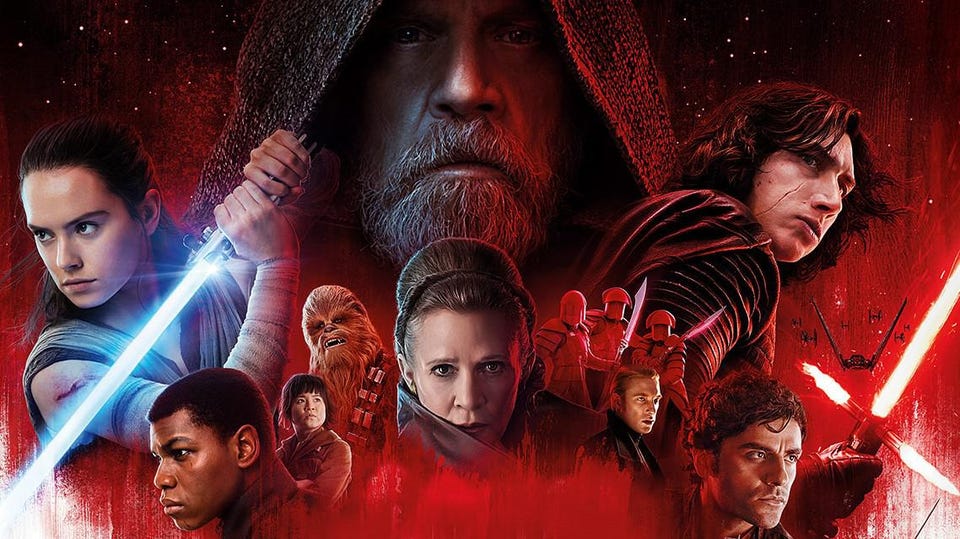
Shortly after my wife and I started dating, I made a horrifying discovery: She had never seen the original Star Wars trilogy. Well…that wasn’t exactly true. She had seen the opening minutes of George Lucas’ sci-fi epics, which are consistently ranked among the most influential works of cinema ever created. She had just fallen asleep for the remainder of the movies.
Suffice it to say that, shortly after we were married, I assumed my God-given husbandly duty of bringing her up to speed on the Star Wars universe. She watched The Empire Strikes Back for the first time last week, and while I’ve seen that film more times than I can count, it was delightful to revisit it through her eyes. I found myself marveling afresh at the sharp, surprising storytelling of the trilogy’s famous middle chapter. Few films have generated as many sequels and spin-offs as Star Wars has. Some of these follow-ups are thrilling. Others are tedious exercises in fan service (and no, I’m not referring to the Star Wars Holiday Special). However, no Star Wars story reminds me more of Empire Strikes Back than The Last Jedi – a movie which has achieved a similar level of fame, but for much more negative reasons.
Over the years, I’ve debated The Last Jedi with people more than any other film. The movie was incredibly divisive upon its release, polarizing fans of the series about as sharply as the 2016 presidential election. While the vast majority of critics praised its originality, many fans saw it as a betrayal of all the franchise stood for, and some of them even petitioned for a remake. Backlash against the film was so strong that Disney and Lucasfilm brought back series originator J.J. Abrams to plaster over all vestiges of Rian Johnson’s storytelling in the series finale, The Rise of Skywalker. To this day, Star Wars fans can’t agree on whether The Last Jedi was a triumph or a travesty. The film has joined the laundry list of inflammatory topics best avoided at social gatherings, such as finances, politics, death, and whether or not hot dogs are actually sandwiches.
Trigger warning: I happen to believe The Last Jedi is good. Really good. Not only that, but it’s also my favorite Star Wars film, and I think it’s the best Star Wars sequel since The Empire Strikes Back. Many members of my generation don’t know that Empire was also divisive upon its release. Reviews of the film were mixed at best, with fans criticizing its dark tone, its plot twists (particularly Darth Vader’s parental reveal and Han’s romance with Leia), and its conclusion. It took years of reflection and reconsideration for the film to receive the acclaim that it enjoys today. In this essay, I will argue that The Last Jedi deserves the same reconsideration. Like The Empire Strikes Back, Rian Johnson’s famous entry in the Skywalker saga does exactly what the middle chapter of a trilogy should do, expanding the universe of its predecessors, developing characters, and setting up the series finale for success.
Expanding the Universe
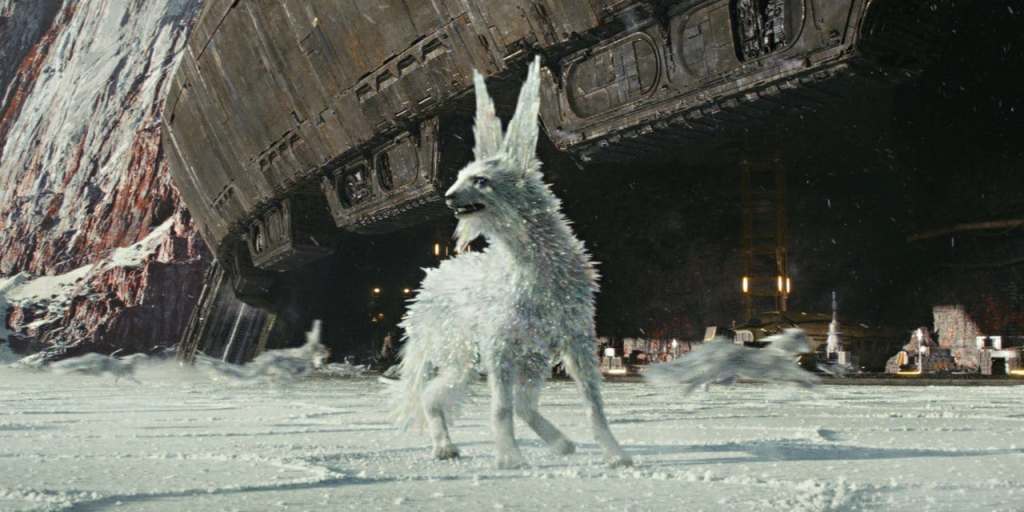
From a purely cinematic standpoint, The Last Jedi is undeniably gripping and immersive. The film boasts some of the most unforgettable images ever captured in the Star Wars franchise: the silent sundering of a Star Destroyer as a cornered ship jumps to hyperspace, blood-red clay bursting from a salt surface as pale and smooth as glass, a balletic duel with red guards in a crumbling throne room, the silhouette of a lone Jedi striding from the rubble to face an armada, and twin suns setting above an empty cloak on a cliff.
The film’s script is top-notch as well, crackling with wit, humor (the best since since the original trilogy), and poetry. Rian Johnson is known for crafting intricate, multilayered screenplays (remember his 2019 film Knives Out?), and he’s also the only person besides George Lucas to both write and direct his own Star Wars film. The result here is a streamlined, delightfully quirky script studded with moments of grandeur, such as Luke’s first lesson with Rey, which contains the most eloquent description of the force since Yoda’s in The Empire Strikes Back. Similarly, Yoda’s monologue on Ahch-To contains the best lines the tiny green sage has ever uttered (Seriously, go back and watch it again). Moments of dialogue are interspersed with propulsive action sequences, none of them more heart-pounding and kinetic than the film’s opening scene, which depicts the deaths of Rebel pilots during a bombing raid gone horribly wrong. Rogue One is rightly praised for its gritty depiction of galactic warfare, which highlighted the sufferings of ordinary soldiers outside the Jedi order. Yet, it’s rarely acknowledged that Rian Johnson managed a similar feat in the span of a few minutes, opening his film with a gut-wrenching sequence that showcases the sacrifice of a lone gunner. Leia’s subsequent mourning for the lost pilots and Rose’s grief for her sister lend gravitas to deaths which are all too often sidelined in Star Wars films.
Beyond creating an entertaining spectacle, Rian Johnson expanded the Star Wars universe in exciting, thought-provoking ways. The Last Jedi‘s Canto Bight sequence is frequently criticized by fans, with many claiming that Finn and Rose’s side quest contributes nothing to the movie’s plot. However, while it’s true that the duo’s mission ends in failure, their discoveries complicate simplistic understandings of the franchise’s central conflict. In Canto Bight, Finn witnesses a troubling side-effect of war: greedy profiteers enriched by military arms deals. DJ, the swaggering code-breaker rescued by Finn and Rose, challenges the former’s idealism and loyalty to the Rebellion by demonstrating that both Rebel and First Order weapons are traceable to the same salesmen. War doesn’t just benefit the gamblers and hustlers who crowd Canto Bight’s casinos; it also finances the subjugation of a slave population. In a series where “good guys” and “bad guys” are usually clear-cut categories, Canto Bight presents a more complex, unsettling, and three-dimensional picture of warfare. It also saddles Finn with a new dilemma: Is sticking his neck out for the Rebellion truly worthwhile? Faced with the ambiguities of war, DJ advises Finn to pursue his own self-interest: “Live free. Don’t join.” The audience is left wondering how Finn’s discoveries will affect his allegiance to the Rebellion. This situation harkens back to The Empire Strikes Back, a film that exposed audiences to similarly thorny questions. It’s easy to hate and kill a masked tyrant whose actions have brought untold suffering to the galaxy. But what if that tyrant is your own flesh and blood?
Similarly, The Last Jedi breathes new life into our understanding of the Force. Part of the joy of The Empire Strikes Back was discovering that the Force was bigger than we imagined. Not only could it guide Jedi movements, sway the mind of a stormtrooper, or choke a bothersome officer (as in A New Hope), but it could also pull objects through the air, propel a Jedi through space, lift a spaceship from the bottom of a swamp, and connect the thoughts of a father and son. In The Last Jedi, Rey and Kylo Ren discover (to their astonishment) that they can speak, see one another, and even touch across vast distances. Their scenes of Force connection raised intriguing questions about their relationship (later described as a “dyad” in the Force) and also paved the way for thrilling action sequences in The Rise of Skywalker. Luke’s climactic, self-sacrificial projection of a Force ghost to outwit Kylo Ren is another feat audiences had never dreamed possible. Not since Yoda dredged Luke’s X-wing from the marshes of Dagoba have I been so gobsmacked and fascinated by what the Force could accomplish.
Rian Johnson’s decision to deny Rey über-powerful, force-wielding parents may have sparked more collective outrage than pineapple on pizza ever has. However, it reinforces Luke’s claim that the Force is bigger than the Jedi. It’s a mysterious, unpredictable reality that surrounds and connects all living things. The Last Jedi‘s closing shot of a Force-sensitive slave boy on Canto Bight drives the point home. Call me naïve, but I’d rather explore a universe where the Force can show up unexpectedly – in places and people and ways I may never have considered – than a universe where that magical, mind-bending reality is constrained by council deliberations or who someone’s parents are. What if the power that the Jedi harness isn’t limited to their ranks? For all their wisdom, might not the Jedi themselves have more to learn about the mysterious ways of the Force?
Developing Characters
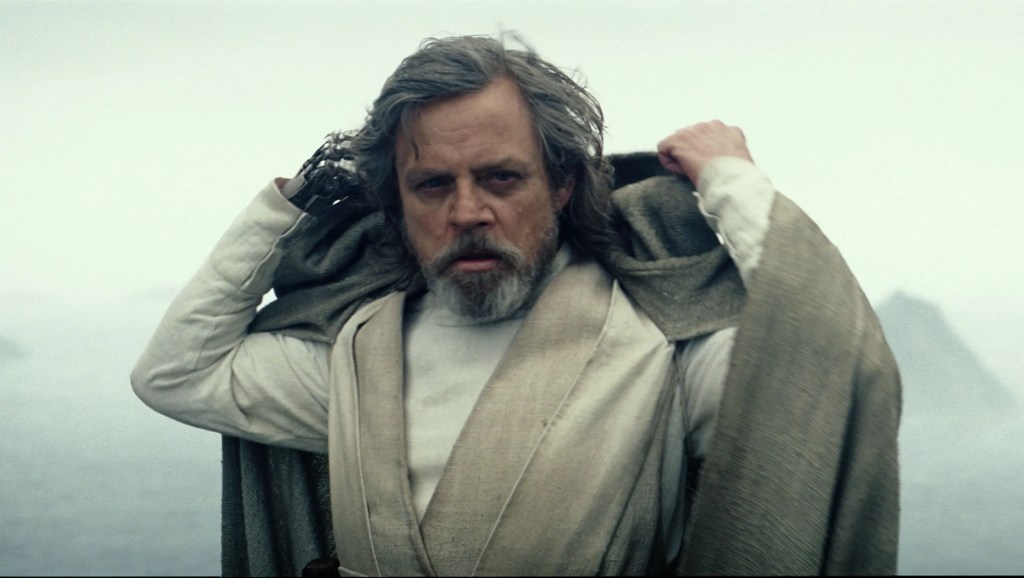
All right, here’s where I’m going to get in trouble (if I haven’t already). I believe that one of the Last Jedi‘s greatest strengths is its character development. Now, before you brand me a heretic, put down your torches and pitchforks and hear me out. Contrary to popular belief, Rian Johnson respected the protagonists introduced by J.J. Abrams in The Force Awakens, so much so that he gave each of them a satisfying, logically consistent character arc. The Last Jedi develops existing characters in ways that, while perhaps unexpected, transform them into more interesting and relatable human beings.
Take Poe Dameron. In The Force Awakens, Poe is a dashing and decisive flyboy whose cockpit skills come in clutch for the Rebellion. And that’s all we really know about him by the end of the film. The Last Jedi asks a weightier question of Poe’s character: What will it take for this scrappy, independent ace to mature into a true leader? At the beginning of the film, Poe’s recklessness and stubbornness have jeopardized the well-being of his crew. Convinced that he knows what’s best, the pilot is unable to stomach orders from his superior officer, Vice-Admiral Holdo. His hot-headed quest for control eventually escalates into mutiny. Yet, when Holdo sacrifices herself to save her fleet, Poe learns that appearances aren’t always what they seem, and he also discovers that patience and circumspection are vital components of effective leadership. Notably, when Kylo Ren’s forces overwhelm Rebel troops on Crait, Poe is the one who directs the Rebels to retreat. He has learned to subject his own desires, and even his own instincts, to the larger mission and the needs of those who follow him.
What about Finn? One of the most complex and interesting characters in the Star Wars saga, Finn made the courageous decision to abandon the stormtrooper platoon that had brainwashed him and taught him to kill. In The Force Awakens, we see him risking his life repeatedly to help Rey, the first true friend he has ever known. Yet, at times, Finn’s loyalty to Rey borders on obsession. More than once, it drives him to make rash decisions that are counterproductive to the Rebel cause. When we first see Finn in The Last Jedi, he’s about to desert the Rebellion to chase after Rey again. However, after Rose politely redirects him with a taser, Finn is forced to determine for the first time who he is apart from Rey. His journey to Canto Bight is pivotal, because both that trip and Rose’s righteous indignation broaden his concerns beyond friendship with Rey to other lives impacted by the First Order, including slave children who are captured and exploited as expendable resources, just as he himself once was.
There’s a reason why DJ’s cynical arguments appeal to Finn. Up to this point, his primary motive has been self-preservation, an instinct which has blinded him to what the Rebels are really fighting for. Finn grew disillusioned with the First Order as a stormtrooper, leading to his defection. Now, faced with conclusive evidence that the Rebels aren’t as squeaky-clean as he’d assumed, he’s tempted to jump ship once again. However, he ultimately decides that the cause of liberating the oppressed is worth fighting for, even if the soldiers and systems that work towards that goal are imperfect. When Captain Phasma calls Finn “scum” later in the movie, he happily replies, “Rebel scum,” finally identifying himself with the Rebellion. He also risks his life for Rebel comrades in a heroic attempt to disable a First Order cannon (although it seems his ship would likely have melted or blown apart before reaching the cannon, doing nothing to slow Kylo Ren’s advance, which explains Rose’s effort to divert the impulsive maneuver). Watch the scene where Rey reunites with Finn again, and you’ll notice that although he greets her warmly, he turns quickly to check on an injured Rose. His friendship with Rey still matters to him, but it isn’t the only thing he cares about anymore.
Then there’s Rey herself. In The Force Awakens, we meet the plucky heroine on Jakku, a desert planet where nothing of consequence ever seems to happen. Her greatest fears are isolation and irrelevance, and throughout The Last Jedi, she looks to Luke as someone who can help her find her place in the galaxy. But Kylo Ren is eager to exploit her loneliness, and she finds herself increasingly drawn to this fellow outcast. Luke’s failures as a mentor exacerbate her insecurities. In one of the film’s climactic scenes, Kylo twists the knife into Rey’s very worst fear, revealing that her parents were nobodies who abandoned her as a child. It’s Rey’s lowest moment – a gut-wrenching revelation that makes the Sith lord’s offer of companionship all the more tantalizing. While Rey manages to resist, we are left wondering how she will reckon with Kylo’s words. It’s a gutsy move by Rian Johnson, and it gives Rey’s character plenty of impetus to grow in the series finale.
Speaking of Kylo Ren, Rian Johnson’s decision to kill off Supreme Leader Snoke isn’t simply an effort to subvert expectations. Rather, it’s a perfect excuse to deepen and develop Kylo’s character. In The Force Awakens, the Sith lord is a powerful but temperamental youth who dreams of filling Darth Vader’s sizable shoes. He’s out to prove himself, but he’s also very insecure, hiding behind a mask and throwing tantrums whenever his plans go awry. Toward the end of that film, we witness a tiny crack in his facade – a moment of vulnerability in the presence of his father, Han Solo. The Last Jedi draws out these character threads in insightful ways. On the one hand, we see Kylo’s grip on the galaxy tightening, each victory pushing him further and further toward the point of no return. His decision to unmask underscores his resolve to step out of Vader’s shadow and embrace his own identity as a Sith. On the other hand, we see his inner turmoil intensifying as his avenues toward redemption disappear. He sheds tears in secret, hesitates to kill his mother, and reaches out to Rey as the one person who might still provide him with companionship (if only she would turn to the dark side). Kylo’s conversations with Rey in The Last Jedi are both brilliantly acted and narratively compelling. Chock-full of longing, tension, and subtlety, they invite us into the emotional journeys of both characters, establishing the pair’s relationship as a complex, multifaceted phenomenon.
Finally, we come to Luke Skywalker. For many fans, Luke’s disdainful, over-the-shoulder lightsaber toss was the most incomprehensible Jedi act since Anakin’s sand monologue. With that provocative image, Rian Johnson challenged audiences to reexamine their beloved childhood hero with fresh eyes, checking any assumptions about who he must have become at the door. Personally, I found this challenge invigorating. For all their charm, the characters of Han Solo and Princess Leia in The Force Awakens were essentially exercises in nostalgia – carbon copies of their past incarnations in Return of the Jedi, albeit with more wrinkles and arthritis. In sharp contrast, Rian Johnson gave Mark Hamill a fully-fleshed character to inhabit, investing that character with new fears, new questions, and new obstacles to overcome. I must confess that grumpy Luke is my favorite Luke. I happen to think it’s Mark Hamill’s best performance. Sure, seeing that same old starry-eyed, swashbuckling, morally stalwart Luke that we all know and love would have made us feel nice. But wouldn’t we rather meet a Luke who still has depths within him yet to be explored – who, after all these years, might still be capable of surprising us?
The most common criticism leveled at The Last Jedi’s Luke is that his behavior is out of character. However, this criticism overlooks an important fact of human nature: People often change in surprising and substantial ways, especially after unexpected tragedies (Have we forgotten about Anakin’s descent into hatred after the death of his mother, or about Han Solo’s return to smuggling after his divorce?). The Last Jedi answers a question posed by The Force Awakens: Why would this leader of the Rebellion abandon his friends and family and retreat to the distant reaches of the galaxy? Like Yoda’s hermitage on Dagobah, Luke’s isolation was prompted by a painful failure. After spearheading the defeat of the Empire, Luke failed to see the darkness brewing within his young padawan until it was too late, just as Yoda and his Jedi compatriots failed to see the Sith lord gathering power right under their noses. But Luke’s grief ran deeper than Yoda’s. Not only did his failure as a teacher stoke the fires of Kylo Ren’s rage, dividing Han and Leia from their son, but it also resulted in the slaughter of Luke’s students and the rise of the First Order, resurrecting the very evils he had fought so long and so hard to destroy. All of his life’s work seemed to have amounted to nothing. If ever there was a breeding ground for cynicism, this was it.
This is why Luke and Rey needed to cross paths. Rey’s youthful optimism and faith in Kylo’s goodness rekindled something deep inside Luke – the memory of a headstrong young Jedi who never gave up hope that brokenness could be redeemed. This is also why Yoda needed to be the one to comfort and challenge Luke after Rey’s departure. He alone understood Luke’s burden – the struggle of rebuilding from the ashes of catastrophic failure. At the beginning of The Last Jedi, Luke dismissed Rey’s plea for help with weary annoyance: “You don’t need Luke Skywalker. You think what? I’m gonna walk out with a laser sword and face down the whole First Order?” Yet, at the climax of the film, this is exactly what he does. Luke’s showdown with Kylo Ren on Crait is both a masterwork of suspense and a perfect summation of his character. He’s not interesting in taking Kylo’s life, but rather in saving the Rebellion. Long, long ago in a galaxy far, far away, Luke won our hearts by triumphing over evil with self-giving love, which is the truest expression of the Force. On Crait, Luke lays down his life for those he loves (including Kylo Ren), conquers through peace and self-control, and in so doing achieves a union with the Force hitherto unimagined. There could be no better homage to Luke Skywalker than the film’s closing shot, in which a group of slave children tells the tale of Luke’s last stand, which has already spread across the galaxy.
Setting Up the Sequel
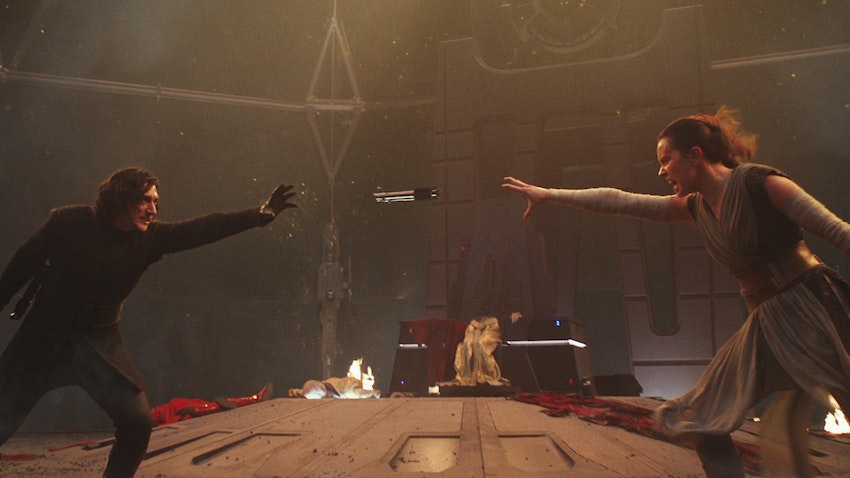
Many people believe that J.J. Abrams’ The Force Awakens was a solid beginning to the sequel trilogy. Episode seven reminded audiences of what they loved about Star Wars while also introducing them to exciting new characters. By contrast, many of these same people see The Last Jedi as the proverbial wrecking ball of the Star Wars universe – a destructive force with all the tact and taste of a wampa. Did Rian Johnson hamstring the sequel trilogy’s shot at greatness? Or did he set up the series finale for success?
I enjoyed every minute of The Force Awakens when it opened in 2015, and I still think it’s loads of fun. However, I recognize that its story is profoundly unoriginal. The film is a pure nostalgia trip that recycles numerous elements of past Star Wars movies: an orphaned protagonist on a desert planet who possesses unusual flying skills and untapped Force abilities; Rebel plans stashed in a lost droid; a trio of young heroes; a masked, black-clad villain in service to a prune-faced Sith master who pulls the strings; an army of stormtroopers and Nazi-esque officers; a bigger and better Death Star (the third of its kind); a cantina sequence with a motley crew of aliens; the handoff of a legendary lightsaber; a shocking parental reveal; a father-son confrontation on a bridge; a space battle finale accompanied by a climactic lightsaber duel; the protagonist flying off to a remote planet to find a reclusive, powerful Jedi teacher; Han and Leia and Chewie and C-3PO and R2-D2 and the Millennium Falcon. Besides the welcome diversity of its cast, the film contributed little if anything to the Star Wars saga that we hadn’t already seen before. It was as safe, predictable, and bland as blue milk on Tatooine.
The Last Jedi is not without its missteps. The physics of Holdo’s lightspeed kamikaze trick may not withstand scrutiny. The porgs on Ahch-To are a little too cute and cuddly for their own good, less fit for a harsh island climate than for the shelves of Toys R Us (That said, I would gladly own one myself). Finn and Rose’s fortuitous discovery of a backup code-breaker on Canto Bight strains credibility. And Leia’s Force resurrection scene is downright befuddling. Still, despite its flaws, the film raised all kinds of fascinating questions for the series finale to explore: How will Finn and Poe implement their hard-won wisdom as leaders of the Rebellion? How will the bond between our three protagonists grow and change now that they’ve each experienced failure? How will Rose fit within that dynamic? How will Rey move forward with the knowledge that she is nobody special, and how will this impact our understanding of the Force? How will Kylo Ren develop as the new Supreme Leader? Leaving The Last Jedi, I felt like the series could go almost anywhere. The sky was the limit. And that was a very good thing.
An aside about Kylo Ren: In Return of the Jedi, Darth Vader defeated Emperor Palpatine and redeemed himself by doing so. In The Last Jedi, Kylo Ren followed suit by killing Snoke; yet, contrary to what we might have expected, that act pushed him further into the clutches of the dark side. While the sight of Snoke’s severed corpse tumbling to the floor may have prompted droves of Star Wars aficionados to spit out their popcorn, that twist was exactly what the franchise needed to stay alive. Protests about Snoke’s unexplained backstory fail to persuade; Palpatine himself didn’t need a backstory until the prequel trilogy. And did we really want a rehashing of Return of the Jedi in which, at the climactic moment of the finale, our hero must once again confront that mysterious old geezer who wants to turn them to the dark side, all in hope of redeeming that evil mastermind’s sympathetic padawan? I know I didn’t. That story had already been told. I wanted to see how young Kylo would carry the mantle of ultimate power. Would he steel his resolve to stay on top, glimpse his need for salvation, or spiral into madness? Luke had managed to redeem the Emperor’s crony. But could Rey possibly redeem the new “Emperor” himself?
Sadly, The Rise of Skywalker failed to dunk these alley-oops. Frankly, it didn’t even try. Caving to the complaints of outraged fans, Disney summoned the Force ghost of J.J. Abrams, who retconned Rian Johnson’s narrative at every turn and reactivated The Force Awakens’ strongest weapon: nostalgia. There were more cameos: Lando Calrissian and an inexplicably resurrected Palpatine. There was another mask for Kylo Ren. There was another lightsaber standoff in Palpatine’s throne room and even another showdown with Palpatine himself on Exegol. There was another dramatic parental reveal (“Wait a sec, Palpatine is a grandpa? Ick.”). There was Luke’s old X-wing and a LOT more Force lightning. There was more Han, more Leia, more Chewie, more C-3PO, more R2-D2, and (you guessed it) more Millennium Falcon. Abrams vindicated angry fans by giving them everything they thought they wanted, except for one thing: a new story. Many believe that Rian Johnson killed Star Wars. That couldn’t be further from the truth. The Last Jedi was the one true spark of energy, originality, and hope in an otherwise lifeless, derivative enterprise.
Perhaps the most surprising thing about The Last Jedi is that it succeeded in surprising us at all. Sandwiched in the middle of a multibillion-dollar trilogy pored over by business executives and countless fans alike, the movie risked collapsing under a freight load of expectations. Yet, against the odds, it inspired more reflection, questioning, and debate than any Star Wars film since The Empire Strikes Back. The credit for that belongs primarily to Rian Johnson, who loved Star Wars enough to propel its story into uncharted territory, moving old characters forward and exploring what the series might say to a new generation of fans. Film critics recognized the genius of Johnson’s accomplishment, as did many die-hard Star Wars fans (including myself). If this essay accomplishes anything, I hope that it will inspire readers who may have discounted Rian Johnson’s work to ponder what might have been, had The Last Jedi‘s narrative choices been built upon rather than discarded.
Conclusion
One of the most frequent criticisms of The Last Jedi that I’ve heard is that all of its plot threads end in failure. Leaving aside the fact that this same objection was raised against The Empire Strikes Back, I would argue that failure is actually the beating heart of Rian Johnson’s story. Specifically, The Last Jedi asks audiences a question which is at once timely and timeless: How do we keep fighting for truth and justice when the heroes who inspired us to do so let us down, when our best efforts don’t produce any substantive results, and when the systems we’ve built to protect ourselves from corruption are afflicted with that very same disease?
“Let the past die. Kill it if you have to.” For some naysayers, these words are a perfect summary of Rian Johnson’s attitude toward Star Wars: Burn it all down to make way for something new. Yet, these words are spoken by The Last Jedi‘s antagonist. Embittered by the failures of his mentor, Kylo Ren wants to crush everything and everyone that has ever failed him, including his parents, his former teacher, the Jedi Order, and the Sith master who would use him as a pawn. Similarly, Luke’s disillusionment with the past prompts him to tell Rey, “It’s time for the Jedi to end.” However, unlike Kylo’s arc, Luke’s story doesn’t terminate hateful resignation. Like Finn, who faces up to the flaws of the Rebellion and still finds reason to rebel, and like Rey, who refuses in spite of crushing disappointment to take Kylo’s hand, Luke realizes that the Force is bigger than the imperfect agents who represent it. For all the Jedi Order’s oversights, arrogance, and mistakes, their cause is still worth fighting for. Ultimately, the grizzled master changes his tune when confronting Kylo Ren: “The Rebellion is reborn today. The war is just beginning. And I will not be the last Jedi.” In the end, Luke glimpses a reality described by J.R.R. Tolkien in The Lord of the Rings: the truth that the shadows within and without us are “only a small and passing thing,” and that there is “light and high beauty” forever beyond their reach.
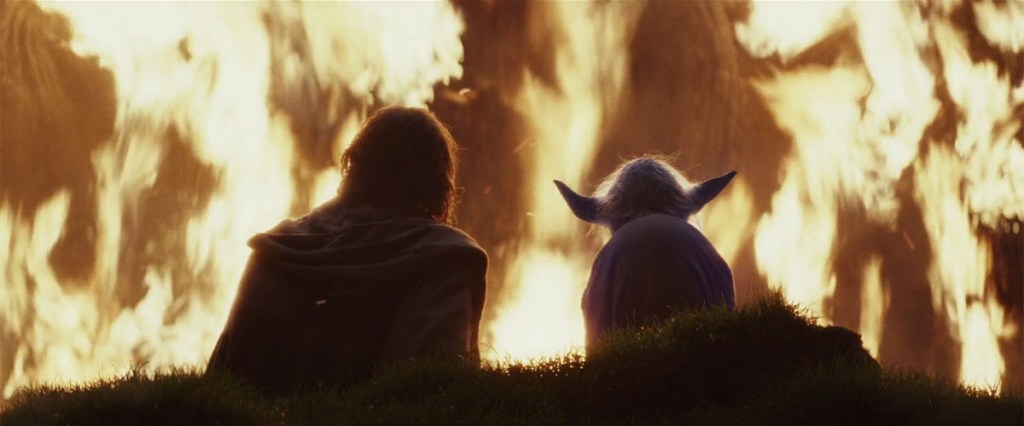
These themes are most poignantly expressed in what has become my favorite scene in the Star Wars saga. Watching as his tree hideaway goes up in flames, Luke laments his inability to train Rey and bids farewell to what he believes are the last embers of the Jedi Order. Sitting beside him, the ghost of Yoda patiently yet firmly rebukes his defeatism:
Time it is for you to look past a pile of old books, hmm?… Page-turners, they were not. Yes, yes, yes. Wisdom they held, but that library contained nothing that the girl Rey does not already possess… Lost Ben Solo you did. Lose Rey we must not… Heeded my words not, did you? Pass on what you have learned. Strength. Mastery. But weakness, folly, failure also. Yes, failure most of all. The greatest teacher, failure is. Luke, we are what they grow beyond. That is the true burden of all masters.
Yoda’s speech has something to say to Star Wars fans of every age. For youngsters who first encountered the Force alongside Rey, Finn, and Poe, it serves as a reminder that our elders have wisdom to pass on. This wisdom includes not only their words but also their lived experiences – their strength, their mastery, and their failures. The sacred Jedi texts may not be “page-turners,” but a careful observer will notice that Rey takes them with her to Crait, suggesting that they may have something to teach her after all (Yoda betrays his awareness of Rey’s theft with his tongue-in-cheek claim that the library doesn’t contain anything which the girl doesn’t already have in her possession). And for old farts (like me) who grew up alongside Luke, Leia, and Han, Yoda’s words serve as a reminder that life is an invitation to constant rediscovery. Wisdom isn’t found in blindly venerating the old or in destroying the old to make way for the new. Both of these paths allow injustice to thrive. Rather, wisdom requires openness – a willingness to reexamine our cherished beliefs, traditions, and ways of life; to honestly confront their shortcomings (and our own); to fight for what’s worth keeping; and to set fire to some things in order to make room for new discoveries. This process is tricky, and we’ll inevitably make mistakes along the way. But if goodness, truth, and beauty are as enduring as Yoda believes they are, then even those mistakes can become signposts to redemption – lessons to pass on to those who follow.
For Rian Johnson, Yoda’s speech wasn’t just talk. The director reinforced the Jedi master’s words with his own filmmaking, bravely crafting a Star Wars sequel that returned to the franchise’s roots while simultaneously launching the saga to unexplored heights. The time has come for us to celebrate his work as the amazing achievement that it is.
 Words for Wayfarers
An amazing read. Having spent the past five years rewatching this movie and probably arguing about it just as much as you have, I loved that there were thoughts and observations here that were still fresh for me.
LikeLike