What do World War I and Holy Week have in common?
Earlier this week, my dad and brothers and I watched Sam Mendes’ acclaimed war film 1917. It’s an amazing movie. The acting is terrific, the narrative is gripping, and the cinematography is unreal. If you’ve seen the film, then you know what I mean. 1917 was nominated for ten Oscars, and honestly, it’s worth seeing for its technical aspects alone. However, what struck me most about the movie wasn’t its film quality or even its storyline. What struck me most about it was its surprising echoes of the story of Easter.
The War
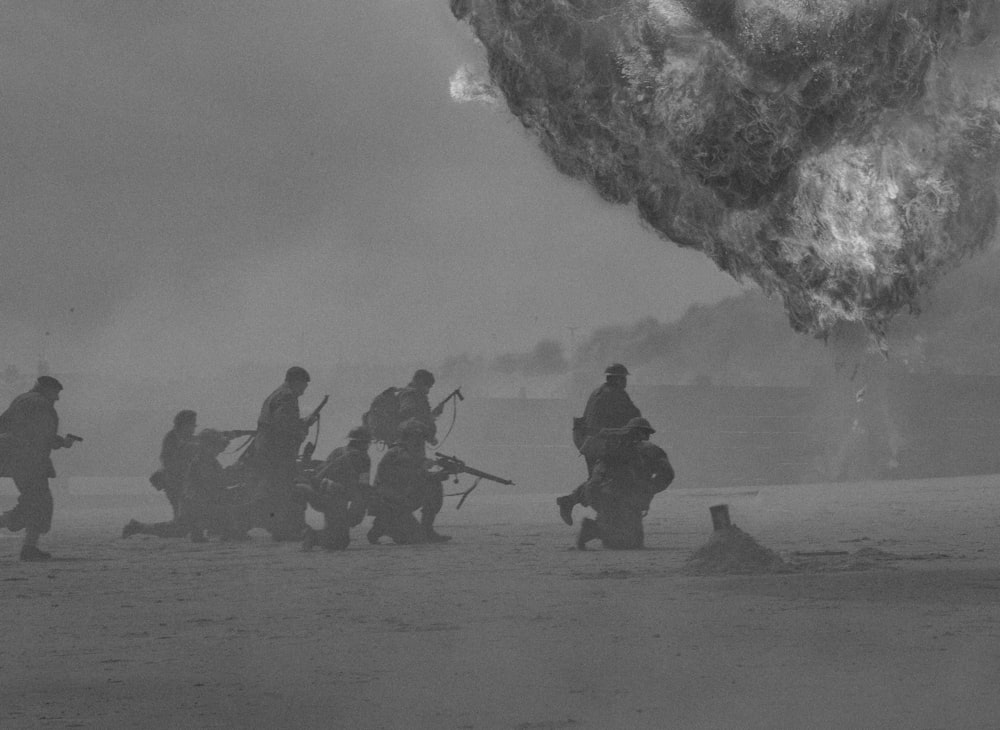
At the beginning of the film, a young British soldier named Blake is summoned to a meeting with a general. He’s told to bring a companion along, and he chooses his friend Schofield. When the pair arrive in the general’s tent, they receive grim news: German forces have withdrawn from a nearby front in order to lure their British foes into an ambush. The British troops are unaware of this tactic and are planning a full-scale assault the following morning. If this attack is not called off, they will walk straight into a trap. After telling Blake and Schofield this information, the general gives the men their assignment: they must travel across no-man’s land and through enemy territory to warn the endangered regiment. If they don’t deliver their message by sunrise, then 1,600 British soldiers – Blake’s brother among them – will be slaughtered.
Blake and Schofield recognize that this mission is extraordinarily dangerous. Yet, when their commander asks them if they have any questions, they answer with a salute. Shouldering their rifles, they hurry from the tent and begin their race against time.
Why do these men agree to such a perilous task? The answer is twofold. First, one of them has a personal stake in the journey. For Blake, it’s his best hope of rescuing his brother. Second, the men are following orders. As crazy as those orders sound, their duty as soldiers is to trust that their commander’s assessment of the situation is accurate. While their solemn salute may seem foolhardy, it’s actually deeply noble. They’re choosing to lay their lives on the line for others. Movie critic Brett McCracken says it well in his review of the film: “This resolute gesture, made with unmistakable dread in their eyes, captures the beauty of duty and simple obedience, of saying ‘yes’ to something costly and hard, simply because an authority above you gives the order. In a ‘follow your heart’ world where ‘do as you’re told’ deference to authority is tantamount to blasphemy, the moment feels radical and refreshing – and the rest of the film only builds on it.”
I won’t spoil the rest of the story, but I will say that the “unmistakable dread” in the soldiers’ eyes turns out to be well-founded. Their mission is even more dangerous and costly than they could’ve imagined. As they trek across the hellish, charred remains of no-man’s land and the war-torn countryside of Northern France, Blake and Schofield must stay alert for traps, environmental hazards, and the ever-watchful forces of the enemy.
Have you ever felt like a soldier? While most of us can only imagine what it would be like to walk in Blake’s and Schofield’s shoes, there are some aspects of the soldiers’ wartime quest that we can all relate to. We’ve all experienced some measure of dread – a sense of looming, imminent disaster. Whether by the death of loved ones or narrow escapes from death ourselves, many of us have also faced reminders of our own mortality (Just this week, my family and I were reminded of this fact through the death of a beloved friend to Covid-19). Additionally, all of us have grappled with suffering. For some, this suffering has resembled a soldier’s journey – a long, desperate slog with seemingly no end in sight. We’ve all known seasons of chaos – times when our hopes or plans were upended and we had no clue what tomorrow would bring. In this season of quarantine, many of us have felt the combined weight of these struggles more keenly than usual.
Early in 1917, there’s a moment when the main characters have narrowly escaped death. A frustrated and bewildered Schofield asks Blake, “Why on earth did you have to choose me?” Defensive, Blake retorts, “I didn’t know what I was picking you for. I thought they were going to send us back up the line, or for food, or something. I thought it was going to be something easy, alright? I never thought it would be this.”
The Bible is full of stories about people who were called by God into unexpected, confusing, and difficult circumstances. In the The Doctrine of the Word of God, theologian John Frame discusses the stories of Biblical figures like Noah, Abraham, Isaac, Jacob, Moses, and David. He makes this observation: “All these narratives and others begin with God’s personal speech, often saying something hard to believe or commanding something hard to do. The course of the narrative depends on the character’s response, in faith or unbelief… Faith, in both Testaments, is hearing the word of God and doing it.” According to Frame, faith in God is not passive. Faith requires us to act on our Creator’s orders, even when those orders are frightening or confusing. Very often, living in faith is a weighty and difficult task.
As I’ve reflected on 1917, I’ve found myself resonating with the soldiers’ feelings of confusion and disillusionment. As a follower of Jesus Christ, I reject the notion that God has promised his followers an easy, comfortable, pain-free life. Jesus taught the opposite; he warned his followers that their loyalty to him would cost them. “In this world you will have trouble,” he told his disciples (John 16:33). Another time, he said, “If the world hates you, keep in mind that it hated me first” (John 15:18). Again and again, Christ told people that obedience to him would result in persecution (Matthew 5:10-12, Luke 6:22, John 15:20). We shouldn’t be surprised by life’s obstacles. And yet, when our obedience to God is met with suffering, sorrow, or strife, the promise that God is working all things for good (Romans 8:28) can be incredibly difficult to believe. Andrew Peterson describes this struggle well in his song “No More Faith”:
I say faith is burden
It’s a weight to bear
It’s brave and bittersweet
And hope is hard to hold to
Lord, I believe
Only help my unbelief
We may understand that God works in mysterious ways. We may know that he tells us to trust him in difficult situations. We may even realize that struggle is intrinsic to the Christian life. Yet, despite knowing all of these truths, we can still be blindsided by suffering. I’ve grappled with my share of unexpected hardships. I’ve said goodbyes to some cherished dreams. I’ve faltered in my efforts to obey God’s commands, terrified of what obedience would cost me. I’ve grieved with friends and family whose lives are scarred by sorrow. Whether or not I’ve voiced my questions aloud, I’ve felt them rumbling like a fault line in my heart: God, why me? Why them? Did it have to be like this? Was there really no other way to accomplish your mission?
The Waymaker
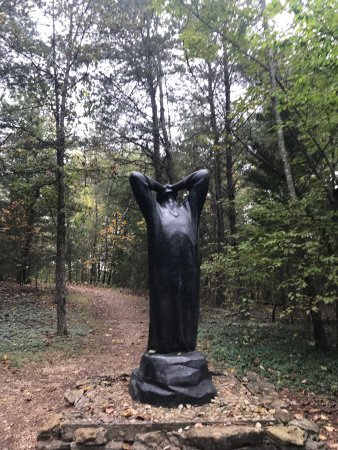
While pondering 1917 and my own questions regarding suffering, I was reminded of a familiar passage of the Easter narrative. Shortly before his crucifixion, Jesus spent time in the Garden of Gethsemane. There, in the dead of night, he prayed this prayer: “My father, if possible, let this cup pass from me; nevertheless, not as I will, but as you will.”
Like Blake and Schofield, Jesus had been given a rescue mission – the salvation of a broken world. Unlike Blake and Schofield, Jesus knew what the outcome of his mission would be. His death had been planned before the creation of the world (Revelation 13:8). He was acting on orders – not out of compulsion, but out of a deep love for his heavenly father (John 17:20-23). The scriptures also tell us that he was acting out of a deep love for humanity – for you and for me (John 3:16-17, 17:20-23). However, while Jesus foresaw and accepted the cost of his obedience, he also groaned under the weight of his mission. In the Garden of Gethsemane, we don’t see a calm, collected, statuesque hero. We see Christ in agony. We see a man who is unable to sleep, sweating profusely, and pleading with his father to make another way (Luke 22:40-46). We see a man whose soul was “deeply grieved, to the point of death” (Matthew 26:38). In the eyes of Jesus, we glimpse our own anguish.
Because Christians believe that Jesus was God in human flesh, we easily forget that he was, in fact, fully human. Jesus’ prayers in the Garden of Gethsemane reveal a heart just like our own – a palpitating heart that strained under the burden of suffering. During his life, Jesus reckoned with the same temptations that haunt our tracks. By doing so, he gained the ability to sympathize with our weaknesses (Hebrews 2:18, 4:15). Scripture even makes the astonishing claim that Jesus – God himself – “learned obedience through what he suffered” (Hebrews 5:8). Jesus felt the weight of duty, the difficulty of obedience to God’s commands, as keenly as any of us ever have. The cry of Christ on the cross rings with a bewilderment even deeper than that of the soldiers in 1917: “My God, my God, why have you forsaken me?” (Matthew 27:46).
The reality of Christ’s suffering is deeply comforting to me. I may not grasp why God has given me a certain task. I may not understand why I’m afflicted with a particular sin or struggle. I may never know why my road is so hard. However, unlike Blake and Schofield, I’m not in uncharted territory. The path that I travel has been traveled before. Christ – the obedient soldier – has gone ahead of me to prepare the way. Because he was faithful to complete his mission, I have hope of completing mine. When I think of my Savior, I resonate with the words of Andrew Peterson’s song “Pillar of Fire”:
You’ve been there every step along that roadFrom a barn in BethlehemTo Hell and back againYou blaze the trail that leads me home
In his review of 1917, journalist Brett McCracken makes this insightful comment: “Not since Christopher Nolan’s Dunkirk has time itself been so foregrounded as a war film’s scariest foe. In both Dunkirk and 1917, the ostensible enemy (the German army) is largely unseen. Sure, we see their bullets, bombs, and bunkers, but we (mostly) don’t see their faces. This is because Mendes, like Nolan, wants audiences to focus on a more universal and terrifying villain: time, and its close cousin mortality.”
McCracken’s remarks highlight another facet of the stories surrounding Holy Week. The scariest foes in Christ’s narrative seem to be the Roman soldiers who executed him. However, there was a deeper and darker reality to the events preceding Easter. The accounts of Jesus’ final week are actually accounts of battle preparations. In the week leading up to his death, Jesus was bracing himself for combat with an unseen enemy, one that was much more terrifying than Roman soldiers. Easter, at its very heart, is a war story.
When Jesus arrived in Jerusalem on Palm Sunday, he walked straight into the eye of a storm. His dramatic, celebrated entrance on a donkey fulfilled Jewish expectations of the Messiah, the prophesied king who would fight for his people’s deliverance. Jesus’ followers expected him to free them from Roman oppression. However, their Messiah had come to face a far deadlier foe. On the cross, Christ would square off against sin itself, confronting the spiritual darkness that ravaged humanity from the inside like a cancer. He would shoulder the full weight of human evil and suffer the consequences of that evil on humanity’s behalf (2 Corinthians 5:21). He would do battle with death and the devil (Hebrews 2:14). In 1917, Blake and Schofield walk through a hellish landscape. But on Good Friday, Jesus walked into the very maw of Hell.
There are some horrifying moments in 1917. During these moments, Blake and Schofield are tempted to despair. In the eyes of everyone around them, their mission is a nearly suicidal race against the clock, a fool’s hope at best. As the sun set on Good Friday, Christ’s followers gave up hope. The Messiah was dead. Time had run out. God’s rescue mission had failed. And yet, for two thousand years, Christians have marked the Sunday after Good Friday not with mourning, but with music and dancing. Easter isn’t a grim reflection on death; it’s an unabashed celebration of life. If Christ really left his own grave on Easter Sunday, as Christians around the world believe, then sin, death, and the hosts of Hell have been defeated. For those who place their hope in the risen Christ, the dawn of resurrection is coming, just as surely as green things come after winter. In this life, the battle between good and evil rages around us. But in the scope of eternity, in the deepest and truest sense, God’s rescue mission is complete. The war has already been won.
Brett McCracken sums up the story of 1917 well when he writes: “1917 captures the beauty of men taking the fight to the villain of time by giving everything they can in the few moments they have… It’s a movie about seizing the moment, recognizing the urgency of the mission, and choosing costly obedience over self-preserving comfort.” Like Blake and Schofield, those of us who follow Christ have been given a mission. Our commander has entrusted us with a message of extraordinary importance: the good news of Jesus’ victory over sin and death. We’ve been instructed to journey across no-man’s land and into hostile territory, braving obstacles in our efforts to extend the rescue of the cross. Lives hang in the balance. There isn’t much time. However, the path that we walk has been traveled before. We follow in the footsteps of another soldier, one who blazed the trail and now walks alongside us. While our duty is heavy, we don’t have to shoulder it alone. The one who walks beside us says: “I am with you always, to the very end of the age” (Matthew 28:20).
 Words for Wayfarers