Have you ever been blindsided by something that left you feeling completely helpless?
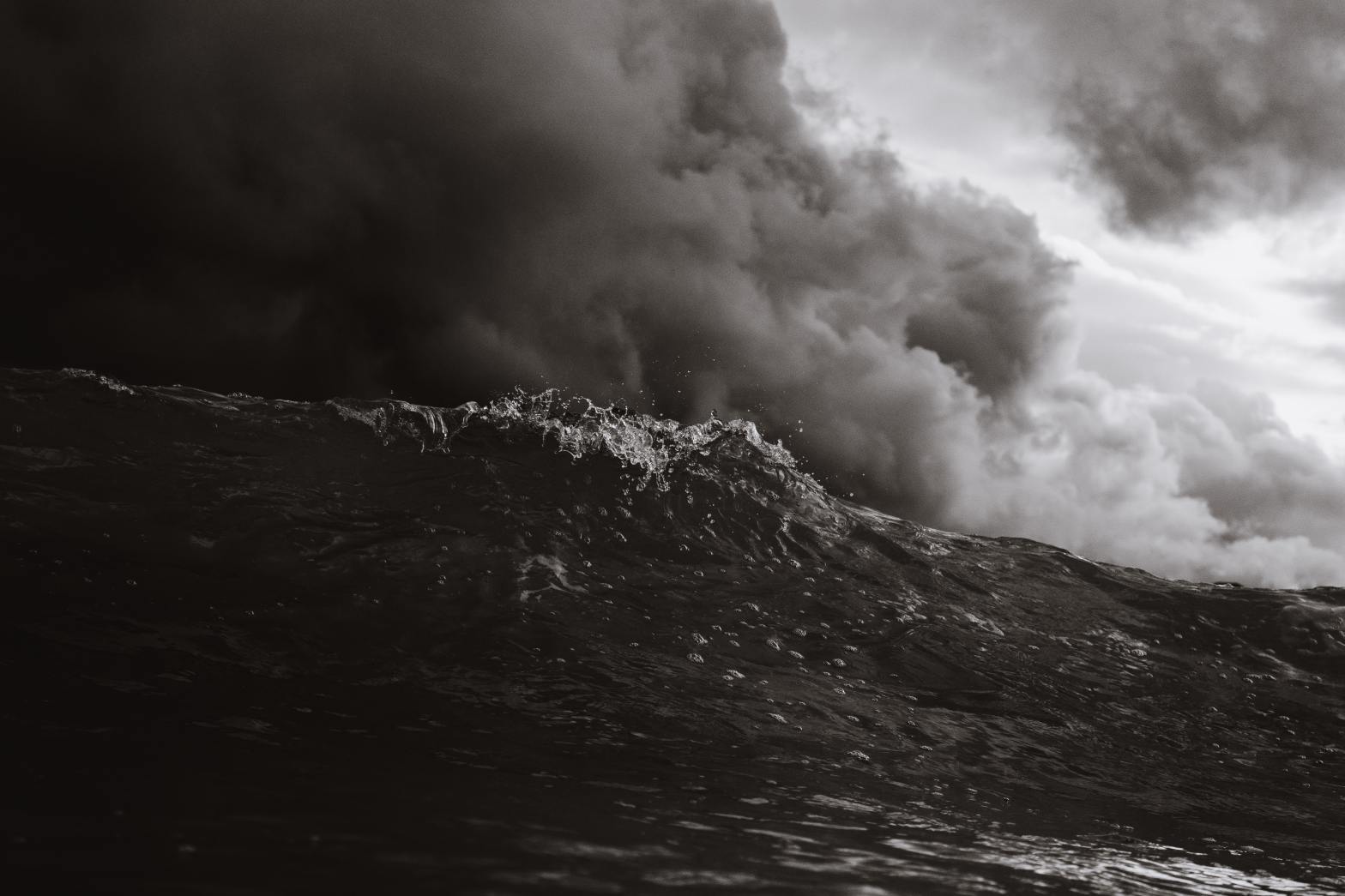
On a windy afternoon in the autumn of 2017, I was caught off guard by a huge wave while bodysurfing in the Indian Ocean. I’d been catching waves with a friend for a long time that day and was having a blast. As each wave approached, I turned my back to it and leaned forward, bracing for the impact that would launch me toward shore. The speed generated by the breakers was exhilarating. I loved the feeling of knifing through space with a tunnel of water surging around me.
The wave that blindsided me looked just like all the others had, and I braced for it like I had dozens of times before. But this time, I got the timing all wrong. Instead of propelling me forward, the wave came down hard on my shoulders, plunging me below the surface. My nose and mouth flooded with seawater, and I found myself tumbling across the sandy bottom of the inlet, clawing at the sand in a vain attempt to slow myself down. At one point, the water slammed my head into the sand and swept the rest of my body over it, and I felt and heard a sickening crunch in my neck. When the wave finally receded, I lurched to my feet and stumbled away from the water. I didn’t try any more bodysurfing on that trip. For two days, I couldn’t open my mouth without deep pressure and pain in the hinges of my jaw. Thankfully, these sensations disappeared with time. To this day, I have no idea what happened in my neck and jaw that afternoon. I don’t doubt that the force of that wave could’ve snapped my neck, and I’m grateful that God kept that from happening. But I still remember what it felt like to be caught in the clutches of the sea – that terrifying loss of control at the hands of a wave which didn’t know or care that I existed.
For many people, the past year has felt an awful lot like the experience I just described. 2020 will go down in history as a year of profound disorientation – a year that blindsided us all, sweeping us along with all the force of a tidal wave. Taken alone, each of the year’s crises – COVID-19, hurricanes and wildfires, police brutality and riots, political corruption and polarization – would be exhausting. Taken together, these events have left many people feeling bewildered and adrift, tossed about like flotsam in a churning sea.
When I first heard Ella Mine’s debut album Dream War earlier this year, I didn’t recognize its deep relevance to this particular season of disorientation. The first thing that struck me about the album was the genius of the music: the enchanting blend of alt rock and classical piano and Irish folk, the perfect synthesis of tunes and lyrics, the way the songs flow into and build upon one another (honestly, it’s one of the most well-crafted records I’ve ever heard). The second thing that struck me about it was the intimacy of the tale being told. Mine penned the album’s songs during her recovery from a season of severe mental illness. In an interview with Chris Thiessen of the Rabbit Room, she described the experience this way:
I was diagnosed with a pain condition called Central Sensitization Syndrome when I was 17. To help with the pain, I was prescribed an SSRI designed to treat depression, but commonly offered off-label for physical pain like mine. After two months, my personality was completely altered. It took me and the people around me completely off guard. We didn’t know that the medication would have psychoactive effects. I became apathetic and hateful, two emotional states I had never experienced before. It was terrible. I got off the SSRI slowly, thinking, “Now I’ll get back to normal.” Sadly, that’s often not how it works. Getting off the medication was even worse. I experienced psychosis, a confusing, terrifying state where I didn’t know what was true and what wasn’t. Visual and auditory hallucinations made it difficult to know whether or not what I was seeing or hearing was real. The drug also caused akathisia and mild cognitive impairment that made math, logic, and even speaking difficult. I had compulsions and impulses that were completely foreign and terrifying. That’s hard to live through. At that point, it’s a choice to keep living. And five years later, I’m still on an incline of recovery. (Read the rest of the interview here:The Rabbit Room | Dream War: An Interview with Ella Mine)
Like a Biblical psalmist, Mine narrates this season of suffering and her responses to it with raw honesty. Her album brought me to tears twice, which is pretty darn unusual (only one other album has ever pulled that off: Andy Gullahorn’s 2018 record Everything as It Should Be). As someone who has suffered from debilitating mental illness, Mine’s songs resonated with me on a deep level. I expect to revisit them often in years to come.
Frederick Buechner wrote, “The story of one of us is, in some measure, the story of us all.” By plumbing the depths of her own experience of disorientation, Ella Mine offers us a new lens to examine our own struggles. Her story raises important questions: When waves of suffering threaten to overwhelm us, how do we keep our heads above water? How do we cling to hope when all we see around us is chaos? The tagline of Dream War asks the question this way: “How can we again dream, hope, or love when our first dreams have been crushed, our first hopes dashed, and our first loves ravaged?” For the rest of this post, I’ll be exploring Mine’s answers to those questions. In what I would argue is the finest album of 2020 so far, Mine charts a course that the rest of us can follow – a path which doesn’t lead us away from our hardships and heartbreaks, but rather towards them, into the very heart of the sea.
I. Going Under

Psalm 130 opens with a cry for help: “Out of the depths I cry to you, O Lord! O Lord, hear my voice! Let your ears be attentive to the voice of my pleas for mercy!” (v. 1-2). The author of this ancient Hebrew song is drowning in suffering. Not only that, but he’s so far down that his only recourse is to plead with God for mercy. He harbors no illusions about his ability to swim back to the surface, no fantasies about his capacity to control the waves. Barring miraculous intervention, he’s sunk.
Like Psalm 130, the songs of Dream War are filled with sea imagery. The first, “Intro // Tedious + Brief,” uses the sea as a metaphor for life itself, which is characterized by both wonder and danger. The chaos that lurks beneath the surface can’t dissuade Ella Mine from wanting to experience the water: “Though there are shadows dancing just beneath the waves / I wanna jump in / I wanna jump in anyway.” In the album’s second track, “Tender World I.,” Mine expresses her enchantment with the world’s beauty. She longs to love deeply and live fully alive: “What a tender world / What a tender world / Wanna give my heart up / To you.” Yet, she acknowledges that the sea of life is inherently unpredictable, and she knows that sailing it is a risky enterprise: “What a wild way, what a frightening game / We play in dreams / We send our hearts out on the waves / In pure belief.” Despite this recognition of risk, Mine is drawn to the promise and possibility of the ocean.
Then, suddenly, things go horribly wrong. In the album’s third track, “Wolves (Ved Dora Mi),” we witness the entrance of hallucinations into Mine’s world, personified as hungry beasts that gnaw and scrape at the door of Mine’s bedroom. The terror of this experience sends shock waves through the waters of Mine’s dreams. Gone is the glistening ocean of promise, now replaced by a roiling sea of chaos. In the following song, “Dream War,” Mine is overwhelmed by her nightmares: “Calling off the dream war, ’cause I / Can’t keep the waves from breaking on this shore / Calling off the dream war, ’cause I / Already lost the dreams I was fighting for.” The same world that filled the sails of Mine’s dreams with its wonder has dashed those dreams on the rocks of its violence. The fifth track, “Don’t Make Me Go Back There,” opens with a haunting statement that captures the singer’s loss of innocence: “I don’t want to close my eyes / I don’t want to dream again.”
As the album progresses, Mine’s disorientation intensifies. In the seventh song, she presents listeners with an unforgettable image: “There’s a bridge under water / And a flood running over.” Her escape route itself has been submerged. She’s at the mercy of the tide.
Mine’s lyrics remind listeners that we have far less control over the circumstances of our lives than we tend to believe. Life on this planet is characterized by chaos. While suffering strikes us all, the nature and extent and timing of that suffering are as uncertain as the sea in a storm. And while some hardships can be bulldozed by sheer willpower, the kind of suffering that Mine’s songs and Psalm 130 describe is completely overwhelming – a pit far too deep to climb out from on one’s own. Simplistic slogans and ready-made solutions are of no use here. As Derek Kidner puts it, “Self-help is no answer to the depths of distress, however comforting it may be in the shallows of self-pity.” Faced with relentless hurt, we inevitably start asking big questions, which pull back the curtain of our lives and probe for meaning beyond it: “Why me?” “Why now?” “What did I do to deserve this?” “Where is God?” Paul Simon of Simon & Garfunkel describes this reality beautifully in his song “Wartime Prayers”:
It’s a hard time, but everybody knows
All about hard times, the thing is, what are you gonna do?
Well, you cry and try to muscle through
Try to rearrange your stuff
But when the wounds are deep enough,
And it’s all that we can bear,
We wrap ourselves in prayer
Despite our best-laid plans, and despite our American culture’s assurances to the contrary, each and every one of us will eventually face a mess that we can’t fix. Sooner or later, we all find ourselves in the depths, floundering and fighting for breath. When this happens, when our attempts to reach shore have left us utterly spent, what will we do? Ella Mine’s first answer to the problem of overwhelming suffering is to acknowledge that it’s just that – overwhelming. If we cling to the illusion of control, we’ll find it a heavier illusion than we expected, and we may find ourselves sinking even further beneath the waves. Letting go is a frightening alternative. However, for Mine and for the writer of Psalm 130, it’s the essential starting point.
II. Swallowing Water

After pleading with God to rescue him from the depths of his suffering, the writer of Psalm 130 poses this question: “If you, O Lord, should mark iniquities, O Lord, who could stand?” (v. 3). Here, the psalmist acknowledges that the problems he’s facing aren’t just the result of forces beyond his control; they’re also the result of his own choices. The psalmist is painfully aware of his misdeeds, the wreckage that these actions have created, and his culpability before God. If he were impervious to the waters, puffed up and waterproofed like an inflatable raft, then he’d have nothing to worry about. However, he knows that he’s vulnerable to the waves – that the same darkness which swirls around him is capable of rushing into him, filling his lungs, and plunging him even deeper into the sea.
Midway through Dream War, Ella Mine’s reflections take a similar turn. Her song “Waters Rise” begins with these questions:
Where you go in the night,
Would you go in daylight?
Have you seen on your way
Affections your choices have made?
And the heart is caught in the crossfire
Of dreams, but dreams are just desire
Here, Mine reveals that her nightmares aren’t just terrifying because of their foreignness, but also, in a sense, because of their familiarity. Like the waters of Psalm 130, these nightmares have exposed something in the songwriter’s heart – namely, its vulnerability to misguided and destructive desires. According to Mine, these twisted affections are the product of her own choices. Her dreams haven’t created new desires out of nothing. Rather, they’ve revealed, amplified, and corrupted desires which already existed, lurking below the surface like hungry sharks. In the song “Dream War,” Mine confesses her fear that these dark desires will begin to influence her actions: “If I’m scared then I’m scared of what I might design.”
As Mine’s lyrics suggest, seasons of overwhelming suffering often act like wrecking balls, demolishing our defenses and unearthing parts of ourselves that we tend to ignore or hide. Think about this past year: battered by waves of hardship and controversy, how has our society responded? If we’re honest, we’ve got to admit that the fault lines we see around us – the riots and racial divides, the bickering and name-calling on social media, the disillusionment and distrust of political leaders, the panic and insensitivity surrounding responses to COVID-19 – aren’t new things. These cracks in our country’s foundations have existed for decades, even centuries in the case of racial injustice. Ignored for too long, such fractures have a way of asserting themselves during times of crisis. And before you or I start pointing fingers, pinning blame for our misfortunes on the shortcomings of everyone around us, we would do well to examine ourselves – to assess how we respond to inconveniences, upended plans, disagreements, and people who get on our nerves. If we do, we’ll be faced with the inescapable fact of our own flaws and failures. We’re part of the problem, after all. The chaos that we see in the world resides in us, too. As Russian author and political activist Alexander Solzhenitsyn wrote, “The line separating good and evil passes not through states, nor between classes, nor between political parties either – but right through every human heart.”
The storm clouds that’ve been gathering throughout Dream War finally erupt in a devastating duo of songs, which come barreling at the listener like a runaway locomotive. The first, “Where Is She Now?,”borrows imagery from Shakespeare’s Macbeth. Late in that play, there’s a scene where Lady Macbeth is sleepwalking after arranging the murder of Scotland’s king. In the throes of a dream, she tries desperately to wash imaginary blood from her hands. Ella Mine applies this scene to her own story, emphasizing the terrifying persistence of her own guilt:
Uh oh, there’s blood on my hands
I dreamed I killed a man
Oh memory, wash away
My knife, see not the wound, see not the wound you make…
Out, out, damned spot! Out! Away!
Wash, wash, my lady, wash, I say
I’ve seen in sleep
What, will these hands never be clean?
The next track, “Sound + Fury,”begins with a death knell. It borrows lines from Macbeth’s famous monologue, which occurs shortly after he receives news of his wife’s suicide. Here, Mine’s despair reaches its crescendo. Drowning in the depths of suffering, both suffering beyond her control and suffering of her own making, she can’t see any reason to hope. She shouts out: “Tomorrow and tomorrow gets more frightening all the time / We cry, ‘Out, brief candle! There’s no good for you to light.'” As in Psalm 130, Mine’s second response to the problem of overwhelming suffering is confession: an honest examination of personal brokenness. She recognizes that the chaos of the world is inextricably intertwined with the chaos of her own heart. After battling the waves of both of these seas, she finds herself unable to surmount them. Listeners are left with the strains of “Sound + Fury” ringing in their ears, wondering what possible resolution there could be to the dilemmas Mine has presented.
III. Coming Up for Air

Like most Biblical lament songs, Psalm 130 concludes with a turn towards hope. Having lamented his suffering, confessed his sins, and urged God to rescue him, the psalmist clings to the belief that God will act: “I wait for the Lord, my soul waits, and in his word I hope; my soul waits for the Lord, more than watchmen for the morning, more than watchmen for the morning. Oh Israel, hope in the Lord! For with the Lord there is steadfast love, and with him is plentiful redemption. And he will redeem Israel from all his iniquities” (v. 5-8).
Mine’s own turn towards hope begins slowly, almost imperceptibly. The climax of Dream War, “Wheel of Love,”opens with a set of questions that summarize the record’s themes:
Honestly, tell me, is it better to believe
That good exists on some far out shore
And set your course for the open sea?
Honestly, tell me, is it better to dream and
Be dashed again against the cliffs
And cast under the waves again?
Most of us have probably heard these famous lines by the poet Alfred, Lord Tennyson: “Tis better to have loved and lost / Than never to have loved at all.” In “Wheel of Love,” Ella Mine dares to ask whether this statement is true. Are the joys of love really worth the costs of love? Is it truly worthwhile to love the world when life as we know it is ravaged by forces of darkness and decay, when the things that we treasure are torn from us, when our best efforts to love are scarred by failure and heartbreak? These questions might seem unnecessarily dismal. However, those who have navigated seasons of intense grief will resonate with their honesty.
In the chorus of her song, Mine depicts love as a massive wheel, which inevitably chews up and spits out all who come close to it, changing them forever in the process. Those who keep their distance from the gear escape its peril and pain. However, they must face the alternative burden of loneliness:
This wheel of love is turning slowly
So you love and you lose or you live your life lonely
And what you give, oh you know it might not come back to you, so you
Give it up freely, baby, or you guard it so tight that no one can get through
In the dark of your eyes and the shadow of your wall
You don’t hear the cries of the people as they fall
From the top of the wheel and are crushed by the gear
Alive in love
Dreaming and trying, believing and buying
Hurt by love
Broken and frightened, loving and dying
Remade by love
As these lines wash over the listener, light begins to break over the surface of the sea. Mine’s struggles haven’t disappeared. The waters still roil around her, threatening to submerge her again. Yet, in a way that is at once subtle and seismic, her perspective on the storm has changed. Faced with the unbearable option of loneliness, of turning inward and shutting herself off from others in order to escape pain, Mine is reminded of why she ventured out to sea in the first place. She was made to love – kindled with yearning, designed for community with others, hand-crafted in the image of the God whose very essence is self-giving loyalty (Genesis 1:27, 1 John 4:7-8). She can’t deny this purpose any more than a fish can deny its gills. Rather than drowning her longing for love, Mine’s losses have deepened and hallowed that longing. The depths of her sorrow at love’s loss have reminded her that, like a “far out shore,” real love exists on the horizon and is really worth pursuing.
In the following song, “Fire,”Mine acknowledges the dangers of love again: “I can’t love in this world…Without a fight / That’ll wear me down.” Then, like the author of Psalm 130, she turns her gaze upward, urging God to renew her strength: “I’ll run again / I’ll run again / Replace the fire.” Faced with the heavy costs of love, Mine gives her best answer to the problem of overwhelming suffering, which turns out to be the old answer, after all: Tis better to have loved and lost than never to have loved.
Earlier, in her song “Walls,”Mine sings these words: “If I had held my head above the rising tide / I wouldn’t have to hold this breath so far inside.” In her interview with Chris Thiessen of the Rabbit Room, Mine explained these lyrics:
“Dream War” is full of ocean and water imagery because in those moments of clarity, it was like getting my head above water before being thrown back under the sea. I would take the deepest breath of air that I possibly could. Then, back under the waves, I would hold my breath as long as I could. In the recovery community, they call that sort of cycle “windows and waves.” In the windows, I would find truth and bury it inside of me. Not bury as in hide it, but as in secure it somewhere safe so that when I feel like I can’t reach it, I can still remember that it exists.
How does Mine hold on to hope in the midst of chaos? Like the author of Psalm 130, she rehearses God’s promises of redemption, breathing them in and clinging to them with all she’s got. She remembers truth and beauty. Like watchmen on a rampart, she looks to the horizon, and she waits for the dawn.
Mine doesn’t answer all the questions surrounding her suffering, because she can’t. She doesn’t know why God has allowed it. She may never know. But two things she does know: First, she can’t live on the land, safe and solitary and untouched by heartbreak. She was made to brave the sea, with all of its storm clouds and breakers and tides. Second, her only hope for rescue from the depths of suffering – both the suffering of life’s waves and the suffering caused by her own failures – is the God who made the sea. This same God beckons to her (and to all of us) from the far out shore, inviting her to come further up and further in, promising that the destination is worth the perils of the journey.
Epilogue: Dream Again

There’s a reason for Ella Mine’s belief that God is at work in her suffering. In the Gospel of Luke, we’re told a story about a group of men who got caught in a storm at sea. These men were seasoned sailors. They recognized the severity of the storm. They knew that, barring a miracle, they were sunk. Fighting to steer through the swells, they woke one of their company, who’d been sleeping on the floor of the boat. Climbing to his feet, this man uttered a single phrase – “Peace, be still” – and the storm ceased. The waves ground to a halt. The boat stopped moving. Shocked, the sailors turned to one another and asked the natural question: “Who then is this, that he commands even winds and water, and they obey him?” (Luke 8:25).
The answer to their question can be found earlier in Scripture, tucked within an ancient prophecy made by God to people caught in the midst of overwhelming suffering: “When you pass through the waters, I will be with you; and through the rivers, they shall not overwhelm you…” (Isaiah 43:2). There is comfort in knowing that the same God who controls the sea also controls each of our storms. There is also comfort in knowing that he has promised to carry us through them. But what about the here and now, where our prayers for rescue are met with silence, where our best efforts at faith fall woefully short, where our deepest questions go unanswered? I’ve heard dozens of sermons on this particular story. However, few of them have highlighted the aspect of it that I find most comforting. Before stilling the storm, the maker of the sea rides in the boat. He ventures out with us into the depths. He takes on our humanity and suffers alongside us in the midst of life’s storms, enduring the chaos of the waves. He enters into our worst nightmares and invites us, come hell or high water, to dream again. His presence, more than anything else, is the reason for our hope. This is why the moment of Dream War that first brought me to tears was the bridge of the song “Wheel of Love,” where Ella Mine sings these words:
I won’t take this burden from you
Only ride with you along the way
And you can sail this sinking vessel
If you set your sight above the waves
 Words for Wayfarers