
There’s a great moment near the end of The Lord of the Rings: The Two Towers that I’ve been pondering recently. The scene is set in Osgiliath, a military outpost on the edge of the noble kingdom of Gondor. Osgiliath is under siege, targeted by dragons that are dive-bombing it from the sky and ripping its ramparts to pieces. As soldiers scurry for cover, two hobbits – Frodo Baggins and Samwise Gamgee – huddle together by a flight of stairs. Months ago, these hobbits had left their homes in the Shire, bearing a dark and powerful ring toward the distant land of Mordor. They had known then that their road would be a difficult and dangerous one. However, nothing could have prepared them for the horrors they would face along the way.
Leaning against a wall, Frodo groans in despair: “I can’t do this, Sam.” Sam rises and murmurs in agreement: “I know. It’s all wrong. By rights we shouldn’t even be here.” Then, staring out at the battle raging in Osgiliath, he starts thinking aloud:
It’s like in the great stories, Mr. Frodo. The ones that really mattered. Full of darkness and danger they were. And sometimes you didn’t want to know the end, because how could the end be happy? How could the world go back to the way it was when so much bad had happened? But in the end, it’s only a passing thing, this shadow. Even darkness must pass. A new day will come, and when the sun shines it’ll shine out the clearer. Those were the stories that stayed with you, that meant something, even if you were too small to understand why.
Here’s a challenge: take a moment to think about the stories that, in Sam’s words, have “stayed with you” over the years and “meant something” to you. What do those stories have in common? Sam’s words in Osgiliath are a great description of many stories that I love deeply – tales like J.K. Rowling’s Harry Potter series, Leif Enger’s Peace Like a River, Richard Adams’ Watership Down, Cormac McCarthy’s The Road, and of course, J.R.R. Tolkien’s The Lord of the Rings trilogy. Each of these books depicts ordinary folk who are both faced with great evil and swept into a wondrous adventure to strange lands. Additionally, each of them reminds me of another story that has stayed with me over the years: the Bible.
Throughout my life, no story has impacted me as deeply as the stories of the Bible have. As a Christian, I believe that the narratives of this ancient book are God’s words to humanity – which means, of course, that I think they actually happened. This isn’t to say that I find them easy to believe. Honestly, more often than not, I find them strange and fantastical. I’ve wrestled with doubts about the existence of God and the validity of Christianity since middle school (the time when most crises of faith, including puberty, seem to begin). Sometimes, my doubts have been paralyzing, tossing me to and fro like a ship in a storm. Other times, they’ve been present but less palpable, rumbling at the back of my mind like distant thunder.
Yet, as difficult as they are to believe, the stories of Scripture have imbued my life with purpose, offering hope and guidance amidst life’s changing seasons. When I think about my continued faith in Christ, I find myself circling back to Samwise Gamgee’s definition of lasting and meaningful stories. The Bible fulfills this definition better than any other story I know. Additionally, I would argue that many great tales – the kind that really matter – contain echoes of the Biblical story, which J.R.R. Tolkien himself described as “the true myth.” Whether you agree with me or think I’m nuts, this blog post is an invitation to re-examine the stories of Scripture through the eyes of that most eloquent of hobbits: Samwise Gamgee.
“Full of Darkness and Danger They Were”
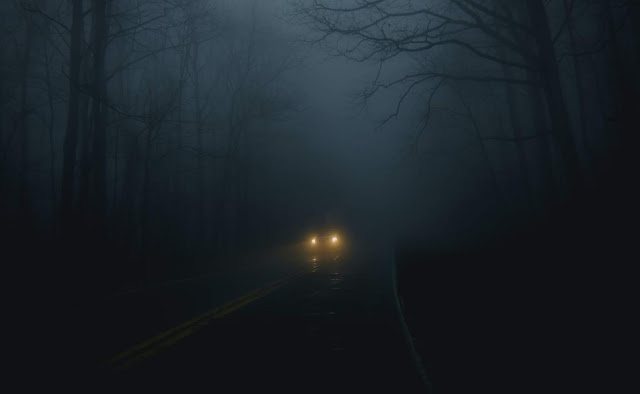
According to Samwise, great stories are marked by deep suffering. This suffering isn’t the natural order of things, but rather a departure from the way things used to be. Often, it’s so deep that the characters start to wonder if it can possibly be overcome: “How could the world go back to the way it was when so much bad had happened?” The world that we call home is a deeply broken place. While we may not agree on the scope or significance of the world’s brokenness, its reality confronts us every day: war, hatred, oppression, poverty, greed, corruption, pollution, disease. In the darkness of great tales – the fearsome Black Riders of The Lord of the Rings, the Death Eaters of Harry Potter, the armies of Thanos in the Avengers movies – we glimpse the darkness of our own story.
While we all recognize the world’s brokenness, the stories that we tell make sense of this reality differently. Some stories deny the weightiness of suffering. In religions like Zen Buddhism, enlightenment is reached by detaching oneself from earthly hardships, longings, and concerns. Similarly, many religious people (including some Christians) look forward to an afterlife that is divorced from the stuff of earth – an immaterial paradise beyond the clouds. While we may not agree with these attitudes, you and I are surrounded by an entertainment culture that constantly promotes distraction and escapism as antidotes to suffering.
In his book Long Journey Home, Os Guinness tells the story of a man named Issa, who was one of Japan’s most beloved haiku poets. Issa was well-acquainted with suffering. Before turning thirty years old, he witnessed the death of five of his children. Later, his young wife died as well. Heartbroken, Issa sought counsel from an elder monk, who gave him this advice: “The world is dew.” The monk reminded Issa that his religion required detachment from earthly matters, including the loss of loved ones. Pondering the monk’s words, Issa penned this poem: “The world is dew, / the world is dew – / and yet, / and yet…” In these lines, we don’t hear cold indifference to suffering. We hear the longing of a grieving father and husband – the groaning of a wounded soul. While Issa’s faith made no allowance for the weight of sorrow, his own story was inescapably scarred by it.
Some stories refuse to downplay the world’s darkness and choose instead to resign themselves to it. In these tales, pain and death are intrinsic parts of life. While we can try to alleviate suffering, there isn’t a higher answer for our struggles and sorrows – at least, not one that we can know. Life is hard, and we’ve got to get used to it. This attitude resonates with what we see in nature, which – as Alfred, Lord Tennyson put it in his poem “In Memoriam A.H.H.” – is “red in tooth and claw.” In his song “For What It’s Worth,” J Lind describes a familiar scene from a Planet Earth documentary:
Turn it up, this is my favorite part
Watch how the tiger catches the deer in the dark
Its teeth were sharpened by the Darwinian arc
Of a million years
For most of us, this image is routine. While the deer might have a few objections, we don’t question the morality of the tiger’s hunt. However, faced with images of human suffering in the third stanza of J Lind’s song, we start to feel differently:
Look it up, or look across the street
Flies on their faces and nothing on their feet
These little ones will be lucky if they breathe
For a couple years
Faced with extreme examples of human suffering – things like debilitating poverty, starvation, and the death of children – something inside us starts to protest. Though they are everyday realities, these things feel unnatural and wrong in the deepest sense of both words. As philosopher George Steiner puts it in his book Errata, we’re ambushed by the sense that “Something…has gone hideously wrong,” that “Reality could, should have been, otherwise.” While we might encourage resignation in theory, we tend to deny it in practice, especially when we’re confronted with death. To a mother who has lost a child, the statement that suffering is an intrinsic part of life rings incredibly hollow.
Though we all know that death awaits us, we still kick and scream when it claims those we love. Reminded of our mortality, we resonate with the words of poet Dylan Thomas: “Do not go gentle into that good night. / Old age should burn and rave at close of day. / Rage, rage against the dying of the light.” For as long as anyone can remember, humans have believed in some form of an afterlife. It could be argued that these beliefs are a coping mechanism – a way to manage our fears of the unknown. But what if they’re actually an instinct pointing toward something true about our world? What if death feels unnatural because it is? What if we can’t imagine disappearing because we were never meant to disappear?
Some stories promote human effort as the solution to the world’s problems. These tales can be found not only in philosophies of secular humanism, but also in religions that advocate merit-based salvation. Sure, our lives are messy now. But it’s nothing we can’t fix. Give us enough time, and we’ll get things straightened out. This position sounds eminently hopeful. Surely, humanity has come a long way throughout history. However, from where I’m standing, the world looks just as broken as it has always been. Old sins have given way to new ones: weapons of mass destruction, rampant greed and materialism, wars sparking massive refugee movements, pollution and deforestation, the normalization of abortion. From the swords of Rome to the cannons of the colonizers to the tanks and bombs of World War II, we humans have proven ourselves incapable of fixing the mess we’re in.
I know my own heart too well to put my faith in humanity. As N.T. Wright says in his book Simply Christian, “The line between justice and injustice, between things being right and things not being right, can’t be drawn between ‘us’ and ‘them.’ It runs right down through the middle of each one of us.” My heart is fractured by the same selfishness and complacency that I see in the world. Despite my best efforts to do good, I still compromise on my convictions, make stupid choices, and hurt the people I love. I resonate with the wayward spaceman in J Lind’s song “The Astronaut (Part II)”:
Behold the astronaut, so far from home
He washed up on a shore unknown
He’d build a tower out of stone
But all he sees is sand
Mistaking confidence for competence
He calls himself an optimist
And builds until the sand is wet
And running through his hands
Like Samwise Gamgee, the story of the Bible depicts suffering and death as realities that are both weighty and unnatural. In the Book of Genesis, God designs the first humans to live in harmony with himself, with each other, and with the earth (Genesis 1:16-29). However, he also gives them free will, warning them that rebellion against the created order will bring death into the world (Genesis 2:16-17). The sin of Adam and Eve is more than just a naughty deed. It’s a symbolic act of defiance – a refusal to submit to the Creator of the cosmos. The Bible tells us that all of the world’s brokenness – shame, toil, pain, dysfunctional relationships, exile, and death – can be traced to that fateful choice (Genesis 3:8-24), which humans have been repeating ever since. In the wake of Adam and Eve’s disobedience, the story of the Bible is a long train wreck – a grisly account of people destroying each other, neglecting the earth, and refusing to heed God’s warnings.
This is the fallout from the fall. We were created to live under our Maker’s authority. Left to our own devices, we rupture and fall apart. There’s a reason why we shiver when the Black Riders arrive in the Shire, when Voldemort’s servants slink into Hogwarts, and when Thanos’ spaceship touches down on planet earth. In the opening pages of the Bible, we’re told that there has been an invasion. Something, indeed, has gone horribly wrong.
“When the Sun Shines”
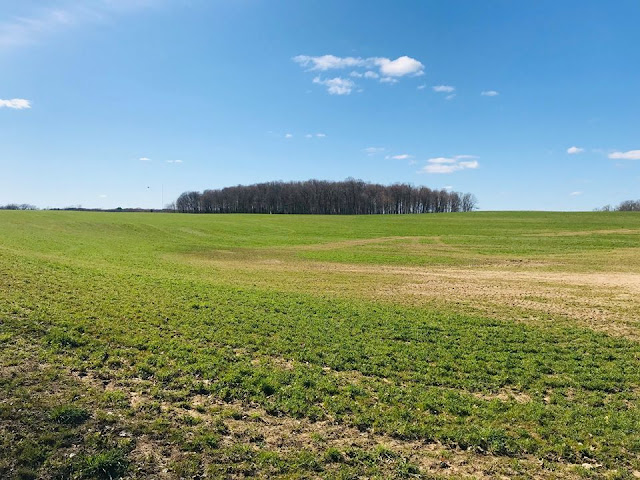
In his monologue at Osgiliath, Samwise Gamgee says that great stories are marked not only by deep suffering, but also by intense beauty. The kind of beauty that Sam describes isn’t tame. It’s powerful and persistent – a light made all the more vibrant by the darkness that threatens to extinguish it: “A new day will come, and when the sun shines it’ll shine out the clearer.” Each of us has experienced the thrill of losing ourselves in a well-told tale, whether we found ourselves strolling the grassy slopes of the Shire, touching snow-covered branches where the back of a wardrobe should be, or hearing the whistle of a train puffing into Platform 9 & 3/4. The wonder we feel when lost in a story is an echo of a truth that we all too easily forget: despite its darkness, our world remains far more beautiful than it needs to be.
I hope you’ve been getting outside during this quarantine. Even in the frozen tundra of Michigan, where it sometimes feels like it’s “always winter, but never Christmas,” the earth is coming alive again. Recently, on a walk through the farmlands surrounding my home, I was repeatedly ambushed by the arresting beauty of Springtime: the rich smell of furrowed soil, the new grass gleaming green in afternoon sunlight, the yawning sea of electric blue sky. As I walked, each bend in the dirt road became a doorway to a strange new land.
We’ve all encountered beautiful landscapes that took our breath away. According to author G.K. Chesterton, this is one of the reasons why fantasy stories – in particular fairy tales – resonate with us. By beckoning us into unfamiliar territory, where the rules of our universe are upended and anything can happen, stories of magic invite us to re-examine the strangeness and beauty of the people, landscapes, and creatures that surround us. In his book Orthodoxy, Chesterton put it this way:
“We all like astonishing tales because they touch the nerve of the ancient instinct of astonishment. This is proved by the fact that when we are very young children we do not need fairy tales: we only need tales. Mere life is interesting enough… These tales say apples were golden only to refresh the forgotten moment when we found out that they were green. They make rivers run with wine only to make us remember, for one wild moment, that they run with water.”
If you’re anything like me, encounters with intense beauty fill you with a fierce appreciation for the planet you call home – a feeling that life, as Chesterton described it, “is not only a pleasure but a kind of eccentric privilege.” It’s the sense of being given a lavish (even downright excessive) gift that you could never hope to repay. It’s wondering, “Why on earth do I get to live in a world of sunrises and sunsets, of wolves and whales, of music and mountains, of constellations and the color green?” G.K. Chesterton had a similar response to the world’s beauty:
“The test of all happiness is gratitude; and I felt grateful, though I hardly knew to whom. Children are grateful when Santa Claus puts into their stockings gifts or toys or sweets. Could I not be grateful to Santa Claus when he put in my stockings the gift of two miraculous legs? We thank people for birthday presents of cigars and slippers. Can I thank no one for the birthday present of birth?”
Faced with intense beauty, we don’t turn inward. Whether we’re listening to the drumbeat of thunder and rain, feeling the warmth of sand between our toes, savoring the tang of fresh coffee, or smelling the salty spray of seawater, experiences of intense beauty pull us out of ourselves, reawakening awe and appreciation for the miracle of ordinary life.
One of the most startling things about beauty is its resilience. Despite all the struggles, sicknesses, and sorrows that surround us, people are still singing songs and telling tales that celebrate life’s beauty. During the summer and fall of 2017, I had the opportunity to live and study in an urban slum community in a Southeast Asian country. My neighbors were scavengers who made their living by picking through the city’s trash for recyclable materials. Their lives were very hard. Yet, when I think back on the time I spent with them, I’m flooded with memories of beauty: friends swapping stories over coffee and cigarettes, mothers cooking delicious meals, families decorating their homes with items salvaged from trash heaps, neighbors singing karaoke music late into the night. These creative activities weren’t coping mechanisms. In the midst of their poverty, my neighbors affirmed G.K. Chesterton’s description of life as a gift to be cherished: “The goodness of the fairy tale was not affected by the fact that there might be more dragons than princesses; it was good to be in a fairy tale.”

In his song “For What It’s Worth,” J Lind describes similarly striking celebrations of life’s beauty among the people of India:
And the women laugh from their cages in Bombay
As the children clap from Calcutta-bound freight trains
And their song is lost to the chaos of the earth
But they still lift up holy hands for what it’s worth
Pondering the stark contrast between this brokenness and the beauty of the earth, Lind writes these words in his song “Letter to the Editor”:
No, I don’t want to love in spite of it
Like it’s just some sad mistake
No, I would rather love because of it
Oh, the contrast that creates
All of the colors found with every twist
Of this kaleidoscopic fate
Yes, I’d like to learn to love it anyway
In the midst of deep suffering, simple acts of creativity and kindness “shine out the clearer,” as Samwise Gamgee puts it. More surprising than the brutal reality of my neighbors’ poverty was the fierce persistence of their joy. More shocking than the oppression of Nazi Germany was the resistance of ordinary men and women who risked their lives to rescue people they’d never met. More startling than the contemporary refugee crisis is the multitude of people who have opened their homes to strangers from distant lands, sacrificing their time, energy, and money to help foreigners feel welcome. Instead of extinguishing light, darkness only augments light’s beauty.
One of my favorite scenes from The Lord of the Rings: The Return of the King occurs on the molten slopes of Mount Doom, where Frodo Baggins and Samwise Gamgee are fighting to draw breath in a firestorm. Cradling an exhausted Frodo in his arms, with smoke and sulfur raining down around him, Sam sustains his friend with memories of their homeland: “Do you remember the Shire, Mr. Frodo? It’ll be Spring soon, and the orchards will be in blossom. And the birds will be nesting in the hazel thicket. And they’ll be sowing the barley in the lower fields. And they’ll be eating the first of the strawberries with cream. Do you remember the taste of strawberries?” Surrounded by the hellish fires of Mordor, Sam’s memories of the Shire burn with a deeper and holier light.
In sharp contrast to stories that encourage detachment from the earth or that view nature as an accidental byproduct of blind forces, the story of Scripture contends that our universe is ablaze with purpose. In the Book of Genesis, we meet a God who creates beautiful things – not out of necessity or boredom, but out of sheer joy. After speaking the earth into existence, God blesses each part of it and declares that it is “good” (Genesis 1:3-31). God commands the first humans to cultivate the earth, to build families, and to enjoy the bounty of creation (Genesis 1:26, 28-29). According to the Bible, every beautiful thing in the world – from the petals of a dandelion to the peaks of the Himalayas – is the handiwork of a master artist.
Though nature has been ravaged by humanity’s misdeeds, it still bears the mark of its Maker’s hand: “The heavens declare the glory of God; the skies proclaim the work of his hands” (Psalm 19:1). The world of Scripture is far more than a stagnant backdrop for human activity. It’s a place of magic – a land of wonders that thrums with life and praise: “Let the heavens rejoice, let the earth be glad; let the sea resound, and all that is in it. Let the fields be jubilant, and everything in them; let all the trees of the forest sing for joy (Psalm 96:11-12). Humanity is God’s masterpiece. We are made in our Creator’s image (Genesis 1:27), woven with all the intricacy of a beautiful tapestry: “For you created my inmost being; you knit me together in my mother’s womb. I praise you, for I am fearfully and wonderfully made” (Psalm 139:13-14). Additionally, acts of love and courage that fulfill God’s purposes are described as deeply beautiful: “How beautiful on the mountains are the feet of those who bring good news…who say to Zion, ‘Your God reigns!’ (Isaiah 52:7).
According to the Bible, we have every reason to be grateful. Our planet is indeed a gift that we could never hope to repay. In the pages of Scripture, we also find reason for the resilience of beauty: the Creator has not abandoned his world, but rather still holds each part of it together (Colossians 1:17). His love sustains world’s light: “The light shines in the darkness, and the darkness has not overcome it” (John 1:5). His presence still haunts the hollows of the earth. In Scripture, we glimpse a truth that great stories have always hinted at: the world outside our front doors has always been more wild and wondrous than Middle Earth, more strange and surprising than Narnia, more magical and mysterious than Hogwarts. If we listen closely, we might hear the grizzled voice of Gandalf the Grey whispering in our ears: “The world isn’t in your books and maps, it’s out there.”
“Even Darkness Must Pass”
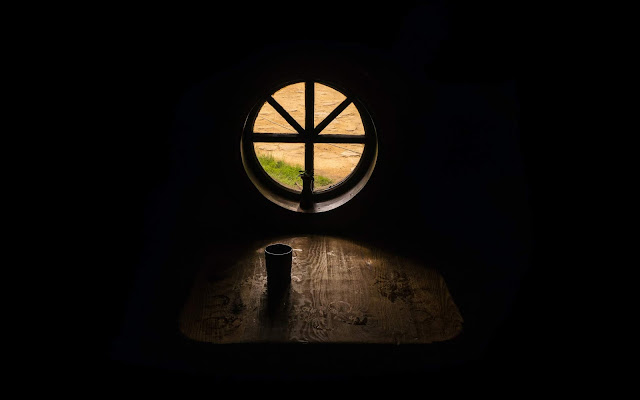
At the heart of Samwise Gamgee’s description of great stories is this statement: “But in the end, it’s only a passing thing, this shadow. Even darkness must pass.” According to Sam, great stories depict the triumph of light over darkness. This isn’t to say that great stories can’t have sad endings (personally, I’m a sucker for sad movies). As we’ve seen already, acknowledgement of the world’s brokenness is a crucial part of any great story. However, the victory of good over evil is a common trope of many great stories, especially the fantasy tales, epic quests, and superhero sagas that kindle our imaginations. In the end, no matter the cost, Sauron’s ring must be destroyed. Voldemort, invincible though he seems, must be killed. There must be some way to reverse Thanos’ fateful snap. Even the Star Wars trilogies, which borrow Zen Buddhist ideas of an eternal balance between light and darkness, must end with the triumph of the Jedi over the Sith. G.K. Chesterton made a similar observation about children’s stories: “Fairy tales don’t teach children the dragons exist. Children already know that dragons exist. Fairy tales teach children the dragons can be killed.”
Recently, I saw a video of an experiment in which little children were shown two versions of Disney’s Beauty and the Beast: the original version, and an alternate version that ended with the Beast’s death (if this experiment sounds sick and twisted to you, then you might be a Disney fan). The kids were asked which version they preferred, and why. Overwhelmingly, they preferred the original version (surprise!), which concluded with a wedding and a reunion of characters. This experiment confirms what we already know: from a young age, we’re hardwired for happy endings. However, we’re left wondering: Is our longing for happy endings simply wish-fulfillment, something that we all outgrow with time? Do we really have any reason to expect that our own stories will end happily?
Like many great stories, the Bible affirms the victory of goodness and life over evil and death. However, if this affirmation is to ring true, then the solution must be as multifaceted as the problem (if you ever had your heart broken by the ending of the TV show Lost, then you know exactly what I’m talking about). Here, in my opinion, is where the Bible outpaces the competition. In the death and resurrection of Jesus Christ, we encounter a climax that takes seriously both the weight of the world’s brokenness and the intensity of the world’s beauty.
In Jesus’ trial by Jewish authorities and execution at the hands of Roman soldiers, we witness many consequences of human evil: betrayal, abandonment by friends, isolation, a corrupt justice system, torture, and mob brutality. In contrast to stories that downplay the world’s darkness, the cross affirms that humanity’s sin is incredibly costly. Evil deeds create wounds that can’t be glossed over or ignored. Injustice demands a reckoning, and the inevitable outcome of our rebellion against God is death (Romans 6:23). In contrast to tales that resign themselves to the world’s darkness, the cross affirms that there is a solution for sin and suffering – one that we can know. On the cross, the Son of God chooses to take our place, bearing the punishment that we deserve and offering us his track record of perfect obedience in return: “God made him who had no sin to be sin for us, so that in him we might become the righteousness of God” (2 Corinthians 5:21). And in contrast to stories that advocate human effort as the solution, the cross affirms that this rescue operation is entirely God’s initiative: “For God so loved the world that he gave his one and only Son, that whoever believes in him shall not perish but have eternal life” (John 3:16).
While confronting the world’s brokenness, the cross of Christ also declares creation’s beauty. In the person of Jesus, the Maker of time and space himself stepped into time and space, taking on flesh and bone. In doing so, God affirmed the value of the material world – the sacredness of the landscapes and bodies that we were always meant to inhabit. Rather than discarding his wounded creation, God reaffirms his statements in Genesis 1, which J Lind references in his song “It is Good”:
It is good, it is good
The water, the fire – the spirit, earth, and wind
It is good, it is good
And I would do it all again
Furthermore, in light of the cross, humanity has good reason for the kind of gratitude that G.K. Chesterton described. The Giver of earth has offered us another gift that we could never hope to repay: eternal life with God (John 3:16). We’ve been given the opportunity to become beautiful artwork – the people who we were always meant to be: “Therefore, if anyone is in Christ, the new creation has come” (2 Corinthians 5:17). Additionally, Jesus’ self-sacrificial death displays the resilience of beauty. For over two thousand years, this selfless act has inspired countless other acts of creativity and compassion. People are still paying it forward.
If the story ended there, we’d have an epic and deeply moving conclusion – something like the finale of Avengers: Endgame. Yet, what truly sets the Bible apart from other tales is what happened after Good Friday. While the cross squared off against the world’s brokenness, the resurrection proclaims the utter defeat of brokenness at the hands of beauty. For followers of Christ, sin and suffering will not have the last word. Death – the Great Invader – has been mortally wounded. If Christ is risen, then our bodies aren’t destined for decay: “By his power God raised the Lord from the dead, and he will raise us also” (1 Corinthians 6:14). According to Scripture, we aren’t looking forward to an escape from this earth. Rather, we’re looking forward to a renewed planet (Revelation 21:1) – a world of sunrises and sunsets, wolves and whales, music and mountains, constellations and the color green.
To many people, this resurrection hope seems incredibly naive – a fool’s hope at best. But as Andrew Peterson suggests in his book Adorning the Dark, “a fool’s hope may be the best kind.” Like Samwise Gamgee, those of us who have trusted in Christ have awoken in a warm bed after a difficult and dangerous road, laughing with bewildered joy: “Is everything sad going to come untrue? What’s happened to the world?”
“Their Joy Was Like Swords”

Near the end of J.R.R. Tolkien’s The Return of the King, there’s a moment when a minstrel rises to sing for the people of Gondor, who have gathered in the city of Minas Tirith. It is a time of great rejoicing. Against all odds, Mordor has crumbled, and Sauron has been overthrown. The Ring of Power has been destroyed once and for all, carried to its demise by two brave hobbits. Frodo Baggins and Samwise Gamgee are among the crowd, recently recovered from their grim ascent of Mount Doom. Addressing the people, the minstrel introduces his song:
“‘Lo! lords and knights and men of valour unashamed, kings and princes, and fair people of Gondor, and Riders of Rohan, and ye sons of Elrond, and Dunedain of the North, and Elf and Dwarf, and greathearts of the Shire, and all free folk of the West, now listen to my lay. For I will sing to you of Frodo of the Nine Fingers and the Ring of Doom.”
Hearing these words, Samwise Gamgee is overwhelmed:
“And when Sam heard that he laughed aloud for sheer delight, and he stood up and cried: ‘O great glory and splendour! And all my wishes have come true!’ And then he wept.”
Why does Sam respond this way to the minstrel’s ballad? In the fortress of Osgiliath, Sam had found hope in the memory of great stories – “the ones that really mattered.”. In Minas Tirith, he hears his own story sung, and realizes with sudden joy that he has been living in one of those tales all along. Like the stories that “stayed with you” and “meant something,” Sam’s own story has been full of brokenness – of “darkness and danger” that threatened to snuff out the light. Yet, as in those stories, darkness has passed. A new day has come. Rather than being forgotten, Sam’s suffering has been woven into the song, making it all the more remarkable. His brokenness has been turned into beauty. According to Scripture, this redemption is the destiny of God’s people: “For this light momentary affliction is preparing for us an eternal weight of glory, beyond all comparison” (2 Corinthians 4:17).
After all these years, this is why I keep coming back to the Bible. In its pages, I glimpse what I believe to be the greatest story ever told – the tale of a world that, in songwriter Andrew Peterson’s words, was created good, has fallen, and will be redeemed again. And do you want to know the craziest part? When I pick up that ancient book and sit down to read, I see us there in its pages – you and me. I find myself nodding in agreement with G.K. Chesterton: “I had always felt life first as a story: and if there is a story there is a storyteller.” There’s a reason why great stories resonate with our hearts. These tales are, after all, only echoes of the story we’re living in. Like Samwise Gamgee, I can’t wait to hear how it ends:
“And all the host laughed and wept, and in the midst of their merriment and tears the clear voice of the minstrel rose like silver and gold, and all men were hushed. And he sang to them, now in the Elven-tongue, now in the speech of the West, until their hearts, wounded with sweet words, overflowed, and their joy was like swords, and they passed in thought out to regions where pain and delight flow together and tears are the very wine of blessedness.”

 Words for Wayfarers