
If you could get everybody on planet earth to check out one work of art – whether it be a book, a movie, a piece of music, a painting, or a replica of a famous monument made out of dry pasta – what would you share? For me, the answer comes quickly: that work of art would be an album of music called A Liturgy, a Legacy, & a Ragamuffin Band by a guy named Rich Mullins. I enjoy lots of different music (most everything outside of death metal and polka), and there are many songs that I find beautiful, inspiring, or thought-provoking. But this album has stuck with me in a unique way, becoming more meaningful with time. God brought the music of Rich Mullins into my life at a time when I needed to be confronted by grace – to have the reality of God’s unconditional love for me driven into my heart. A Liturgy, a Legacy, & a Ragamuffin Band has prompted me to wonder more at the mystery and magic of the wild world around me, to rest more in the grace that hangs around despite my hang-ups, and to yearn more for the renewed world that is coming. In summary, it has drawn me into a deeper relationship with my God. This blog post is basically an excuse for me to geek out about something I find really cool. It’s an invitation to you music junkies out there to check out what is, in my opinion, one of the most beautiful collections of songs ever crafted, and also a brief roadmap to help you understand a bit of the story and significance behind the songs. Here goes nothin’!
Background:

Born in Indiana in 1955, Rich Mullins was best known for his song “Awesome God.” He was a singer-songwriter who didn’t fit the traditional image of a Christian music star – a quirky, unkempt, cigarette smoking, raspy-voiced single guy who lived like a vagabond and wrestled with alcoholism. While his life was often a very messy and painful struggle to overcome loneliness and addiction, it was also a headlong pursuit of the God whose love amazed Mullins and refused to let him go. Wherever he went, Rich Mullins touched peoples’ lives with his brutal honesty about his own struggles, his desire to live out Jesus’ teachings in simple and unconventional ways, his gift for creating community, and his profound understanding of grace. His songs grapple with feelings of loneliness, sorrow, confusion, and failure, but also contain achingly beautiful pictures of the difference that a relationship with Jesus Christ can make in our brokenness. After achieving fame and fortune as a Christian music star, Mullins decided to live on the average working American’s salary, asking a friend to give away the rest of his earnings to churches and charities. He never found out how much money he actually made during his lifetime. Later in his life, he pursued a degree in music education and left the Christian music scene to live on a Navajo reservation in New Mexico, where he hoped to teach music and the Christian faith to children. He died unexpectedly in a car accident on September 19, 1997, only 41 years old.
A Liturgy, a Legacy, & a Ragamuffin Band was Mullins’ seventh album, released four years before his death. For the project, Mullins assembled a ragtag group of skilled musicians, both pros and amateurs, some of whom had never met each other and none of whom was a Christian music star. The process of forming the band and creating the album was very informal and unorthodox. In the documentary Rich Mullins: A Ragamuffin’s Legacy (2014), guitarist Rick Elias remembers of the band: “It was like a roaming bunch of pirates…it was this circus of individuals. I swear sometimes it’d be like Rich would be driving down the road and we’d just see a hitchhiker and offer him a position in the band.” Mullins dubbed the group the Ragamuffin Band, taking the name from a book called The Ragamuffin Gospel by a pastor named Brennan Manning which he shared with other members of the group. Manning, a recovering alcoholic, emphasized the radical and unconditional nature of God’s love, which is extended to us where we are, in the midst of our failures and screw-ups. The Ragamuffins worked hard to come together as a band, and according to band member Jimmy Abegg, the deeply collaborative nature of their songwriting process was a huge part of what made the album’s music so rich and inventive.
A Liturgy, a Legacy, & a Ragamuffin Band is Mullins’ masterpiece, and it was ranked third in CCM Magazine’s book CCM Presents: The 100 Greatest Albums in Christian Music. The album is a brilliant interweaving of musical styles, blending Americana, Celtic, and rock elements. It also incorporates unusual instrumentation – everything from an electric guitar, a squeezebox, an organ, and African drums to Rich Mullins’ hammered dulcimer and Irish whistle (That might sound like a crazy hodgepodge, but it makes for some surprisingly epic sound). This instrumentation evokes the diversity of the American landscape, including the music of the Irish immigrants who were Mullins’ ancestors.
While each song on the album is great, another big part of the album’s beauty is its structure. It’s a concept album, which means the songs were all written around a central, guiding theme. According to Rich Mullins and his producer, Reed Arvin, “Cuts 2-6 on this album loosely follow the pattern of a liturgy, a tool used for collective worship. In it there is proclamation, praise, confession of sin, affirmation of faith, and celebration of grace. Cuts 7-12 are a consideration of our ‘secular’ heritage, issues and ideas that play themselves out in the history of our country” (From the Ragamuffin album booklet). This juxtaposition of liturgy and legacy is the album’s focus – the intersection between the timeless truths and worship practices of the Christian faith and the gritty, difficult realities of life in contemporary America. The work is both epic and intimate, combining sweeping orchestration with vulnerable, down-to-earth lyrics, echoing the combination of brilliance and brokenness that characterized Mullins’ life (I’m indebted to Andrew Peterson’s Rabbit Room article, “A Legacy of Love: My Rich Mullins Story” for this insight).
Behind The Songs:
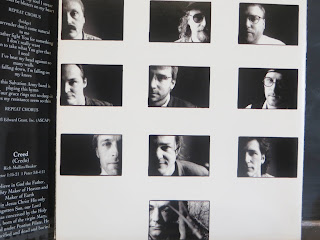
Here in America functions as an introduction to the album, opened by a comment from a band member that reminds the listener of what the Ragamuffin Band was – a bunch of flawed and nervous dudes trying their best to make something meaningful. The song is a meditation on the beauty of the American landscape and the wondrous reality that the God of ancient Israel still cares for his people in modern America.
The Liturgy section of the album begins with 52:10, which functions as the Entroit (Proclamation). The song’s lyrics are taken from verse 10 of chapter 52 of the Book of Isaiah: “The Lord has bared his holy arm before the eyes of all the nations, and all the ends of the earth shall see the salvation of our God.” With thundering drums, rolling piano, and a haunting melody, the song’s music sets the mood for words that extol God as the mighty ruler and redeemer of the earth. Next comes The Color Green, which is the Gloria in Excelsis (Praise). According to Mullins, this Celtic number imagines an Irishman traveling to a morning church service, only to discover that he has already experienced God’s presence in the natural world along the road there. After that comes Hold Me Jesus, the Dona Nobis Pacem (Confession of sin). It was written by Mullins as a prayer during a particularly rough, late-night struggle with temptation while on tour in Amsterdam, and is a raw, vulnerable admission of personal brokenness:
Surrender don’t come natural to me
I’d rather fight you for something I don’t really want
Than take what you give that I need
And I’ve beat my head on so many walls
Now I’m falling down, I’m falling on my knees
And the salvation army band was playing this hymn
And your grace rings out so deep
It makes my resistance seem so thin
So hold me, Jesus
‘Cause I’m shaking like a leaf
You have been King of my Glory
Won’t you be my Prince of Peace?
This song, which became one of Rich Mullins’ greatest hits, has had a deep impact on me over time, reminding me of God’s persistent grace in the midst of my own battle with sin and feelings of distance from God. I’ve prayed its words after some of my darkest and most discouraging failures, and found hope through them. Next on the album, Creed serves as the Credo (Affirmation of faith). Undergirded by Mullins’ brilliant and rhythmic hammered dulcimer, the song’s lyrics are the words of the Apostle’s Creed, an ancient summary of Christian beliefs from around the time of Jesus. The chorus of the song references a line from G.K. Chesterton’s Orthodoxy about the power of these simple truths of the faith: “I will not call it my philosophy; for I did not make it. God and humanity made it; and it made me.” Rounding out the liturgy is Peace (a Communion Blessing from St. Joseph’s Square), which is the Agnus Dei (Celebration of grace). This song celebrates the unity that followers of Jesus have through the sacrifice of our Savior’s blood and body on the cross, symbolized in the wine and broken bread of the Eucharist celebration (the name of this ritual meal means “thanksgiving”).
Next comes the Legacy. This section begins with a brilliant interlude of Celtic music called 78 Eatonwood Green, which was an address that Mullins stayed at on a visit to Ireland. Hard begins a series of songs focused on the challenges of applying the liturgy’s truths to daily life. Facetiously describing himself as a “good midwestern boy” with “values that would make the White House jealous,” Mullins suggests the danger of pridefully comparing ourselves to other people, rather than realizing that we consistently fail to measure up to the standard of love, faith, and prayer that Jesus taught and lived. “Ain’t it hard to be like Jesus?” he asks. I’ll Carry On reflects on how the Christian life calls us away from what is familiar to a hard road, which involves holding onto simple truths and acknowledging the painful weight of our heritage. Christmas Morning is a simple but beautiful duet of piano and Irish whistle that connects a child’s excitement to wake to Christmas gifts with the wondrous truth that God sent his son as a gift to the world. How to Grow Up Big and Strong was written by a singer-songwriter named Mark Heard, who died in 1992. The number is a tribute to him, and seems to be a reflection on our human tendency to build our identities around strength and power, which all too often leads to the ravages of war. Rounding out the album, Land of My Sojourn is an epic conclusion to the album. Tracing a journey across the American landscape, the song contains some of the most beautiful poetry that Mullins ever wrote. It captures the theme that ties together the album – the tension between our sense of wonder at the beauty and promise of our country and our disappointment at its brokenness, which prompts a longing for something beyond this land – a healed and restored creation:
Nobody tells you, when you get born here
How much you’ll come to love it
And how you’ll never belong here
So I’ll call you my country
And I wish that I could take you there with me
Conclusion:

I believe that God sometimes uses works of art to grip our hearts, rock our world, and change us in surprising ways. A Liturgy, a Legacy, & a Ragamuffin Band has certainly drawn me closer to God, and it continues to do so. The music of Rich Mullins has encouraged me to live with greater wonder, on the lookout for magic, beauty, and goodness breaking through the shadows around me. While we await the restored creation to come, we can still marvel at the goodness of God’s handiwork in the places, creatures, and people that surround us – in the sights and sounds of America, in the joy of a kid on Christmas morning, and even in the color green. Mullins’ music has also filled me with a deeper yearning for things that have been busted up to be healed and set right – things in my own heart and body, in my relationships with God and others, and in my country. I am a sojourner, living in the tension between the “already, but not yet,” praising God for the place I call home and yet realizing that it will someday pass away. I want to be who I was meant to be, and while I know that I’ll continue to mess up and make mistakes in this life, I’ll carry on toward the vision of true humanity that Jesus taught and lived. The path is a hard one, deeply painful at times. But it’s worth it. Most of all, I’m grateful to Rich Mullins for the reminder that God loves ragamuffins like you and me, in the midst of all our brokenness. Jesus loved us enough to step into our messy world and give his life for us. Though I all too often forget it, he holds me even when I can’t hold onto him. I’ve encountered and re-encountered grace through this beautiful music. I hope you can too.
For further info on the story of Rich Mullins, check out:
Rich Mullins: A Ragamuffin’s Legacy, a 2014 documentary directed by David Leo Schultz (available on Amazon Prime)
Rich Mullins: An Arrow Pointing to Heaven by James Bryan Smith
 Words for Wayfarers
Thank you for writing this and for reminding me how wonderful a gift this album is to the world.
I fell in love with Rich Mullins and the Ragamuffin Band only after Mullins had already died, and his life/death has touched me deeply, probably more than any other human being, a very distant second to the Man, Jesus Christ, but second probably for sure.
On the other hand, my wife Karen’s beautiful face wafts across my consciousness as I write this, and so maybe I’ll give Mullins second place as a man who has been so important in my Christian life, but Karen definitely comes before Rich as the one right behind Jesus.
I started blogging in this sixty-fifth year of my sojourn, as Mullins might have termed it. I didn’t at all know where the blog was going to go, but so far it turns out that there’s a lot of Jesus, Karen, and Rich Mullins in my posts. That’s not too surprising, I guess, because a writer should write about things and people he or she knows, huh!
Here’s my last post for this year if you’re interested. Peace and love, Jesuha. Happy A.D. 2023!
https://thehappynarcissist.com/2022/12/23/hold-me-jesus/
LikeLike